
Young Women Stand Their Ground in Zambia’s Wildlife Sector

Zambia’s protected area system is home to abundant wildlife, including species like elephant, giraffe, lion, leopard, and rhino. Zambia’s wildlife brings millions of dollars from the tourism sector each year into the country, some of which trickles down into the extremely poor rural communities adjacent to the protected areas. These investments can help to incentivize the protection of species and habitat that would otherwise be susceptible to poaching or conversion to agriculture. Wildlife law enforcement offers one of the few employment opportunities for young people in these rural communities and is an important benefit of conservation. For many young women, however, social and cultural norms make these employment opportunities largely out of reach. Wildlife law enforcement is a male-dominated field, and society  perceives women as lacking the ability and skills to be employed in positions that require being away from home for extended periods of time. Few women are employed in the sector, even in entry level positions such as community scouts. Presently, women make up only 14 percent of community scouts employed nationally.

But perceptions are beginning to shift with Zambia’s first ever all-women team of community scouts, who are mostly under 25 years old. The USAID-funded Integrated Land and Resource Governance (ILRG) worked with the Department of National Parks and Wildlife (DNPW) and Conservation Lower Zambezi (CLZ) to recruit and train a cadre of female scouts working in the communities surrounding Lower Zambezi National Park, and encouraged other conservation partners to increase the number of women recruits they support. This initiative is demonstrating that women excel in wildlife protection when offered the chance. With formal employment comes increased status, independence, and confidence, as well as cultural acceptance for these women to decide if and when they would like to start a family. It shows that formal employment in the wildlife law enforcement sector can change the lives of young women for the better, and it impacts the perceptions of the broader communities on the value of conservation and the role of women in its protection. The women who have participated note the family and cultural pressure to get married and start families once they have finished with formal school. But with employment, the women are able to chart their own paths and take control of their futures.
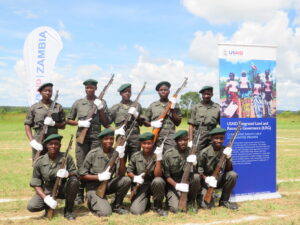
Zambia's first all female unit from Lower Zambezi National Park during the Community Scout Graduation at Chunga Graduation Ceremony, March 2021
Zambia’s first all female unit from Lower Zambezi National Park during the Community Scout Graduation at Chunga Graduation Ceremony, March 2021. Photo credit: Matt Sommerville, ILRG


Breaking these social barriers requires a range of support mechanisms and review of business as usual. To encourage women to apply, USAID partners disseminated messages about this career opportunity in secondary schools, clinics, churches, and by word of mouth. Recruitment is a competitive and physically demanding process. When the young women arrived at the co-ed training, many had never participated in endurance tests or even run in heavy boots. To address gender biases in the recruitment process, physical endurance standards were adapted for the women and men recruits.

Rosemary Chimeza, 21, was one of the 46 people recruited for the intensive three-month residential training at the Chunga Wildlife Training School in Kafue National Park.
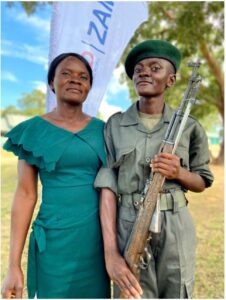
Rosemary, right, and her mother, Lilian, left, celebrate at the graduation ceremony Credit: Francesca Cooke, Consultant
Rosemary, right, and her mother, Lilian, left, celebrate at the graduation ceremony
Photo Credit: Francesca Cooke for USAID

Half of the cohort was female, which was the highest ever proportion of women recruited in a single selection. USAID ILRG supported the adaptation of the curriculum so that training was women-inclusive and gender-responsive. An eight-hour gender-specific session was held during training, covering both the challenges and benefits of women’s participation in natural resource management, and the prevention and response of gender-based violence (GBV). Women and men trainees also received training on socio-emotional skills like assertiveness, self-confidence, and leadership.

Training was physically and mentally demanding.  It was the first time many young women were away from home. Building physical fitness and learning wildlife field operation also required perseverance and endurance. Rosemary and her colleagues recounted their experiences, “Every day there was a new physical activity for us to train in. We would be woken up unexpectedly in the middle of the night to start a long run through the rain. It was difficult but we supported each other. This made the training less stressful and actually it became a fun challenge. After the first few weeks, we knew that we could complete this course.”

Rosemary still remembers with joy the day she returned to her village following her graduation as a community scout. She says she was received “like a chief” by everyone. “People look at me differently, I look at myself differently,” she said. “The young men of the village show me respect, and others now fear me, because I’ve been trained in handling firearms. They call me ‘officer.’”

Breaking gender barriers

On patrol, the all-women team of community scouts are doing everything their male counterparts do. Young women still face challenges though, as deep-seated gender norms and traditional beliefs persist in the local communities. When they patrol remote areas, community scouts must spend extended periods of time away from their homes and families, which is often socially perceived as incompatible with women’s reproductive roles and with their disproportionate share of unpaid caring responsibilities.

On the other hand, the community scout job offers a well-respected employment pathway for young women and supports gradual shifts in gender norms. The women community scouts said that many of their female friends in their villages are already married, while the scouts feel they could wait more years to get married and spend their time investing in their careers and future. In many ways, the work of community scouts is redefining the role of young women in conservation and raising their value within the community. 

“We had accepted that the scout job is too tough for women but these young women have shown us that it’s not,” explained Chimusambo, the village Head Person from Rosemary’s village.

As the only woman in her village with a job that is typically reserved for men, Rosemary feels like she is  inspiring young women and men in her community. “They see my life as serious and focused, and they want to join and become community scouts. Even some parents now think they can send their girls to join,” said Rosemary.

Traditional Leaders in Zambia Shift Gender Norms and Strengthen Women’s Land Rights

Originally published on the International Institute for Environment and Development blog.  

By Patricia Malasha

Across much of Africa, land is not allocated and inherited under statutory law but through customary practices rooted in kinship. In patrilineal systems, land belongs to men’s families and is inherited through the paternal line.

In Zambia, many ethnic groups follow a matrilineal system, where women own land and pass it down the maternal line.

But ownership does not necessarily translate into access, use and control of land. Even in matrilineal societies, social and gender norms undermine women’s decision-making power. Traditionally – regardless of patrilineal or matrilineal systems − men have authority over household resources, including land − so when it comes to land rights, women are left out.

In Zambia’s customary systems chiefs and their advisors – known as indunas – and village headpersons allocate land. These customary leaders are usually men and, as custodians of tradition and culture, heavily influence whether harmful gender norms and practices persist or change.

Recognizing their influence, the United States Agency for International Development (USAID)-funded ‘Integrated Land and Resource Governance (ILRG)‘ program piloted an approach to engage these traditional leaders in shifting harmful gender norms and strengthening women’s land rights in Zambia’s Eastern province, to support a parallel systematic land documentation process. Ninety-six indunas and village headpersons (32% women) from seven chiefdoms participated in a year-long three-part dialogue series.

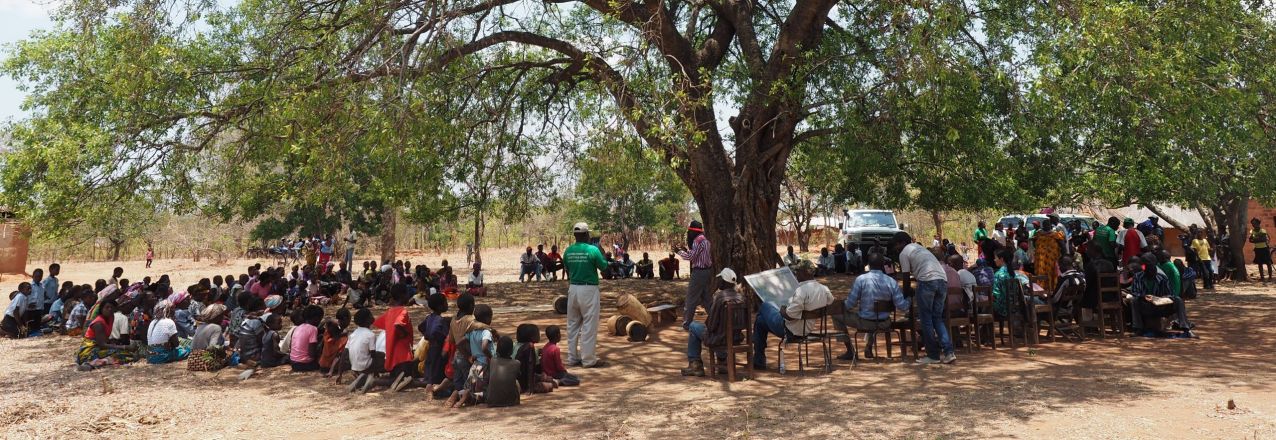
The dialogues provided indunas with a safe space to reflect and take positive action. The first session analyzed gender inequalities in ownership, access and control of land. The second session envisioned the change indunas wanted and their role to bring about that change. In the final session, indunas discussed achievements and challenges over the year.

Dialogue Leads to Action

Through the dialogues, the indunas made promising steps to shift gender norms that hinder women’s land rights. In five chiefdoms, indunas facilitated local discussions about harmful traditions, such as sending divorcees and widows away from the villages.

These discussion forums triggered an upsurge in the number of women bringing their cases to the chief’s attention. In four chiefdoms, indunas drafted by-laws supporting women’s land rights and banning property grabbing.

Some indunas who now support changing land records to reflect land given to women reached out to traditional courts to raise awareness about the shift. In the patrilineal Nzamane chiefdom, a woman – for the first time in history – was appointed as village headperson with full authority and decision-making power.

A woman headperson in the Nyamphande chiefdom addressed a pressing form of gender-based violence related to land: the use of traditional funeral rites to deny widows’ access to their deceased spouse’s land.

Indunas and village headpersons who participated in the dialogues encouraged men in their communities to include their wives in land documentation. And the indunas led by example, committing to share their own land with their wives and children, both boys and girls.

Induna Jacob Phiri, from Mnukwa chiefdom, was the first to share his land after the first dialogue session, saying My wife had access to my land and planted crops of her own choice, but I never thought about what could happen to her if I died. I knew I needed to act while I was still alive, so I gave her a portion of land to be her own. After that, I felt empowered to tell people in my village to do the same.”

Not All Indunas Embrace Change

Despite promising shifts in behaviors and gender norms, many indunas did not support change − taking a backseat or even attempting to block and discourage those willing to drive it forward.

Although bringing together indunas from different chiefdoms intended to foster collaboration, the pilot initiative found that individual action by the indunas was much more successful than collective action.

Some of the indunas resisted changes in social norms, and it is important to invest more time in supporting the indunas and headpersons to have a deeper understanding of existing gender norms that should be changed before moving to planning and implementation.

Change Starts with Community

The pilot showed that shifting harmful gender norms at the community level is crucial in supporting women to access land rights. Given their role in regulating local culture and advising the traditional authority on land administration, customary leaders like indunas and village headpersons are a key entry point for that shift.

Change can be slow. But spaces for dialogue, critical reflection, and support for action-planning enabled the indunas to not only change their own beliefs, but also begin to see their role and their communities in a different light.

Climate Change is Not Gender Neutral

A Q&A with PepsiCo and USAID on making the business case for women’s empowerment and combating climate change in West Bengal, India

Cross-posted from the USAID Medium blog

Margaret Henry, PepsiCo’s Director of Sustainable Agriculture; Sarah Lowery, Economist & Public-Private Finance Specialist in USAID’s Land and Resource Governance Division; and Corinne Hart, Senior Gender Advisor for Energy and Environment at USAID’s Gender Equality and Women’s Empowerment Hub, discuss how USAID and PepsiCo are working together to equip women farmers with skills to adapt to the effects of climate change.

Why did PepsiCo and USAID partner in India?

Margaret: PepsiCo and USAID came together in West Bengal, India, to form a partnership to demonstrate the business case for women’s empowerment. PepsiCo has had a long-standing commitment to sustainability and to farmer livelihoods, but we knew we couldn’t solve all the problems alone. We partnered with USAID to expand our ability to influence and benefit the women of West Bengal, who are an integral part of our farming communities.

seated group of women
USAID and Pepsico sponsor training for Eid Mubarak group members. Photo credit: Subarna Maitra, ILRG

Women are often ignored in the agricultural sector. How can the USAID-PepsiCo partnership change that?

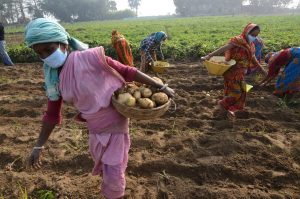
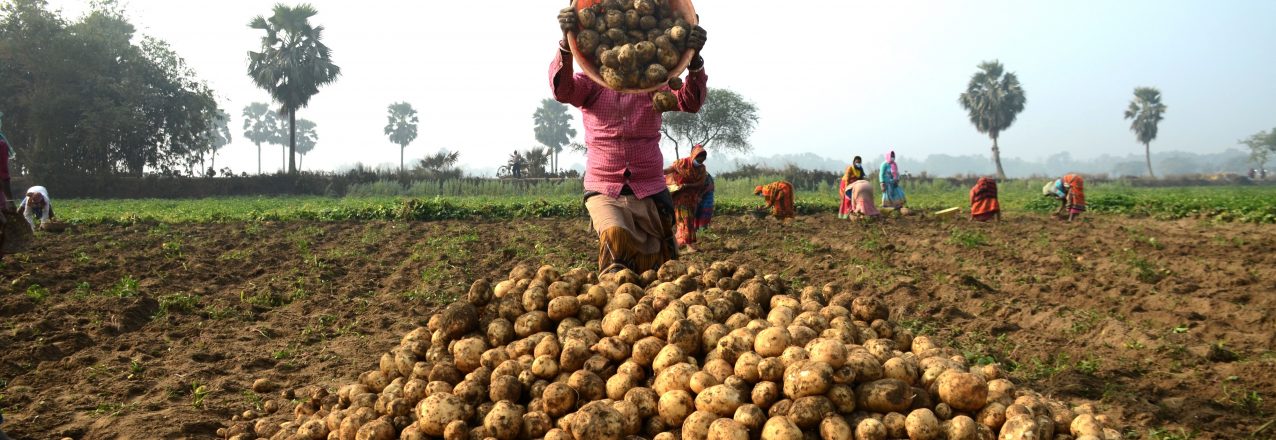
Sarah: Women produce 60 to 80 percent of food across the world, but they own a mere fraction of the land that they farm. They are also less likely to control resources, receive technical training, and enjoy the financial benefits from commercial farming. In West Bengal, women have important roles throughout the potato supply chain, and this partnership ensures that women have access to land and the knowledge and skills they need to excel in these roles.

woman harvesting potatoes
Women harvesting potatoes. Photo credit: Subarna Maitra, ILRG

What are some of the results you have seen from this partnership for women farmers and PepsiCo?

Corinne: In addition to greater access to land and productive resources, the partnership in West Bengal is engaging all members of household and local champions like potato aggregators to shift gender norms that limit women’s participation and benefit sharing. Over the past two years we have seen women gain mobility, decision-making power over farming decisions and household income, and confidence as lead farmers and community agronomists. Women’s families and communities increasingly acknowledge their roles and the skills they bring to potato farming.

How can empowering women increase productivity and mitigate the effects of climate change on agricultural supply chains?

Margaret: Every day, farmers face critical challenges from climate change, and we want to work with them to not only reduce the impact of agriculture on climate change, but to help them adapt to the changes that are coming. By empowering women, we empower our supply chains to do better. Not only in terms of productivity, but with environmental performance and adaptation to the kinds of events associated with climate change.

woman farmer with potatoes
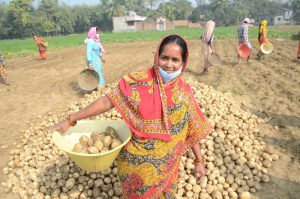
Mafuja, member of Eid Mubarak Group, at harvest in Moloypur, Hooghly. Photo credit: Subarna Maitra, ILRG

How are USAID and PepsiCo scaling this partnership in West Bengal to meet global gender equality and climate goals?

Corinne: In 2020 USAID and PepsiCo began a Global Development Alliance, a five-year, $20 million co-funded partnership to demonstrate that investing in women in PepsiCo’s supply chains can lead to greater profitability and sustainability, as well as development outcomes, like gender equality and economic growth. Evidence-based approaches to improve women’s access to resources, land, skills, and employment, alongside robust data collection, will make a compelling business case for scaling to additional PepsiCo markets and influencing other global companies sourcing from rural communities. By integrating gender equality and women’s empowerment into PepsiCo’s global sustainable agriculture strategy, the GDA is directly contributing to climate change mitigation and adaptation efforts throughout their agricultural supply chains around the world.

Gender and Climate Change: the Intersection of Women’s Empowerment and Sustainable Farming

A USAID-PepsiCo partnership is demonstrating how governments can leverage the private sector to empower women while advancing climate change goals

Arati Besra had been planting rice and raising small animals for her family’s subsistence since she got married at the age of 15. She had never thought about farming for profit until she heard of a partnership between the U.S. Agency for International Development (USAID) and PepsiCo, Inc., the U.S.-based multinational food, snack, and beverage corporation, which empowers women in PepsiCo’s potato supply chain in West Bengal.

Arati in a field
With support from USAID, Arati Besra leased land with a group of other women to produce potatoes for PepsiCo and increase her family’s income. Photo credit: Landesa

Arati was eager to take part in the partnership’s in-depth potato farming training program, where she learned about land preparation, seed treatment, soil health, pest and disease control, harvest, and record-keeping, expanding her skills as a farmer. Empowered with new knowledge and skills, she led the 12 women in the Self-Help Group she founded in 2005 to produce potatoes independently and enter the PepsiCo potato supply chain. With assistance from USAID and PepsiCo aggregators to identify and negotiate land available for leasing, the women leased a plot of land as a group and managed the farming operations throughout the growing season. Following the harvest, the women reported above-average yields for the area.

This innovative partnership between USAID and PepsiCo is demonstrating that women’s empowerment can increase the potato supplier base for PepsiCo, improve yields and profitability for rural farmers and PepsiCo, and promote the adoption of sustainable and regenerative farming practices that advance USAID’s and PepsiCo’s global climate change commitments. Working in partnership with women, USAID and PepsiCo are learning from women in the community about the constraints and opportunities for their increased participation in the PepsiCo potato supply chain.

“By empowering women, we are empowering our supply chains to do better every day. Not only with productivity, but with environmental performance and adaptation to the challenges associated with climate change,” said Margaret Henry, PepsiCo’s Director of Sustainable Agriculture.

Over the past two years, USAID and PepsiCo have provided gender awareness training to all PepsiCo staff in West Bengal and agricultural extension services to over 1,000 women potato farmers. Training on sustainable farming practices like composting, reducing crop residue burning, soil testing, responsible pest control, and using drip irrigation contributes to climate change mitigation and adaptation efforts by maintaining soil carbon levels, reducing air pollution and CO2 emissions, and reducing pesticide runoff and water contamination. In addition, the partnership is increasing women’s access to productive resources, information, and income diversification, reducing women’s vulnerability and increasing household resilience.

USAID and PepsiCo worked with female agronomists to train women farmers on potato agronomy and sustainable farming practices. Photo credit: Subarna Maitra/ILRG

Participating in extension training and producing potatoes independently for the first time increased the women’s ability to become change-makers in their communities and champions for women’s empowerment and sustainable farming. The partnership is also working with male champions such as aggregators and sub-vendors in the supply chain to understand and value women empowerment. These male champions have increased their outreach to women farmers and played a key role in convincing other men in the communities to support women’s efforts.  

After attending training, leading her women’s land leasing group, and overcoming skepticism from men in her family and community, Arati has been selected by the partnership to serve as a part-time Community Agronomist. In the role, she provides support and advice to PepsiCo farmers in her village and has developed innovative farm waste disposal mechanisms with locally available resources.

Arati now sees herself as a successful farmer and local leader. “I was able to prove that I can do this. The knowledge gained through training has helped me guide the farmers. Now I have acceptance and respect from other women and male farmers too. I am learning many new things and I am trying to apply those lessons at a personal level and also reach out to other women like me.”

Documenting Individual Land Rights to Save Zambia’s Forests

Cross-posted from USAID Medium

In his leadership role, John Zimba, Chief Sandwe of the Nsenga People of Zambia’s Eastern Province has personally taken steps to help his people, particularly women, formally secure the rights to their land and the forests within their communities. The chief and his constituents are already seeing the benefits from protecting habitat and wildlife.

forest
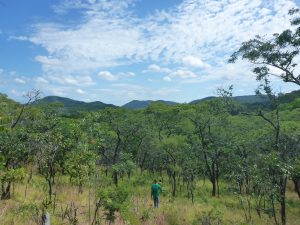
Sandwe Community Forest includes vast areas of wildlife habitat adjacent to South Luangwa National Park. Photo credit: Matt Sommerville, ILRG

Located in the southern end of Zambia’s flagship national park, South Luangwa, the chiefdom has traditionally been home to abundant wildlife and dense forests; however, there are new pressures threatening this delicate ecosystem.

The chiefdom has recently been declared a new district with a new municipal town currently under development. In recent years a large-scale mining concession was awarded, and people from both within and outside the community have begun invading the forest to engage in small-scale, off-grid gold mining. All of these are occurring right next to habitat where an NGO manages a forest carbon project and companies maintain legal, regulated hunting concessions. Both of these provide income generating activities for the community.

charcoal stacks
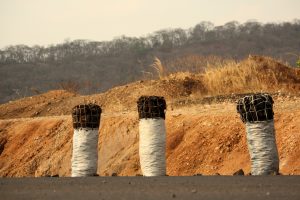
Charcoal is an increasing driver of forest degradation in Sandwe Chiefdom. Photo credit: Jeremy Green, USAID

Despite the role of forests in combating climate change, until recently

Zambia had few ways to incentivize conservation. Without legal rights to the forest land, communities and residents could only benefit from forests by converting them into charcoal or agriculture. This lack of rights is one of a number of reasons that Zambia has had one of the highest rates of deforestation in Africa over the past decade.

“Even though we are in a very rural area, there are many interests in Sandwe. It is my job to organize, manage, govern and harmonize people and resources across the chiefdom,” says the chief. “We think this work on documenting land rights and forest rights will encourage development. With USAID’s support, we have gone through the effort to document the land rights of 10,000 agricultural parcels and to apply for community forest management rights.”

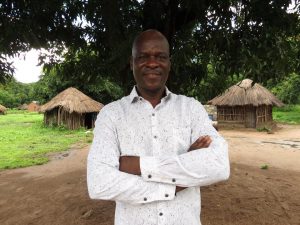
John Zimba, Chief Sandwe of the Nsenga People of Zambia’s Eastern Province
John Zimba, Chief Sandwe of the Nsenga People of Zambia’s Eastern Province Photo credit: Chloe Melrose

The chief is one of approximately 12 of Zambia’s 188 chiefs piloting customary land certification, offered through the USAID Integrated Land and Resource Governance project, in line with Zambia’s 2021 Lands Policy. He also supports the 2018 community forest management regulation that offers Zambian communities the opportunity to register their rights to forests and receive the many financial benefits that come from the land, such as non-timber forest products like mushrooms and forest carbon income.

Forest carbon payments are generated when communities and residents protect standing forests, which play a key role in reducing greenhouse gas emissions that cause climate change. In the past three years, more than 80 local community forest management groups have been registered, protecting over 1.5 million hectares of forests in Zambia.

man and woman holding documents
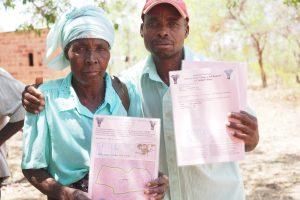
Each household has documents of their individual holdings. Women’s rights are well represented and documented in Sandwe Chiefdom. Photo credit: Matt Sommerville, ILRG

George Tembo, chairperson of the Community Resources Board that organizes action around management of forest and wildlife in the chiefdom notes that, “Since the coming of community forestry many people are benefiting from new development infrastructure and income. Our community members have realized the benefits of conserving wildlife habitats, and have started addressing threats like charcoal production and poaching.”

Chief Sandwe acknowledges that the work has started, but that it will be a long journey.

“By documenting our land, we can help to stop encroachment and the human-wildlife conflicts that come with it, land documentation has empowered individuals with a sense of ownership and responsibility over land. If we want people to protect the forest to combat climate change and to conserve the wildlife within this area, the community must benefit.

community members
Communities in Sandwe Chiefdom have mapped out their village boundaries and defined community forest areas for formal recognition. Photo credit: Sandra Coburn

Developing new revenue sources is important for diversification and resilience of the chiefdom. The revenue from protecting the forest has helped motivate communities to continue protecting the forests during a low year for hunting. He says that: “This year, amidst COVID-19, the carbon fees made a positive impact; they supported our agricultural preparations and the availability of clean borehole sourced water within established villages across the chiefdom.”

Now that Chief Sandwe has official records on the locations of his communities and the chiefdom resources, he proactively plans for future development. He is using the information to bring together both women and men, groups and companies to use these land documentation maps to resolve issues early. “We are already seeing results,” he says. “Even in just these first few years, we are seeing that land disputes have become rare.”

The USAID Integrated Land and Resources Governance project supports improved land use planning for wildlife and forestry sectors, low cost and accessible land documentation for communities, and strategies to secure land rights, especially for women. The project also develops opportunities for communities to benefit from sustainable natural resource management.

About the author: Chando Mapoma is the Senior Development Outreach Communications Officer at USAID’s Mission in Zambia

New USAID Study Examines Gender Bias in Customary Land Allocations: Findings Have Important Implications for Advancement of Women’s Land Rights

Land access and ownership for women remains severely unequal compared to men despite the fact that women are active participants in the agricultural sector and provide the majority of agricultural labor in much of sub-Saharan Africa. A recent USAID gender analysis of customary land allocations found that female-headed households in Ethiopia and Zambia not only receive less land in customary systems, but also less productive land. Land of lesser quality was more commonly received through gifts or loans than through inheritance, purchase or rent. The study also found that younger women received the least productive land, and that female heads of household often face higher levels of disputes over their land. In addition, women have less access to land rental markets compared to men, which means that women who do not receive a sufficient amount of land to meet their needs through allocation are less able than men to obtain more land through the market.

While gender biases in customary land allocation systems are well-documented, there have been no rigorous empirical analyses to characterize the extent and nature of these biases. This study is the first post-evaluation analysis of quantitative data to investigate gender bias in customary land allocation systems. It provides an important contribution to our shared knowledge and understanding of women’s land rights. This rigorous approach was made possible by utilizing USAID’s land tenure impact evaluation datasets and illustrates the value of these data to advancing future research in topics related to land tenure.

The study provides several key lessons for future land sector programming by USAID and other donors:

  1. Donors supporting formalization programs must identify and address gender biases where they exist in customary systems. Efforts to title, certify and/or register land rights within customary systems often crystalize existing allocation patterns. If women have fewer or poorer-quality plots of land to begin with, land programming may deepen these inequities by making them more formal and durable over time. To reduce risks, donors can take steps to: (a) understand patterns of gender inequity in land allocations prior to initial project design phases; (b) develop a strategy to address these inequities and proactively integrate it into project design and implementation; and (c) monitor and evaluate outcomes through the course of the project to ensure that risks are effectively addressed. 
  2. Land quality matters. Donors who do take stock of existing gender biases in the design, monitoring or evaluation of land sector programs often only consider inequities in the quantity of land held. Placing additional focus on land quality will help donors to identify systematic gender inequities and the best approaches to addressing these. The quality of a plot importantly determines its immediate productive value for food security and income generation as well as its longer-term value as a transferable asset. Project evaluations—including baseline and endline data collection, should collect data about land quality to determine the net effect on gender equality.
  3. Women have less access to formal land sales and lease markets compared to men, and therefore are limited in their ability to optimize their land holding. Findings from Ethiopia and Zambia underscore the importance of land allocations for women, as they may not be able to gain access to additional or better-quality land through rental or sales markets (albeit informal ones) in the same way that men can. Additional research would help us to understand why this is so, and what steps could be taken to address this gender gap.
  4. Spatial analysis enables estimations of land quality, key to understanding and addressing gender inequities in land allocation. Geospatial data can contribute to the development of effective land quality indices that can assist in the evaluation of gender inequities. This study linked georeferenced household survey data to spatial data on agro-ecological conditions and proximity to roads (as a proxy for market access). This enabled the research team to construct more accurate land quality indices that incorporated both geospatial variables and other factors related to land productivity, providing a critical new lens for land sector gender equality outcomes.

Our findings provide empirical evidence that customary land allocation systems can introduce gender bias in access to land. The appropriate policy response to such gender bias in any particular case will depend on a range of contextual factors. Options may include outreach and sensitization efforts with customary authorities and local communities to influence social norms related to gender, or implementation of programs to help women access land outside of the customary system. Our findings caution that formalization alone may be insufficient to empower women to use land markets to access land, and thus complementary interventions may be needed.

Read the full research paper here.

Authors: Jennifer Duncan, Senior Land Tenure Specialist, and Benjamin Linkow, Senior Research and Evaluation Advisor, on USAID’s Communications Evidence and Learning project

Five Ways USAID is Protecting the Environment by Improving Land and Resource Governance

Good governance is a critical threshold condition for environmental stewardship. USAID’s land and resource governance programming incorporates environmental conservation from the bottom up.  In the context of climate change, growing land and resource scarcity and concerns over resource conflict, secure tenure rights and effective governance of these rights have become all the more important. A growing body of evidence shows the extent to which land and resource governance is connected  to environmental outcomes. (See the IPCC Special Report on Climate Change and Land and IPBES Assessment Report on Land Degradation and Restoration.) Human decisions over land and resource use can lead to land degradation, desertification and climate-induced disasters; conditions that in turn cause human suffering including food loss, malnutrition, and displacement.

Clear rights and good governance provide a starting point for change. Providing safe, long-term tenure rights encourages people living and depending on land to invest in sustainable practices, and can reduce incentives to exploit resources or encroach into new areas. Decentralizing land and resource governance to communities is a critical step toward improved environmental outcomes, and even more so when this transfer empowers traditional resource users.  The Food and Agriculture Organization of the United Nations (FAO)’s recent synthesis report, which reviewed over 300 studies completed over two decades, indicates that transferring land and resource rights to Indigenous and Tribal Peoples can cut deforestation rates in half. Transparent and inclusive land and resource governance also helps to reduce conflict and ensure broad-based benefits from the use of common resources.

USAID’s land and resource governance programming:

1)      Strengthens tenure rights to increase climate smart investments and reduce pressure on forests. By supporting secure land tenure through land rights formalization projects and improved governance, USAID encourages long-term investments in environmental stewardship, such as soil conservation and tree planting. When rights are recognized and recorded, it is also easier for governments and communities themselves to monitor uses and promote accountability. USAID is working on land rights formalization programs in several countries rich in environmental resources, such as Colombia, Ghana, Liberia, Tanzania, and  Zambia. In Ghana, USAID will be evaluating impacts of land tenure efforts on carbon emissions.

2)      Promotes women’s land and resource rights and gender equal resource governance. Women are underrepresented in land and resource governance at almost every level in many countries, and often face additional gender bias at the local level under decentralized systems. Tackling the challenges of resource scarcity and changing climate conditions will require  vibrant participation of diverse voices in the community, including both women and men. Gender inclusive land and resource governance also provides the foundation for successful and equitable climate change adaptation programs, and mitigation programs entailing Payment for Environmental Services  (such as REDD+). USAID is working with the government of Zambia on a breakthrough program to bolster women’s participation in the governance of wildlife resources through Community Resource Boards, and training women as community wildlife scouts.

3)      Supports strong local resource governance bodies to ensure effective environmental stewardship.  The transfer of land and resource governance to local communities is taking place in many countries around the world. USAID’s 2020 Policy on Promoting the Rights of Indigenous Peoples reinforces the central role that Indigenous Peoples play in the Agency’s programming for land and resource governance. USAID programs supporting formalization of land and resource rights for Indigenous Peoples in Bolivia and Peru, for example, demonstrate  that communities  who live in and depend on forest and other ecosystems  do the best job  taking care of these resources. For over 20 years, USAID has worked to support Indigenous land and resource rights in Bolivia; from 2000 to 2012, formal recognition of these lands resulted in an average deforestation decrease of 286 percent. The carbon emissions reduction associated with this result was equivalent to removing over 1.6 million cars from the roads for one year. In Peru, USAID supported more than 1,200 Indigenous communities to secure titles to their land and resources; when communities received titles, deforestation decreased by 97 percent.

4)      Builds stability in fragile and post-conflict states. By focusing on land tenure security in post-conflict states, USAID helps to ensure political stability that will, in turn, enable good stewardship of environmental resources over time, and help to reduce the chance of violent conflict and war that wreaks havoc on the natural environment. Insecure land rights can lead to displacement and grievance, which contribute to conflicts large and small. Secure and equitable land rights can be a pillar of political stability and broad-based economic development. USAID has a historically strong land and resource governance focus in fragile and post-conflict states, and currently has programs in Colombia, Liberia, and Mozambique.

5)      Reforms artisanal and small-scale mining (ASM) to reduce conflict and improve environmental impact. By partnering with countries to formalize and regulate artisanal and small-scale mining (ASM), USAID fosters ASM supply chains that are not only legal, but also environmentally and socially responsible. USAID is working closely with the U.S. Departments of State, Labor, and Commerce; the U.S. Geological Survey (USGS); and the Environmental Protection Agency to tackle the complex array of ASM-related development challenges.

Chiribiquete: Protecting Colombia’s Largest National Park

USAID is partnering with the Government of Colombia to strengthen the capacity to increase sustainable land use and decrease deforestation to protect an iconic UNESCO World Heritage Site.

Birds in Chiribiquete
Besides housing enormous biodiversity and connecting the Andean, Orinocan, and Amazonian ecosystems continent-wide, it is critical to the conservation of the greater Amazonian watershed. Photo by Iván Macias (Colombia Oculta)

The Serranía del Chiribiquete was first declared a protected area in 1989 when it covered 1.3 million hectares. The government has since expanded the park to its current 4.2 million hectares, roughly the size of Denmark. As Colombia’s largest park, Chiribiquete National Park is regarded as a vital hotspot of biodiversity in the northern Amazon, sheltering jaguar, tapir, manatee, the brown woolly monkey, and giant anteater. The world’s largest protected tropical rainforest, this national park is home to hundreds of birds and butterflies species and plays a key role in global conservation. 

Chiribiquete’s natural wealth goes beyond its biodiversity.

Chiribiquete pictograms
Pictographs near Chiribiquete. Photo by Iván Macias (Colombia Oculta)

The park also bears traces of ancient human populations, perhaps the oldest inhabitants of the Americas, who lived in this territory long before the arrival of Europeans. In Chiribiquete, more than 75,000 pictograms depicting animals and humans have been discovered; some of these paintings are believed to be 20,000 years old. Today, the forest is still home to a sparse population of Indigenous Peoples, some of whom remain uncontacted and live in voluntary isolation. 

This forgotten wilderness has been isolated for years due to an armed conflict that had kept tourists and Colombian settlers away from the park’s buffer zone. Getting there is not an easy endeavor, and only a small part of the park has been surveyed. In the wake of Colombia’s 2016 peace accord, biologists, botanists, and archeologists began visiting the rainforest mountain range with more frequency, and today, scientists believe the park could shelter even more biodiversity than is currently estimated.

Sadly, the buffer zones around and land inside Chiribiquete have been affected by rising rates of deforestation. In 2020, the region contained five of 12 deforestation hotspots in Colombia and was home to over 50% of the total national deforested area. In a six-month period between September 2000 and February 2021, 1,000 hectares of forest were felled and burned in the national park, according to a recent report from the Monitoring of the Andean Amazon Project. 

Driving the depletion of the forest are several factors, including illicit crops, land grabbing and occupation, timber trafficking, cattle ranching inside protected areas, and the expansion of the agricultural frontier. A comprehensive solution requires the implementation of a range of policies related to security, land administration, and natural resource management.

“Chiribiquete’s large forests are critical for the water dynamics of the entire mountain range in eastern and central Colombia. Protecting the uncontacted Indigenous groups in this territory is also a challenge because of the risk of cultural loss after contact with land grabbers,” explains Carolina Jarro, Deputy Director of Management of Protected Areas at Colombia’s National Natural Parks authority. 

A Land Governance Approach to Conservation

USAID is actively supporting the government’s efforts to halt deforestation in this region by improving land and environment governance tools and supporting government entities involved in land, conservation, and security. In fact, USAID has strategically aligned its environment and rural economic development/land portfolios in order to address deforestation and approach the issues of illicit crops being cultivated in hard-to-reach environmentally protected areas. 

ariel view Chiribiquete
Photo by: Julia Miranda/Colombia’s Parques Nacionales Naturales

In places where the mechanism to reduce the presence of illicit crops are limited, USAID is demonstrating that land formalization can be a mechanism to strengthen conservation and natural resource management. The work includes working with mayors and municipal governments in buffer zones around the Chiribiquete National Park to strengthen land governance capacities and promote licit livelihoods for communities. 

First step in protecting the forest and everything within it is delimiting the national park and adding it to the national cadaster. After this, USAID is helping the government pilot a land-use contracting program for ranchers and farmers living in the buffer zone. Finally, USAID is facilitating public-private partnerships to mobilize government and private sector investments that foster licit economic opportunities.

“Updating the cadaster is critical for territorial planning and fiscal strengthening of the municipalities, but it is also key for preventing deforestation and the destruction of environmental assets. With an updated cadaster, the park’s boundary and the characteristics of the surrounding areas can be established.” – Alejandra Botero, Presidential Counsellor for Management and Compliance.

This integrated approach has the potential to consolidate policies that can help to curb the region’s unchecked deforestation and unsustainable use of land. By updating the nation’s rural cadaster for areas around Chiribiquete and issuing legal land deeds, communities will be dissuaded from growing illicit crops and increase buy-in for a community-approach to forest management and inclusive growth around the enormous and emblematic park. 

“The Government of Colombia, with the support of international cooperation, has conducted periodic flights to identify the deforestation and illegal occupation areas. These are public parcels that need to be identified to control and restore the area while reducing the possibility of affecting the natural and cultural heritage,” added Mrs. Jarro.

Learn more about the USAID Colombia Land for Prosperity activity here

Land Titles Downstream Will Protect Forests Upstream in Cambodia

By USAID Greening Prey Lang

Originally published March 22, 2021 on USAID Greening Prey Lang Exposure site

Kampong Thom province is one of Cambodia’s agriculture hubs. Across the province rivers originating in Prey Lang Wildlife Sanctuary support vast irrigation systems. The irrigation systems are frequently managed by Farmer Water User Communities (FWUC). One community irrigation system, Tang Krasang, is led by Norng Theourn.

Spanning over 10,000 hectares, the Tang Krasang irrigation system supports small holder farmers and companies to grow rice, mangos, and many other fruits and vegetables. 

The irrigation directly benefits 13,555 people out of whom 6,799 are women. There are 38 committee members managing the Tang Krasang Farmer Water User Community association, and out of those 14 are female. The female committee members are in charge of collecting fees from members, managing the association’s finances and other responsibilities.

Thanks to the irrigation system farmers can grow two to three crops per year. For each crop cycle water users pay $10 per irrigated hectare. Since its establishment in 2017 over $15,000 in fees have been collected by the Tang Krasang Farmer Water User Community. Fees have been used for maintenance of the irrigation system and community development projects. 

Norng Theourn, FWUC leader (right) meets with members to collect farmer contribution fees and prepare a monthly work plan.

Nong Theoun is eager to make the irrigation system more climate resilient. For him, climate resilience includes securing land titles for water users and paying upstream communities for conserving the forests that provide water to the irrigation system. 

To achieve this vision the Tang Krasang Farmer Water User Community has been working with USAID Greening Prey Lang and a provincial level river basin management committee. Efforts are underway to secure land titles for community members who want to access the irrigation system. Proof of land ownership is required to gain access to irrigated water.

Once titles have been secured annual fees collected by the FWUC will skyrocket. Money in the bank will allow Tang Krasang to achieve their climate resilience goals.

“When all farmers in our community have legal land title and can fully participate in the FWUC, contribution fees will increase to between US $60,000 to $120,000 per year, depending on whether they grow two or three crops per year. Before construction of the canal, we could grow only one rice crop each year, with yields less than 1 ton per hectare annually. Now we can grow at least two crops a year, increasing yields to 2 to 3 tons per hectare.

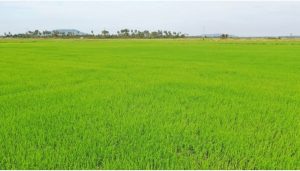
The rice field of a Tang Krasang Farmer Water User Community member

Increased fees will allow for climate resilient infrastructure upgrades. Climate change has made the cycles of droughts and flooding in Cambodia more frequent and more intense. These extremes must be factored into any infrastructure improvements so that the upgraded facilities can withstand climate extremes.

Additional fees will also enable Mr. Nong’s community to provide payments to upstream forest communities to patrol their forests and support law enforcement efforts. Through this nascent payment for ecosystems services scheme downstream water users will contribute to conserving the forests in and around Prey Lang Wildlife Sanctuary.

“Unseasonable droughts and unpredictable rainfall are no longer a worry. We are able to reliably grow rice and other crops because the canal provides sufficient water.”

Land Formalization Goes Live in Colombia

A Colombian Mayor surprises her constituents with land titles and uses live video and social media to spread civic messages about formalizing land tenure.

Facebook Live

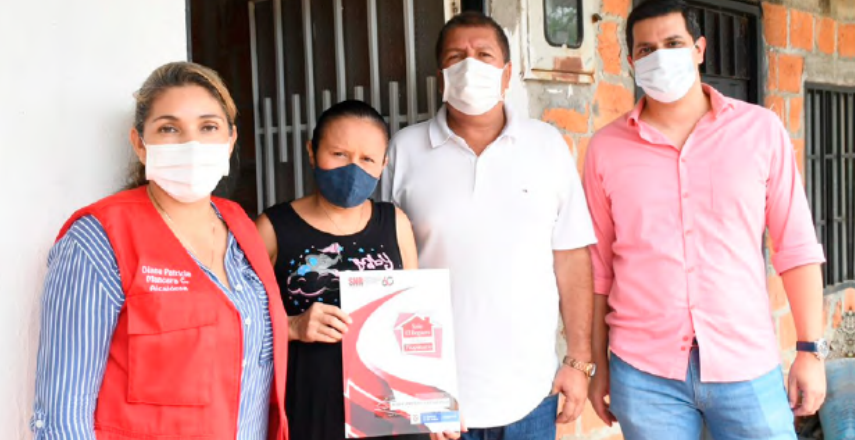
Fuentedeoro’s Mayor, Patricia Mancera, took the world on a digital tour of her town. On Monday last week, Mancera’s team went live on Facebook, while walking door-to-door to deliver registered property titles to dozens of neighbors living in Fuentedeoro’s urban center.

The event was a surprise for the new landowners, some of whom have been waiting more than 20 years to obtain a property deed for their parcels and homes. It was also a surprise for the town’s other residents, many of whom caught the action on a Facebook live video and interacted with the mayor to learn more about the municipality’s efforts to formalize property.

See the Mayor’s video here (en español)

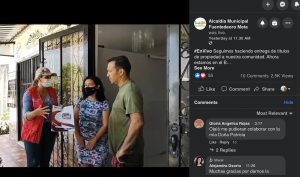
screenshot of mayor on facebook liveBetween house visits, Mayor Mancera, who used a mask throughout the entire video to limit the spread of COVID-19, stopped and looked at the camera explaining to her followers how Fuentedeoro’s Municipal Land Office is playing a key role in allowing her to formalize public properties like schools and health clinics, as well as lands that were donated by the city for social housing.

In a visit to Doña Silvia Garzón, Mayor Mancera explained that: “these property titles are thanks to the coordinated efforts of the Municipal Land Office, the nation’s property registry SNR, the regional government, and USAID. It’s an effort made by all to bring this happiness and the good news that, as of today, you are officially the owner of your property.”

Doña Silvia, like most, was pleasantly surprised to receive the mayor at her front door. She explained that although she has thought about starting the process of obtaining and registering a land title, the procedure’s costs and the idea of having to pay property taxes have kept her from seeing it through.

“USAID has stepped up and helped us with the creation of the Municipal Land Office and integrated our municipality into their programming” – Mayor Patricia Mancera

mayor giving woman land titleShe repeatedly reminded her audience and the new landowners that without their commitment and confidence in local government, Fuentedeoro’s Municipal Land Office would not be able to process their titles. It is true that without community buy-in, building a formal land market is practically impossible.

Ready for Parcel Sweeps

The Mayor then knocked on Doña Alexandra’s door. Alexandra has been waiting several years to obtain a land title. Over the past six months, Alexandra too, worked with the Municipal Land Office and provided the necessary documentation for them to formalize the property in her name.

“I can’t believe it. No, no, no. I can’t… I’m going to cry,” Alexandra said. “This was something that seemed to be impossible to me for so long. Now I realize that nothing is impossible. I am now so happy. I’m going to find my family and we are going to celebrate tonight.”

Citizen Facebook

At one point, after the Mayor had already delivered several deeds, Luz Stella Vásquez, a resident of Fuentedeoro, posted a question in the video’s comments: “When will the titles be delivered to the families living on parcelaciones?” These are lands that were granted to thousands of families around Colombia by the former land authority, known as INCODER. None of the lands came with land titles, and in Fuentedeoro, there are six of these collective land ownership agreements involving more than 160 families.

To answer Luz Stella’s question, the mayor, in partnership with David Peroza, a land expert from USAID’s Land for Prosperity Activity, explained that land titles for all six parcelaciones are currently being processed, and that before the end of the year, Fuentedeoro’s own massive formalization campaign will begin to formalize every single property in the municipality.

Shifting the Paradigm

Colombia is a country where rural land administration services are available to those who could afford them. Fuentedeoro’s Mayor, Patricia Mancera, has probably made history by knocking on doors and delivering land titles to her constituents. The gesture is indicative of a larger shift towards an equitable land administration system, which is the foundation of rural development and good governance.

And if anybody questions the decision to use social media to transmit these types of messages about municipality government and land formalization services, they should know that within the first 24 hours, the video already racked up 2,500 views.

Fuentedeoro is home to 12,000 people.

Background

In Colombia, 6 out of 10 rural properties are informally owned, meaning the owners have no land titles or registered records that the land is theirs. It also means the land parcel does not appear in the country’s land cadaster. Land informality is an obstacle for economic development and poses long-term security risks for landowners, especially in a country like Colombia where violence and internal displacement are commonplace.

To help remedy this situation, USAID is working with the Colombian government on building national and local capacity in land governance. One aspect of the strategy includes the creation of Municipal Land Offices in target municipalities. Another is building the national government’s ability to carry out massive land formalization campaigns in target municipalities. Finally, the USAID strategy facilitates partnerships and mobilizes resources to help create economic opportunities that can catalyze transformation in rural areas that are traditionally underserved.

This post originally appeared on the USAID Land for Prosperity Exposure site.

Download the PDF printable version here.