

Three Promising Approaches for Strengthening Land Rights in Africa

By M. Mercedes Stickler, Land Tenure and Evaluation Specialist, USAID.

Last month, I had the opportunity to take part in the inaugural Conference on Land Policy in Africa. This event—organized by the Land Policy Initiative—highlighted the fact that land is one of the most important development issues facing Africa today.

At the conference, I presented three examples of promising approaches from USAID’s work in Ethiopia, Tanzania, and Zambia. Each of these examples demonstrates lessons learned and new approaches to land tenure challenges that we have worked with multiple stakeholders to design, pilot, evaluate, and scale up.

1. Land Certification in Ethiopia’s Lowland Pastoral Areas
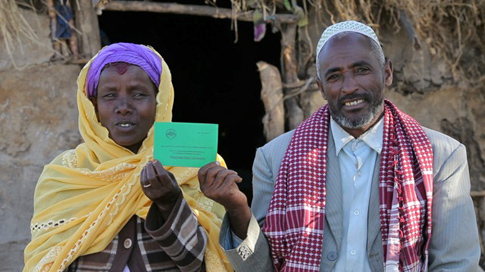
Ethiopia-Couple-with-Land-Certificate
Land Certification in the Ethiopian Highlands

Since 2005, USAID has supported a series of land certification schemes that have registered and surveyed over 800,000 parcels and issued over 500,000 land use certificates. Under these programs, boundaries were clarified and validated by neighbors and community members prior to certification, which reduces the likelihood of disputes among neighbors over land. The programs also piloted a method of co-registration of spouses to strengthen women’s land rights.

Preliminary evidence from the government’s own attempts to strengthen farmers’ tenure security shows a number of positive impacts: land certification was correlated with 40-45% higher land productivity in the Tigray Region and 30% higher soil and water conservation investments in the Amhara Region. The Government of Ethiopia is now scaling up this model – using new low-cost high resolution imagery –with support from the U.K. Department for International Development, the World Bank, and the Government of Finland, among others. Meanwhile, USAID is implementing an impact evaluation to measure the livelihood and production impacts of USAID-supported land certification programs in the highland regions of Ethiopia.

Following on the initial success of certification programs in the highlands, USAID recently launched a new program to strengthen community-level land rights in the pastoral areas of Ethiopia’s lowlands. This program is piloting models to map, register, and certify customary communal land use rights, as well as strengthen customary land governance arrangements. The results of this pilot will also be rigorously assessed through an independent impact evaluation, and the success of this approach could provide lessons on how to strengthen land tenure security in pastoral areas elsewhere in the region, such as in Kenya, Tanzania, and Sudan.

2. Mobile Technology Pilot to Document Land Rights in Tanzania
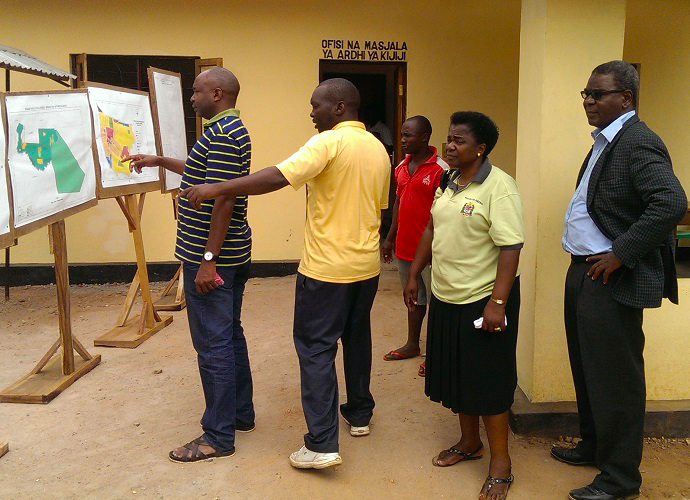
IMAG0245-cropped
Using Mobile Technology to Map Land Rights in Tanzania

In Tanzania, USAID is piloting an innovative approach to documenting land rights information using mobile technology. Land information, such as land claims and boundaries, is documented using low-cost and readily-available devices, such as GPS-enabled smart phones and tablets, coupled with crowd-sourced data collection methods. Under this program, USAID will train local community members to use technology to gather land rights information in rural and underserved settings. The resulting information will be used to quickly build a reliable database of land rights claims, which can then be verified by the government so that formal documentation can be issued in a more transparent, cost-effective, and timely manner, thus increasing land tenure security. USAID has built in an impact evaluation of this approach to help the Government of Tanzania and other stakeholders determine whether this is a viable alternative approach to more traditional and more costly land administration interventions.

3. Land Tenure and Climate-Smart Agriculture in Zambia
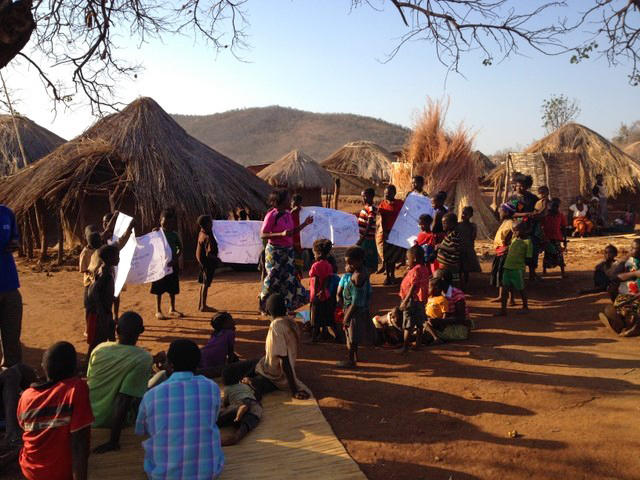
TGCC_QR_Cover_July-September_2014
Community Land Rights Mapping in Zambia

In Zambia, USAID is strengthening smallholder farmers’ land and resource rights to increase investment in climate-smart agricultural practices, specifically agroforestry. Research shows that farmers who invest in agroforestry see positive benefits, including increased crop productivity and soil fertility, reduced variability in yields, and higher, more reliable farm income. However, agroforestry has not been widely adopted in the region, and while existing research suggests that tenure insecurity may be an important barrier to uptake, there has been insufficient evidence to date on how best to secure property rights to promote agroforestry adoption.

In selected sites in Zambia’s Eastern Province, USAID is piloting a series of interventions that strengthen smallholder rights to land and trees and provide agroforestry extension services to facilitate tree planting adoption and survivorship on smallholder farms. We are conducting a randomized control trial assessment to evaluate the impact of project interventions on the land use and livelihood decisions of smallholder farmers. With the consent of the customary authorities, villages were randomly assigned to receive either the agroforestry intervention, the land tenure intervention, both the agroforestry and land tenure interventions, or no intervention (the control group). A baseline survey has already been administered to 4,000 households in 315 villages, and an endline survey will be conducted in 2019. With this strong impact evaluation design, USAID hopes to quantify the correlation between secure land tenure and higher investments in agroforestry.

Supporting Missions Across 24 Countries

These are just three examples of promising approaches from our work in Africa. Across 24 countries, USAID’s Office of Land Tenure and Resource Management is supporting USAID missions to carry out projects, impact evaluations, and research activities that test and scale models to strengthen land tenure and property rights in support of key development objectives. To learn more, visit the following pages:

Harmonizing Land Tenure in National Protected Areas in Honduras

Guest commentary by Christopher Seeley, Chief of Party of the USAID Honduras ProParque project.

One of the most vexing challenges in biodiversity conser/project/proparque-hondurasvation in developing countries is reconciling land tenure and land use issues that emerge when previously unprotected or unregulated ecosystems are placed under state control as part of a national protected areas system.

Communities and resources that were once unencumbered by land use policies and regulations—for better or worse—are placed under a new paradigm with the stroke of a pen. New national protected area boundaries are often created with altruistic conservation objectives, but with little local stakeholder input. These boundaries define, and in many cases, constrain local household livelihood options, place restrictions on the ability of existing communities to access traditionally available and locally controlled natural resources, and legally exclude communities from social and economic development opportunities that communities outside of these “special areas” have a right to pursue.

USAID’s ProParque project in Honduras takes a different approach; it has developed a collaborative method to define boundary limits and legalize the community’s use of park land. The above video describes the project’s participatory approach and key activities, which includes:

  1. identifying weaknesses in protected area boundary delineation criteria;
  2. replacing inadequate criteria with groupings that more holistically optimized social, cultural, economic and biodiversity/natural resource management conservation parameters;
  3. forming inclusive working groups comprised of community participants, protected area managers, municipal leaders and government representatives, to analyze the land tenure and land use implications of the new boundary delineation criteria;
  4. defining community and protected area boundaries with cadastral and legal precision using the agreed upon criteria; and
  5. providing legal protection and transparency for all parties through land and usufruct titling.

The Census, Mapping and Land Regularization approach (“Censo, Medición y Regularización de Tierras” in Spanish) developed under ProParque was first piloted in Western Honduras, in the Celaque National Park. Created in 1987, during a “boom” of national park decrees, the core zone of the park (a cloud forest containing the headwaters of nine rivers) was created in the home territories of numerous indigenous Lenca communities. These communities faced a near total prohibition on resource utilization and were denied access to most government-sponsored social and economic development initiatives. The park was an ideal pilot site for the new approach given the magnitude of the affected population (several hundred households), the sensitivity of their location (deep within the core protected area), and the willingness of both the communities and local leaders to resolve the long-standing conundrum.

The pilot was completed in two phases over eighteen months, financed by the ProParque Small Grants Fund and implemented by the park’s co-management organization MAPANCE. The first phase consisted of community engagement and the creation of a comprehensive census that provided an in-depth portrait of each community’s livelihood assets and on-the-ground reality, and cadastral work at a level of detail adequate for land and usufruct title purposes. The second phase began with a secondary round of community and governmental dialogue to resolve any differences of opinion or position regarding the results of the census and land mapping work.

There have been two important results to date. First, the Government of Honduras has adopted the approach as the standard for resolving land use conflicts and boundary delineation within the national protected areas system. As part of a wider strategy for the rationalization of Honduras’ overly complex protected areas system of categorization, the approach is now being applied to five additional parks.

Second, significant impacts at the initial pilot site in Celaque National Park have been observed. Four hundred and fifty-three families in eight communities have been granted legal title to their lands and usufruct rights to related resources, the core protected area of the park has been redefined using priority conservation target criteria, and the adoption of collaboratively defined zoning for the park is paving the way for a wide variety of initiatives—including carbon- and water-based payment for environmental services agreements, public-private ecotourism partnerships, and the expanded adoption of environmentally friendly coffee certifications by smallholders.

The “Censo, Medición y Regularización de Tierras” approach adopted by ProParque addresses the natural conflict that exists between allowing communities to access natural resources and protecting biodiversity. As a result, the project aligns with USAID’s development objectives related to biodiversity and global climate change. This participatory effort, which engages with communities from the outset and actively seeks mutually beneficial solutions, provides a strong model for future programming in these important sectors.

Read more about USAID’s ProParque project.

Kenya Justice Project Pilot Ready to be Scaled-Up Nationwide


In Kenya’s Ol Pusimoru community, twenty-two women were elected as community elders in 2013, up from 14 in 2012, and zero three years ago.

In Kenya’s traditional, patriarchal Maasai society, women are gaining a new voice and increasingly, seeing their rights to land being recognized and upheld. Twenty-two women were elected as community elders in 2013, up from 14 in 2012, and zero three years ago. This transformation was made possible thanks to a USAID-supported pilot project, Enhancing Customary Justice Systems in the Mau Forest, also known as the Kenya Justice Project (KJP). KJP started during a unique window of opportunity that opened following violent post-election conflict in 2007/8. The violence led to the adoption of a new progressive constitution in 2010. This new constitution enshrines women’s equal rights to property and formalizes the role of traditional leaders as local dispute resolvers.

KJP focused on educating key stakeholder groups through legal literacy and skills trainings, peer sessions, community conversations, and public information activities to increase legal knowledge around constitutional rights and traditional leaders’ responsibilities related to land. The project also demonstrated to Kenyan and U.S. government officials that land is the number one issue of concern for rural communities. While the pilot was designed specifically for the Mau Forest, it could be adapted in other regions. To help replicate the success of the KJP model across Kenya, additional funding was allocated in 2014 for a second phase of KJP to produce a new draft implementation guide to make the model replicable.

The implementation guide outlines KJP’s underlying principles, and the steps, resources and time needed to prepare for and launch similar efforts in new communities. Although the pilot had little funding across phases—only $490,000 to date—it secured buy-in from key players in the Kenyan government, including the Deputy Chief Justice. Importantly, it implemented education and behavior change activities at a comfortable pace using trainers who were respected members of the local community. Awareness raising activities continue to be targeted toward the government and NGOs in order to promote the project and encourage a gender-sensitive approach to the integration of the formal and informal justice systems.

Education and high-level buy-in were the keys to the success of this unique pilot project. Within the community, education was targeted at all levels and groups—from traditional elders and chiefs, to youth and children, and women. Each group learned about and discussed their rights under the constitution. Traditional leaders came to see the important role they play under this new constitution: they are responsible for upholding women’s rights to land. At the same time, they came to see the important role that women play in the community and the benefits that all families could experience by securing women’s rights to land. With this different perspective, traditional leaders invited women to become elders and sit with them to decide local cases. Women and men became confident that they could claim their rights through a more impartial legal process instead of using violence or extra-judicial means. USAID’s Senior Rule of Law Advisor, Ms. Achieng Akumu observed, “People are hungry for this – they have seen the improvement in their lives and are ready for it with the constitution’s devolution of rights.”

According to KJP’s implementing partner, Landesa, “With broader implementation, the transformation that has taken place in the pilot community of Ol Pusimoru can take hold across Kenya, enhancing women’s rights and economic opportunities for all.” With additional funding for training-the-trainer activities and field tests of the model in additional rural communities, the KJP pilot can be sustainably handed off for host-country ownership and scaled across Kenya.


Honoring Anniversary of Indian Ocean Tsunami with Lessons Learned

This week in Jakarta, Indonesia, the Intergovernmental Oceanographic Commission of UNESCO (IOC-UNESCO) will hold a conference on the Indian Ocean Tsunami Warning and Mitigation System 10 years after the Indian Ocean Tsunami: Achievements, Challenges, Remaining Gaps and Policy Perspectives. This gathering provides an opportunity to discuss the policy and programming challenges related to disaster risk reduction. Weak land governance and insecure land tenure needs to be a part of this important discussion.

One of the keys to building more resilient communities – both pre-disaster and during post-disaster relief, recovery, and reconstruction – is secure land tenure and property rights. Land tenure considerations are often missing from current humanitarian response efforts, as highlighted in the USAID’s recently published Land Tenure & Disasters issue brief. The brief considers experts’ predictions that climate change will make disasters more frequent and more damaging, and recommends changes for both humanitarian response efforts and mitigation through DRR.
Some of the key recommendations include:

  • Recognize a continuum of land tenure arrangements that exist in practice prior to a disaster;
  • Document, register, survey, and protect land records to strengthen the land rights of vulnerable groups including women, youth, migrants, and the poor. This can be done through community-led enumerations/mapping;
  • Support participatory enumeration exercises to document local land tenure practices that give community members “secure enough” tenure. Involve community groups in decisions about designating areas as unsuitable for habitation;
  • To address land claims, consult with the community, relevant customary authorities, and formal land administration agencies and, as needed, support accessible dispute resolution mechanisms;
  • Be aware of to power relations within communities and between communities and government agencies; and
  • Strengthen the technical and managerial capacity of institutions that govern land use and property rights through disaster risk reduction efforts.

For detailed guidance, the issue brief lists existing manuals that show how to address land tenure and property rights challenges in both disaster risk reduction interventions and in post-disaster relief, recovery, and reconstruction.

Download the Land Tenure & Disasters issue brief.

Burma Draft National Land Use Policy Open for Public Consultations

Guest commentary by Robert Oberndorf, Resource Law Specialist, Tenure and Global Climate Change Project.

Since December of 2013, USAID’s Tenure and Global Climate Change Program has been providing technical assistance to the Government of Burma to develop a draft National Land Use Policy. The policy is intended to address many of the difficulties faced in reforming the governance frameworks related to democratic resource administration and strengthening land tenure security in the country. The policy is also intended to guide the development of a comprehensive umbrella land law for the country, which will help to address some of the challenging legal harmonization issues confronting the country. While improving land use administration and governance in Burma is a complex endeavor, there are promising signs that progress is being made. The development of the draft policy is one such sign.

The Government of Burma has been developing the draft policy using a multi-stakeholder consultation process that began in 2012 with the National Dialogue on Land Tenure and Land Use Rights. The findings from this event fed directly into the draft policy. In addition, advice from non-government technical experts (national and international); extensive research on various land use issues in Burma from academic institutions, donors, INGOs and CSOs; information from media reports; and findings from various Parliamentary commissions on land use issues have fed into the development of the draft National Land Use Policy.

The draft policy, while attempting to balance the interests of multiple stakeholders, emphasizes strengthening the land tenure security of smallholder farmers, ethnic communities, women, and other vulnerable groups in Burma. The policy also includes important provisions on

  • ensuring the use of effective environmental and social safeguard mechanisms,
  • improving public participation in decision-making processes related to land use planning,
  • improving public access to accurate information related to land use management, and
  • developing independent dispute resolution mechanisms.

The draft policy also includes guidance aimed at strengthening the government’s mechanisms for handling land acquisition, compensation, relocation, and restitution.

Considering the fact that Burma has never had a land use policy before, the development of this draft policy is unprecedented on many levels. For example, the Government of Burma has opened the draft policy to a process of public comment and consultation. On October 18, 2014, the Government of Burma held a multi-stakeholder meeting in Yangon to publicly release the draft National Land Use Policy and officially begin a process of nationwide public consultations. The government provided a dedicated e-mail address to send comments. A process for conducting public consultations in every region and state of the country during the month of November was also announced. Once all comments are submitted, they will be assessed for relevance, categorized, and incorporated into the policy through an approach that attempts to balance the views of various stakeholders. A final national workshop will be held to present the revised version of the draft policy prior to final consideration by the Union Government and formal adoption.

To date, reaction to the draft policy has been mixed, with a major concern that the public consultation process does not provide enough time for civil society organizations and the public to fully review and meaningfully comment on the draft. In response to this, the Government initially moved the schedule for the public consultations back one week. It is not clear whether the schedule for consultations might be adjusted further to address the concerns raised by various civil society organizations in the country.

While the public comment and consultation process led by the Government of Burma may be less than perfect, it is nonetheless a watershed moment for Burma that presents a unique opportunity for all stakeholders to make recommendations on an area of policy that directly impacts such a large portion of society in Burma.

Learn more about land tenure and property rights issues in Burma.

Donors Welcome Principles for Responsible Agricultural Investment

The Global Donor Working Group on Land – a coalition of 23 bilateral and multilateral donors and development agencies committed to improving land governance – welcomes the endorsement of the Principles for Responsible Investment in Agriculture and Food Systems (RAI) by the UN Committee on World Food Security.

USAID, as one of the largest donors in the land and resource governance sector and as the Deputy Chair of the Global Donor Working Group on Land, will work with our partners to support the use of the RAI principles in our efforts to enhance food security and reduce extreme poverty. USAID, along with the U.S. Department of State, Millennium Challenge Corporation, U.S. Department of Agriculture, and the Office of the U.S. Trade Representative, played an active role in the two-year process of developing and negotiating the RAI because we believe that these principles – and the energy, momentum and partnerships that their endorsement has catalyzed – will make an important contribution to achieving global development goals.

The RAI covers a range of issues – from fostering gender equality to incorporating inclusive and transparent governance structures – that are important to promoting responsible conduct across all types of agricultural investments–public and private, large and small. Crucially, the RAI recognizes the need to respect legitimate tenure rights (Principle 5) as one of the essential ingredients for promoting greater and more sustainable investment in agriculture and food systems.

Tajikistan: Legal Aid Boosts Food Security & Agricultural Investment

Guest commentary by Tiernan Mennen, Director, Land Tenure and Resource Rights Practice, Chemonics International, Inc.

Ms. Adolat Hasanova is a shining example of the success of the U.S. Government’s Feed the Future initiative in Tajikistan. Ms. Hasanova is a single mother who—with seven other women-headed families—runs a small farm that produces cotton for export as well as corn, eggplant, watermelon, and other crops for family sustenance. For years Ms. Hasanova was a worker on a large commercial cotton farm, or dekhan farm – an often poorly run vestige from Tajikistan’s collective farm past. As a worker, she was unable to earn enough to support and adequately feed her family; she saw how poorly managed the farm was and knew she could do better.

In 2008 Ms. Hasanova and her friends applied to take their shares from the dekhan farm and start their own family farm. The process, however, was not so easy. Despite clear legal provisions in the Land Code and Dekhan Farm Law that allow farmers to turn their dekhan shares into privately controlled land, the process to do so is unclear and is regularly blocked by authorities and others with vested interests. Ms. Hasanova’s application to the town council was initially denied; however, with the help of USAID-funded legal assistance centers, she was able to appeal the decision and eventually received her land.

Later, after successfully starting the farm, Ms. Hasanova and her group had their access to public irrigation cut off by a powerful local businessman. Again, with assistance from USAID, a legal challenge was filed and won, providing further legal certainty of the group’s rights to their farm.

Despite these past challenges, the ability of the group to protect their legal rights has given them a feeling of security in their ownership that has allowed them to confidently invest in improvements to the farm that have enhanced their yield, improved their families’ nutrition, and increased their income by over five times what they sporadically earned under the commercial farm.

Ms. Hasanova’s story is repeated throughout rural Tajikistan, but not always with the positive ending. Since 2005, over 80,000 farmers have claimed their land rights to start farms, but thousands of farmers remain on commercial farms. Until recently, there have been few mechanisms of legal support when they apply to take their dekhan farm shares or face challenges to their rights.

When more farmers have secure rights to their farms, they can follow Ms. Hasanova’s lead, which will help address problems of poverty and malnutrition. In Tajikistan, 70% of the population lives in rural areas and rural poverty is as high as 49%. Agriculture accounts for 75% of total employment and women represent 70% of its labor force. Despite the predominance of agriculture, 26% of children under five are stunted (low height-for-age) as a result of chronic nutritional deficiency, and 24% of women of reproductive age suffer from anemia. Tajikistan is a Feed the Future priority country despite its fertile soil, extensive irrigation infrastructure, and long agricultural history as an exporter of cotton, apricots, and other cash crops. As with many countries, low agricultural production and food insecurity in Tajikistan is not caused by a lack of agricultural know-how, but by insecure land tenure and the constant threat of eviction for small family farms.

Through the Tajikistan Land Reform and Farm Restructuring Project, USAID is working with the Tajikistan government to extend support to local farmers to increase their rights and food security. Focusing on the FTF-priority Khatlon region in the South, the project supports legal aid centers run by local NGOs to provide legal assistance to farmers to help them secure rights over their land. Through multiple projects, USAID has supported over 30,000 farmers to learn more about their rights, file applications for use, and challenge evictions or land takings in court. Building on this successful work, the project in Khatlon now ensures the sustainability of this approach through pro bono and market-based business models that will harness local resources to provide legal services to small farmers after USAID’s assistance ends. Toward this end, the project is also supporting national policy and legal aid reform efforts by the Government of Tajikistan.

One of the more successful interventions has been the creation of a network of volunteer community-based paralegals by various legal aid centers. This network has allowed the project to extend awareness and services to villages throughout Tajikistan. Empowered by her own experience, Ms. Hasanova now works as a paralegal in her district to support other farmers encountering the same obstacles she once faced and overcame.

Read more about the project profiled in this commentary.

Feed the Future Proves Commitment to Securing Land Tenure

With the endorsement of the Principles for Responsible Investment in Agriculture and Food Systems (RAI) in October, attention turns to how to reflect the principles and practices outlined in the RAI in foreign assistance and public and private investments. The United States’ global hunger and food security initiative, Feed the Future, already places responsible investment at the core of its programs–including clarifying land rights and maximizing the positive impact of agricultural investments on women, smallholder farmers, and families’ nutritional status.

The 2014 Feed the Future progress report, released in May, highlights projects in several countries in which land rights were incorporated into Feed the Future programming–by strengthening land rights, land governance, and land allocation mechanisms, in order to increase investment in land and rural productivity. Some of these efforts are taking place in Senegal and Burkina Faso, with support from the Millennium Challenge Corporation (MCC); they demonstrate how more secure land tenure can help to increase agricultural investment and improve food security.

Incorporating Land Tenure into Feed the Future Programming

From 2009 through 2014, MCC supported the Government of Burkina Faso’s efforts to develop and implement improved rural land legislation, improve institutional capacity to deliver land services in rural areas, and support site-specific land tenure interventions. The land tenure interventions included participatory land use management planning, formalizing customary land rights, and digitizing existing records. This project helped farmers like Siaka Sanou; before Siaka had an official land possession certificate proving his rights he limited the investments that he made in his land out of fear that someone else would claim it. However, once he received the certificate, with assistance from the U.S. government, he felt secure enough to invest in water pumps for irrigation. Siaka is also renting his land without fear that the renters will claim it. Building on the success of MCC’s work, USAID is now supporting the initial start-up phase of a National Land Observatory (NLO). The NLO aims to strengthen Burkina Faso’s land governance and improve transparency in land transactions to promote greater consistency with the Voluntary Guidelines on the Responsible Governance of Tenure of Land, Fisheries and Forests.

In Senegal, land rights constituted an important part of an irrigation activity in an agricultural investment and production project. During the project design phase, officials realized that increasing the value of land by adding or improving irrigation infrastructure would likely increase demand for the improved land, thus possibly increasing the risk of land conflict. To minimize this risk, a land tenure intervention was designed as a component of the project. The approach is based on careful identification and accounting for existing land rights – whether formal or informal (i.e., customary) – throughout intervention zones. When local farmers’ existing land and property rights are clarified and formalized, they gain assurance that their rights will be protected. Such assurance is both necessary and appreciated in light of the powerful, large-scale agricultural investment interests that in recent years have periodically made headlines in the Senegal River Valley.

The project in Senegal shows that addressing land tenure security does not always need to be a stand-alone activity, but rather can be woven into the project design of agricultural programs. By highlighting programs that work to strengthen land tenure for rural farmers, the 2014 Feed the Future progress report demonstrates the important supporting role that land rights play in ensuring food security for a growing global population.

Improving Donor Coordination to Deliver Results

By Tim Fella, Land Tenure and Conflict Advisor, USAID.

On October 15, I had the honor of presenting an updated version of the Global Donor Working Group on Land’s program database and map at a side event at the 41st plenary of the UN Committee on World Food Security (CFS). The Global Donor Working Group on Land is a coalition of 23 donors and development agencies, including USAID, that are committed to improving information sharing, coordination, and collaboration in support of the Voluntary Guidelines for the Responsible Governance of Tenure of Land, Fisheries, and Forests in the Context of National Food Security (VGGT).

At the CFS side event, the Working Group had the opportunity to receive feedback from civil society and private sector representatives, on the program database and the group’s new 3-year road map. The representatives stressed the importance of connecting our efforts with theirs – sharing information and deepening linkages not just among donors, but among all stakeholders in the land sector: governments, civil society and the private sector.

Over the past year, we have made great strides in improving coordination among various stakeholders on this issue. As a result, we now have a comprehensive database of 554 land and resource governance programs funded by 16 donors and development agencies in 150 countries with a total value of approximately $4.6 billion. The interactive map of the information in the database, which clearly displays where different donors and development agencies are working and what they are working on, is a useful tool for stakeholders in the land sector to track activities, monitor progress, avoid duplication, and identify opportunities for greater synergy. Among other future enhancements, we will be exploring opportunities to link the information in this database with other data sets on land tenure and looking into common data standards and platforms for sharing all types of information on land and resource governance.

We recognize that while the creation of this Working Group and the program database are important achievements, they are only initial steps toward our ultimate goals: improving development partner coordination to deliver results on the ground in terms of more secure land tenure and property rights, enhanced food security, and better management of natural resources.

As incoming Vice Chair of the Working Group, USAID will continue to work with our partners to support greater coordination among stakeholders, refine and expand the program database, and develop new tools, programs and resources that move us all closer to realizing the promise of the VGGT.

USAID Launches E-Consultation on Practical Guide for Land-Based Investments

USAID invites you to comment on its draft guide, titled Responsible Land-Based Investment: A Practical Guide for the Private Sector. This guide was developed in response to requests from the private sector for guidance on making land-based investments that are more sustainable, responsible and inclusive, and less risky. USAID seeks input from a broad range of stakeholders in order to identify concerns and opportunities to improve the document. We encourage members of civil society, the private sector, governments, academia, and other development partners, to provide feedback and help ensure the guidance is as comprehensible as possible. The deadline for providing comment is Monday, December 1.

Purpose of the Guide

Recognizing and respecting the legitimate land and resource rights of people who may be affected by an investment is central to designing and operating responsible projects.

With the recent endorsement of the Principles for Responsible Investment in Agriculture and Food Systems (RAI) by the UN Committee on World Food Security, attention is now focused on the how to practically address land tenure concerns in the context of agricultural investments in emerging economies. The guide was developed for this purpose, in line with relevant elements of both the RAI and the Voluntary Guidelines on the Responsible Governance of Land Tenure, Fisheries and Forests (VGGT).

Background

As global demand for food, biofuel, forest, and horticultural products rises, companies are investing – and will continue to invest – in countries where land appears abundant and inexpensive. With the promise of agricultural investment in developing countries come several risks for both local communities and investors; key among these risks is land tenure risk —the risk associated with acquiring rights to land. Many land-based investments take place in environments where land governance is weak and land rights are insecure or undocumented. Unclear, undocumented or contested land rights can lead to dispossession of local people and can create significant investment risks for the private sector. In addition, when a project fails to take adequate account of local land rights, it can face costly delays, work stoppages, protests, and, in some cases, violence. Investors can face legal actions and suffer financial, brand, or reputational harm. USAID’s practical guide does not endorse large-scale land acquisitions, but rather recognizes that large acquisitions do occur, and when they do, they can and should be conducted in a responsible and inclusive manner that does no harm to local communities. This document is intended to give specific, practical guidance to help companies address land tenure risks in their investments. It is hoped that the guide will also be of use to companies that source products from suppliers that may have land-based investments.