Why the African Union’s Pledge to Advance Women’s Land Rights Matters

Originally appeared on the Thomson Reuters Foundation’s website, PLACE.

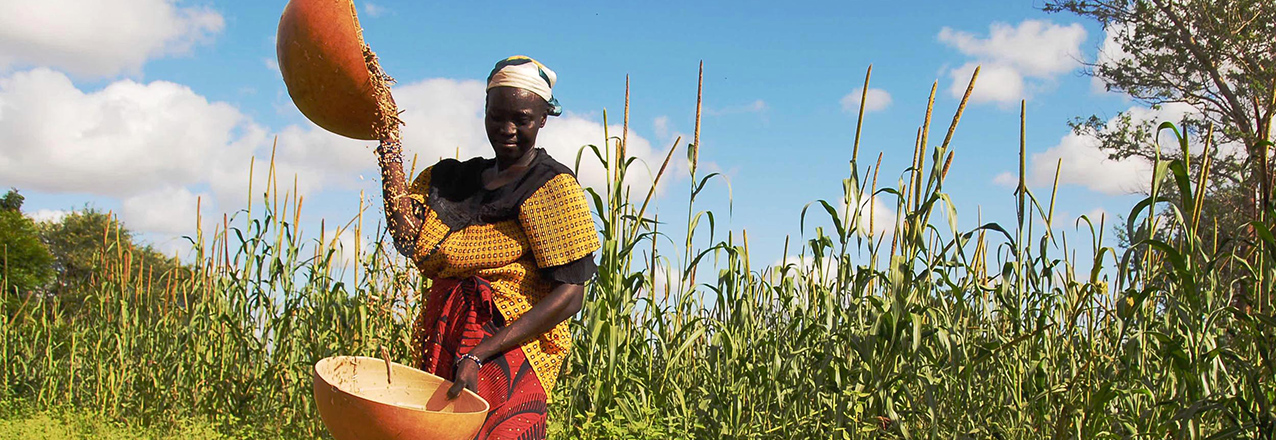
Earlier this year, the African Union made a groundbreaking pledge: by 2025, thirty percent of land in Africa will be allocated to women—and documented in their names.

Why does this matter?

Land is the most critical economic resource for most of the world’s rural poor. Throughout much of the developing world, women are at a severe disadvantage: they have less access, control, and ownership of this key asset. In sub-Saharan Africa, for example, women make up about half of the agricultural labor force, but hold only 15 percent of the agricultural land.

When women cannot control or access land, their economic opportunities are limited and they are vulnerable to poverty, hunger, gender-based violence, and displacement. Without land rights, women often lack the incentives to make long-term improvements to the land and have greater difficulty accessing credit. And the limited amount of land that women do control is often of lower quality than that controlled by men: it may be far from water sources, for example, or located on steep inclines.

Conversely, when women do have secure land rights, they tend to invest in improvements to their property, participate in land rental markets, and earn more income. In Tanzania, women with strong land rights were three times more likely to work off-farm and almost one-and-one-half times more likely to have individual savings. They also earned nearly four times as much income …

Read the full article on PLACE.

Land Matters Media Scan – 28 October 2016

Here are the recent land tenure and resource management media items:

USAID

  1. Taking Stock of the Voluntary Guidelines of Tenure: Lessons Learned and Best Practices (10/27/16)
    Source: LandLinks
  2. Toward a Carbon-Neutral Future: Why Land and Resource Rights Matter – written by Stephen Brooks (10/27/16)
    Source: Columbia University’s Earth Institute blog

Upcoming Events

  1. Climate Change and Sustainable Investment in Natural Resources: From Consensus to Action (11/2/16)
    Source: Columbia Center on Sustainable Investment

Global

  1. Three myths about rural women (10/14/16)
    Source: Thomson Reuters Foundation
  2. “Barefoot surveyors” flag needs in world’s slums, key to urban development – activist (10/20/16)
    Source: Thomson Reuters Foundation
  3. Women and land – how to get from intentions to change on the ground (10/25/16)
    Source: Thomson Reuters Foundation
  4. Could giving wild animals property rights help stop their decline? (10/27/16)
    Source: The Guardian

Africa

  1. Uganda: Why Uganda is a model for dealing with refugees (10/25/16)
    Source: The Economist
  2. Uganda: Jennifer Musisi Warns Investors Against Grabbing Schools’ Land (10/27/16)
    Source: AllAfrica / The Monitor
  3. Uganda: Government Blames District Land Boards for Illegal Land Titles (10/24/16)
    Source: AllAfrica / The Monitor
  4. Ethiopians adjust to life in Africa’s most ambitious social housing project (10/25/16)
    Source: Thomson Reuters Foundation
  5. Ethiopia vows to protect European companies after farms attacked (10/26/16)
    Source: The Guardian
  6. Kenya: ‘I haven’t been given my share’: young Kenyans’ long wait to inherit land (10/26/16)
    Source: Thomson Reuters Foundation
  7. Zimbabwe: How land reform is transforming a small town in southern Zimbabwe (10/24/16)
    Source: Zimbabweland blog
  8. Sudan: Tear gas fired as hundreds protest Sudan ‘land grab’ (10/26/16)
    Source: The Daily Star / AFP
  9. Malawi: From Drought to Green Revolution? Malawi’s—and Africa’s—Quest for Food Security (10/25/16)
    Source: World Politics Review

Americas

  1. Colombia: Despite ‘No’ Vote, Colombian Indigenous Groups Say They’ll Implement Peace Accord (10/17/16)
    Source: Latin America News Dispatch
  2. Brazil land grab threatens isolated tribes: activists (10/27/16)
    Source: Yahoo! / AFP

Asia

  1. Vietnam: Forest land tenure yet to yield full benefits: experts (10/27/16)
    Source: Viet Nam News
  2. India: ‘This forest is like an old friend’ – India’s tribal women fight for land ownership (10/21/16)
    Source: Thomson Reuters Foundation
  3. China needs to protect property rights for all sectors (10/23/16)
    Source: Global Times
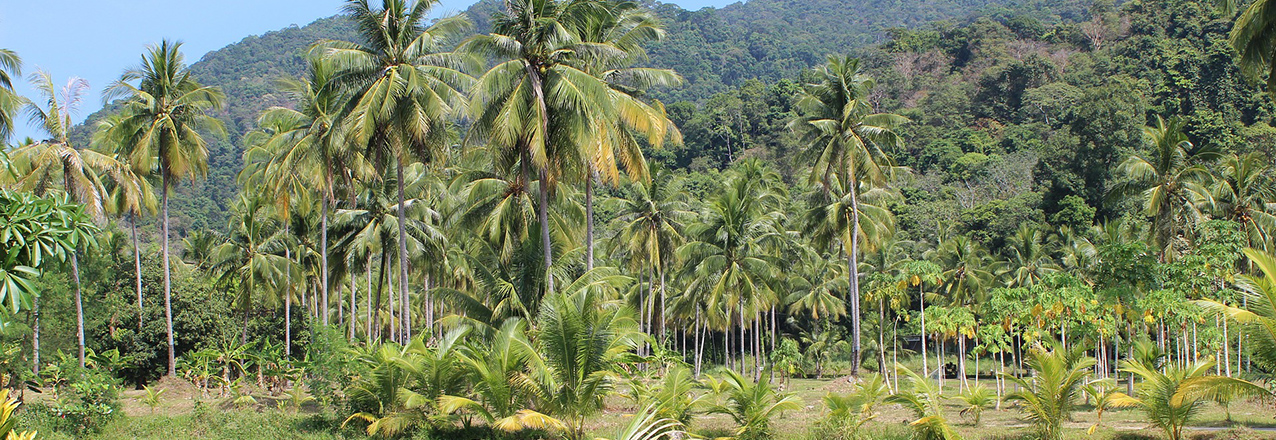
  4. Cambodia: Families Living Near Sihanoukville Waterfall to Get Land Titles (10/28/16)
    Source: The Cambodia Daily

Toward a Carbon-Neutral Future: Why Land and Resource Rights Matter

Originally appeared in Columbia University’s State of the Planet blog.

Next week, the Paris Climate Agreement will enter into force. It is hard to overstate the importance of this historic agreement and its potential impact on combating global warming and reducing emissions. Our efforts to address a rapidly changing climate will require progress on many fronts, from clean energy to land-use planning. Next week, the Columbia Center on Sustainable Investment’s International Investment Conference will highlight the implications of the Paris Agreement on one of those fronts: land and resource governance—an issue that is increasingly important to USAID’s work.

Climate change is a destabilizing force that touches all sectors of society, whether agriculture, forestry, infrastructure, energy, water or health. The inherently intertwined and complex nature of climate change impacts means that strong institutions, laws and policies are critical to ensuring that these impacts don’t impinge on the rights of local populations. Key among these institutions, laws and policies are those that deal with land and resource governance …

Read the full post on the State of the Planet blog.

Taking Stock of the Voluntary Guidelines of Tenure: Lessons Learned and Best Practices

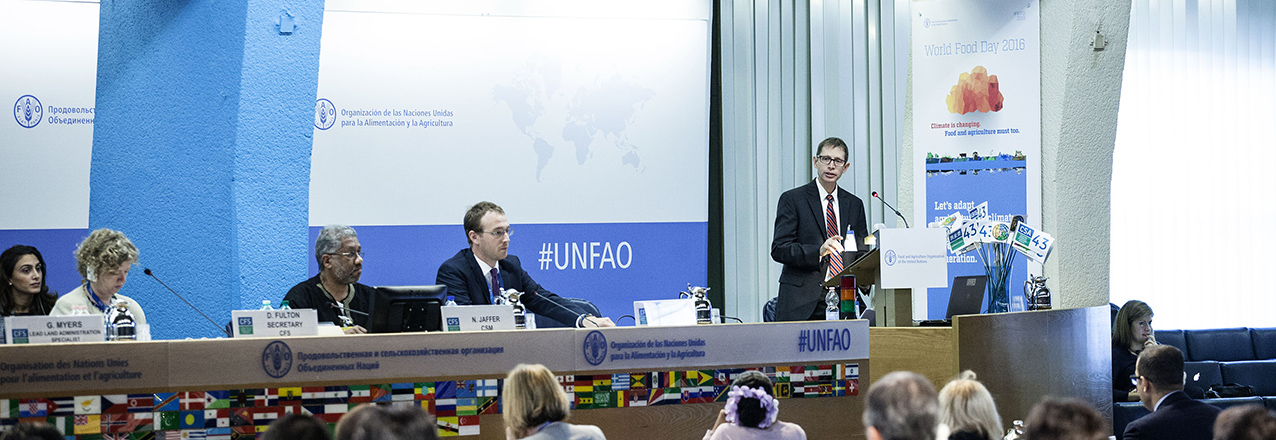
Improving tenure featured prominently at the 43rd session of the Committee on World Food Security (CFS), held during October 17-21 in Rome. Attention focused on identifying lessons learned and good practices following CFS’s endorsement in 2012 of the Voluntary Guidelines on the Responsible Governance of Tenure of Land, Fisheries and Forests in the Context of National Food Security.

A call from CFS to document successful experiences in using the Voluntary Guidelines resulted in a compilation of many examples provided by governments, civil society and private sector, and including the Food and Agriculture Organization of the United Nations (FAO), USAID and the Global Donor Working Group on Land. Themes common to many of these examples are:

  • ensuring political will and sustained commitment;
  • establishing inclusive multi-stakeholder platforms and linking them to processes to reform policies, laws and systems; and
  • empowering stakeholders and enabling them to develop the capacity to actively engage in tenure-related issues and defend their rights.

In addition, the compilation recognizes the need to monitor the Voluntary Guidelines to inform stakeholders of progress in improving tenure governance, in particular for vulnerable and marginalized people.

A plenary session on monitoring the Voluntary Guidelines on October 19 was opened by the Chair of CFS, H.E. Amira Gornass, and led with panelists from governments (represented by Juan Pablo Diaz Granados Pinedo, Colombia; Ali Mohamed Camara, Senegal; and Ir Wiratno, Indonesia), civil society (Naseegh Jaffer) and the private sector (John Young Simpson). The session, moderated by Gregory Myers, also provided an opportunity for a large number of speakers from the floor to describe additional experiences of using the Voluntary Guidelines to improve governance of tenure.

A number of side events at CFS expanded on various aspects of improving the governance of tenure and the Voluntary Guidelines. Topics included monitoring, gender, law, transparency, and the implementation of the AU Declaration on Land in Africa.

A common message throughout CFS 43 was linking improvements to tenure with the Sustainable Development Goals, with the Voluntary Guidelines being viewed as the key reference for doing so. The report of the plenary session highlighted that “the VGGT have been used and applied in many countries since they were endorsed by CFS in 2012” and that “legal and policy frameworks, which have been reformed in line with the VGGT, will have a large impact on a high proportion of the population once implemented.”

The plenary session called for the use and application of the Voluntary Guidelines to be “monitored on a regular basis” and for “standardization of the quantitative indicators used across countries to measure the results [that] would improve the quantitative analysis in the future.”

CFS 43 has provided an opportunity to look forward to 11 May 2017, the fifth anniversary of the endorsement of the Voluntary Guidelines and plans are being developed for a significant event to recognise this important anniversary.

In the meantime, FAO is further developing its VGGT implementation support programme. The first phase (2012-16) addressed raising awareness of the Voluntary Guidelines and how they can be used at the global, regional and national levels; the development of capacity of different stakeholders to improve tenure governance using the Voluntary Guidelines; the development of partnerships; targeted support to a number of countries that reported on their progress at CFS 43; and the monitoring of the use of the Voluntary Guidelines to improve tenure governance. The second phase, already under way, emphasizes even more strongly support at the country level with continuing positive cooperation and support of donors.

Land Matters Media Scan – 24 October 2016

Here are the latest land tenure and resource management media items:

Reports and Publications

  1. Afghanistan: Improving ways to settle water disputes key to economic growth, avoiding conflict – new UN report (10/23/16)
    Source: UN News Centre
  2. Related: Liberia: GVL Rejects Global Witness Claim (10/21/16)
    Source: AllAfrica / Daily Observer
  3. Related: Liberia: the growth of a new palm oil frontier (10/20/16)
    Source: The Guardian

Global

  1. Promoting Land Rights to Empower Rural Women and End Poverty (10/14/16)
    Source: World Bank
  2. Advancing women’s land and resource rights (10/14/16)
    Source: World Bank
  3. World’s slum dwellers, homeless must be protected with right to housing: UN expert (10/19/16)
    Source: Thomson Reuters Foundation
  4. How are Coca-Cola and PepsiCo stacking up on land rights? (10/20/16)
    Source: Oxfam
  5. Related: Reviewing Coca-Cola and PepsiCo’s land assessments in Brazil (10/20/16)
    Source: Oxfam
  6. Obstacles to forest tenure reform deeply rooted in the past (10/20/16)
    Source: CIFOR blog

Africa

  1. African Women Scale Heights in Land Rights Protest (10/14/16)
    Source: Human Rights Watch
  2. Uganda’s nomadic herders feed the country, but under pressure to settle down – activist (10/21/16)
    Source: Thomson Reuters Foundation
  3. Tanzania: Modern Map Equipment Expected to Reduce Land Conflicts (10/21/16)
    Source: AllAfrica / Tanzania Daily News
  4. Nigeria: Endless Fight Over Land (10/20/16)
    Source: AllAfrica / This Day
  5. Related: Women push Kaimenyi into action on their rights to land (10/18/16)
    Source: The Star

Americas

  1. Nicaragua Dispute Over Indigenous Land Erupts in Wave of Killings (10/16/16)
    Source: New York Times

Asia

  1. India: Dalit man kills himself in western India as protest over land rights widens (10/20/16)
    Source: Thomson Reuters Foundation

Land Matters Media Scan – 14 October 2016

Here are the latest land tenure and resource management media items:

USAID

  1. Legitimate Land Rights: You Asked We Answered (9/26/16)
    Source: USAID E3/Land
  2. Liberia: Media Key in Handling Land Governance – Brandy – mentions USAID’s LGSA project (10/6/16)
    Source: AllAfrica
  3. Tanzania: Despite conservation efforts, Tanzania’s forests still under pressure – references USAID’s work in Tanzania (10/7/16)
    Source: Mongabay
  4. Rwanda: Agriculture Land Information System to Help Attract Private Investment – mentions USAID’s Private Sector Driven Agricultural Growth (PSDAG) program (10/12/16)
    Source: AllAfrica

Events

  1. Upcoming: Africa the new palm frontier: can we avoid the mistakes of the past? – event (11/23/16)
    Source: The Guardian
  2. Recorded Webinar: Discover the Land Portal Land Book (10/12/16)
    Source: Land Portal / YouTube

Reports and Publications

  1. A cost-benefit analysis of securing indigenous land rights in the Amazon (10/11/16)
    Source: Mongabay
    Related WRI report: https://goo.gl/ZAfy86
  2. Ghana: Land grabbing may pose threat to achieving SDGs (10/11/16)
    Source: News Ghana
    Related Caritas Ghana report: https://goo.gl/CGQbRn
  3. ‘Land grabbing’ and international investment law: toward a global reconfiguration of property? (October 2016)
    Source: International Institute for Environment and Development

Global

  1. Why Women’s Empowerment Must Start With Land Rights (10/11/16)
    Source: Wilson Center / New Security Beat
  2. The 2016 Nobel Prize: Incentives, Property Rights, and Ownership (10/10/16)
    Source: Mises Institute
  3. Making Gender Equality Central to the New Urban Agenda (10/6/16)
    Source: Next City

Africa

  1. FACTBOX-Best and worst countries in Africa for women’s land rights (10/13/16)
    Source: Thomson Reuters Foundation
  2. Ethiopia blames foreigners for unrest, U.N. experts seek probe (10/10/16)
    Source: Reuters
  3. Kenya: Road that divides: Kenya slum braces for battle (10/10/16)
    Source: Thomson Reuters Foundation
  4. Kenya to ‘purge’ land ministry of corrupt cartels: official (10/12/16)
    Source: Thomson Reuters Foundation
  5. Liberia: Liberia: Concessions Violate Women’s Rights (10/12/16)
    Source: AllAfrica

Americas

  1. Argentina: Cultivating a Different Future for Rural Women in Argentina (10/13/16)
    Source: IPS
  2. Guatemala’s indigenous people are at risk of losing their land (10/10/16)
    Source: ThinkProgress
  3. Peru: What’s in a land title? (10/11/16)
    Source: Land Portal
  4. Peru: When Two Worlds Collide: A victory for Peruvian indigenous leaders, onscreen and off (10/13/16)
    Source: Ford Foundation
  5. Colombia: Ford Foundation returns to Colombia (10/10/16)
    Source: The City Paper

Asia

  1. Video: Piari’s Legacy: A Land Title (10/13/16)
    Source: Landesa / YouTube
  2. India: What’s a slum? India’s Dharavi defies label with thriving informal economy (10/11/16)
    Source: Thomson Reuters Foundation
  3. India: Several Projects Stuck As Village Communities Push Back Against Land Grabs (10/10/16)
    Source: Huffington Post

Middle East

  1. Afghan women to be given ‘fair share’ in property rights drive – land authority (10/11/16)
    Source: Thomson Reuters Foundation


Mobile Mapping Expands Across Africa

This post originally appeared on Medium.

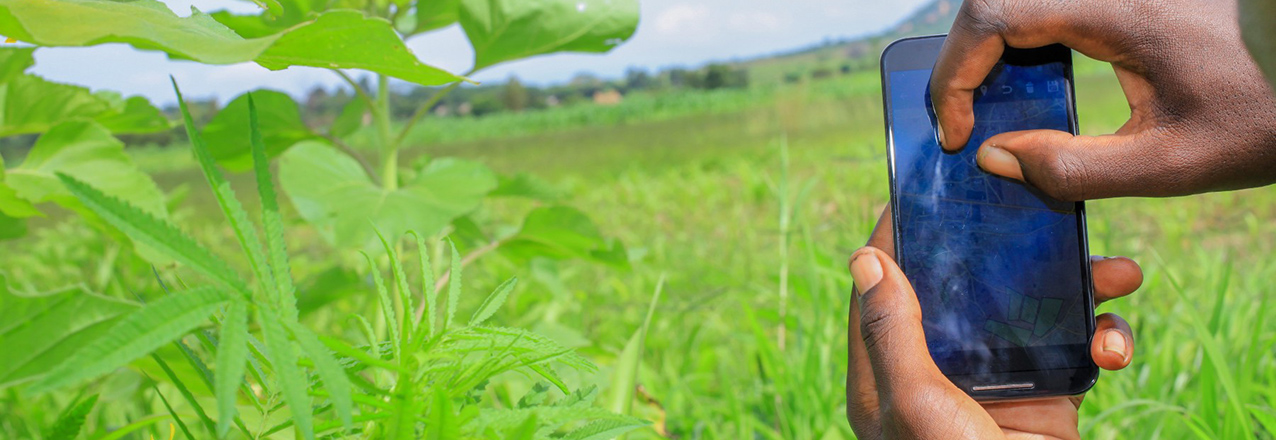
Around the world, millions of people lack documented land rights. In many countries, land surveyors are rare and demand exorbitant prices for their services, mapping and land registry systems don’t work properly, and land titles— something we in the United States take for granted — can take years to issue and cost hundreds if not thousands of dollars to obtain.

But what if you could map land cheaply, efficiently, and accurately, just using an Android app?

Read the full post on Medium.

Legitimate Land Rights: You Asked We Answered

The Legitimate Land Rights event on September 15 inspired a lot of online discussion and we were unable to answer all of the questions from the online audience during the event. Today, we are sharing our answers to some of the most interesting questions:

Question: It would be interesting to understand the international perspective on what constitute legitimate land rights; any thoughts?

Answer: As you might expect there is a rather wide spectrum of opinion about what constitutes a “legitimate” land right. International best practice holds that women have legitimate rights to land and resources as owners in their own right, through marriage or through inheritance, and that communities that hold recognized, traditional (or customary) rights to land and resources also have legitimate rights. Also at the international level, indigenous peoples are recognized to have important, and legitimate, rights to land and resources. However, there may be disagreement about which groups should be considered as “indigenous peoples.” There is less consensus on the status of slum dwellers and if they do, or do not, hold legitimate land rights.

Question: Legitimacy is an interesting term. Who determines legitimacy? Related to validity: what is valid information? This is a problem across scales and need to be incorporated into the idea of cross scale coherence.

Answer: What counts as a legitimate land right might be determined by national legislation, by international agreement, or by social norms and customs. As a result, the kinds of information that are required to determine legitimacy may include things like: traditional memory and oral evidence, formalized documentation found in cadastral offices (including certificates of occupancy/use and title deeds), or information collected by private efforts of civil society organizations. Crowd-sourced information about legitimate land holders may become an increasingly important font of material on the issue of legitimacy. While there is no global, standardized set of land rights information, if the Sustainable Development Goals include targets related to land standardized data will need to be collected to track progress towards goals of providing more secure rights to land to women and men (and legal entities).

Question: Are local legitimate land rights recognized when land was taken for state projects – abandoned – then offered to investors?

Answer: The answer to this question is context specific. Some investors will carry out appropriate due diligence and work to identify and recognize pre-existing legitimate land rights before an investment is made. In other cases, investors will not do this, or will not be guided by governments to do this, creating the potential for harm to local people and to the investor. The kinds of legacy issues this question points to are challenging and recent research on the topic provides helpful recommendations on how best to avoid harm. Please see here.

Question: For Kate Mathias of Illovo Sugar Ltd.: What can an investor possibly do in a situation where the government has leased land to the investor by saying it is unregistered and part of the public domain, but customary land users still claim it as “their” land in opposition to an official government decision?

Answer: It is a difficult situation as the community is effectively questioning the legitimacy of formal land rights as communicated by its government. Land use issues should be identified during the Environmental and Social Impact Assessment and if required it should be registered as a risk to the investment. The company should engage with the communities/stakeholders involved to try to establish if a mutually acceptable solution can be found perhaps by incorporating the customary land users into the supply chain or through meeting the needs of the community through other social support mechanisms. If however a mutual solution cannot be agreed then the company must make a decision around the risk to the investment and could potentially walk away from that land area and discuss alternatives with the government using the ESIA as proof of the risk.

Question: For David Grossman of International City/County Management Association: Will individuals accept property title “proxies” as legitimate land rights? How might engaging banks help?

Answer: Although tax declarations are not proof of ownership, many private individuals accept land title proxies for land transactions, such as sales and mortgages, as collateral for other transactions. For example, in the Philippines, government banks, Development Bank of the Philippines (DBP), and Land Bank accept them and some local governments recognize them absent the best proof of ownership. Land titles apart from tax declarations, tax receipts, and payments on property can also serve as proxies.


Online Discussion: Legitimate Land Rights

Join the discussion by answering the four questions below, sending a question or comment to the panel, or tweeting using #legitlandrights.

Question 1:
In a small rural community there are 35 households of settled farmers. These farmers and their families have been in the area for several generations. Twice a year, a pastoralist clan moves through the area, following a traditional migration route. The pastoralists have always worked with local chiefs and leaders to negotiate access to the local water source as well as access to harvested fields. Neither the farmers nor the pastoralists have any documentation of their rights over the land at issue. An investor arrives and would like to negotiate to lease some of the land that the farmers and pastoralists both use.

In this case, who has legitimate rights: the farmers only; the pastoralists and the farmers both; or no one, given that there is no documentation of rights?

Question 2:

A family of 5 people was forced, along with many others, to leave their home during a civil war. This family had acquired the rights to their home under a previous regime which favored the family’s ethnic group over another ethnic group. They have documentation to show that this transfer took place. During the conflict, the family members relocated to an internally displaced persons’ camp. While the family was living in the camp, another family moved into their home, living there for over five years, considering this home their own, this family made repairs to the house, planted a small farm, and sent their children to local schools. After a peace accord was concluded, the new government began a process to resolve land conflicts associated with the war.

In this case, who has legitimate rights: the displaced family; the family that took up residence during the war; or is it unclear in this case who would have legitimate rights given the convoluted history of the property?

Question 3:

A government, in an effort to conserve biodiversity, decides to create a new national park. This government endorsed the VGGT. The boundaries of the new park were identified using satellite imagery. When park officials arrive in a portion of the park to conduct an animal head count they encounter local indigenous people. These people explain that they have traditionally used the land to hunt, collect medicinal herbs, honey, and some firewood. The park officials tell these people that they believe the land is probably state/government land and therefore local indigenous people have no claim to the land or the resources on the land.

In this case, who has legitimate rights: the indigenous peoples; the government, because that the land was demarcated; or the government because the state’s biodiversity concerns outweigh the legitimate land rights of the indigenous people?

Question 4:

A developer has legally purchased land from a government where there is currently a city slum. The developer was informed by officials that the land was vacant at the time of purchase, but upon visiting the land finds that hundreds of people are currently living in the slum. The developer plans to invest in the land which will lead to greater economic growth within the city, However, these slum dwellers have already been pushed off of rural lands that were also used without their consent. Moreover, many occupants of the slums have been there for many years and have nowhere that they can go if the slums are destroyed.

In this case, who has legitimate rights: the developer because they purchased the land; the slum dwellers; or is it unclear, this case should be determined through the courts?