
Ask the Expert: An Interview with Heather Huntington, Cloudburst

LandLinks caught up with Dr. Heather Huntington, Land Tenure and Natural Resource Management Impact Evaluation Specialist with The Cloudburst Group to discuss a key research paper on tenure security that she has been developing under USAID’s Evaluation, Research and Communication (ERC) Project. The research compares datasets across seven impact evaluations in customary systems across Africa to provide a greater understanding of tenure and local governance perceptions.

Here is what Dr. Huntington had to say (this interview has been edited and condensed for clarity):

“One of the valuable things about this research is the detailed, targeted information on tenure security issues and local governance context. The research is based on a portfolio of impact evaluations that have been designed to capture similar household and village level data across multiple countries. The datasets are based on comprehensive survey instruments that were developed with the goal of promoting cross-site comparisons through comparable modules and questions. As such, the paper draws on several different indicators for tenure security and perception of challenges—and it does this across diverse contexts, analyzing the same set of challenges and replicating them across countries.

Across the datasets, we have a set of modules that specifically ask about local governance challenges, successes, and have numerous indicators to draw from. The paper provides information on people’s experience with land conflict and working with local systems to manage that conflict. The research also provides data on the proliferation of land documentation and what percentage of households have it as well as who feel that land documentation would improve their tenure security.

The findings have been surprising:

  • A high level of tenure security expressed by the constituents.
  • High level of satisfaction with local authorities.
  • The overwhelming majority of survey respondents don’t actually feel that their land and access to land is under threat. They feel that their local leaders are protecting the land to the best of their abilities given the local context.
  • We’re seeing a trend of very low land documentation but still high assessments of tenure security. One of the implications here is, do we need to rethink this emphasis on land documentation in customary contexts, especially development programming that pushes individualized documentation? Or, would it make sense to focus on higher level customary boundaries and strengthening local institutions to manage their own lands?
  • In Liberia, there’s a lot of large-scale lease activity occurring, but only 7 percent of our respondents said they were worried about losing their community land to investors. In contrast, in our study area in Zambia, we had over 25 percent of respondents reply that they were concerned about land reallocation for investment purposes. We would have expected to see those numbers flipped around, due to the expectation of a higher degree of investment pressure in Liberia. This is something that needs to be explored in both of these evaluations (Tenure and Global Climate Change and Community Land Protection Program) and highlights the importance of within country context.”

How might this research be used going forward?

“Having these datasets and the structured similarities between them opens up huge possibilities for research potential. Agricultural economists, researchers, and students can use this paper as the tip of the iceberg of what can be done with this data. With a large number of people focused on these issues and writing innovative papers and reports, it should really grow the knowledge base and expand the literature exponentially.

The goal of the paper is to provide an analysis of the similarities and differences that we see across USAID’s portfolio of seven land tenure impact evaluations, where we are using questions and modules that are the same or similar. It’s very innovative and exciting from a research perspective.

The paper provides a basic overview of each country and the land tenure context and then presents the topical areas across the data. However, the research is not meant to be an ethnographic, anthropological deep dive into each of the country contexts. This is more of a high-level analysis so researchers who are specialists can look at our reports and data and go forward with more nuanced analyses.

We have extremely comprehensive datasets and if we have an overview that allows people to get a high-level understanding of what the datasets can do, they can then do more focused analysis within a country or move from this paper and look at some issue in a more rigorous way. In that way, the tenure security paper can be seen as an introduction and briefer for what USAID’s portfolio does and the research potential.”

How do you see this paper fitting into the existing literature?

“A 2014 publication by Steve Lawry looked at reasons for why we don’t see a lot of impact from land titling on land investment in Africa as compared to Latin America and Asia. This paper provides justification for Lawry’s hypothesis of the “Africa-effect.” (The “Africa-effect” refers to the Lawry’s hypothesis that Africa’s customary setting may confer a high level of baseline tenure security and therefore lead to more mixed investment results from land titling programs. This is in comparison to the more positive economic and food security gains seen from land tenure formalization programs in Asia and Latin America.)

This kind of research hasn’t been possible before because there wasn’t the ability to compare these statistics across different datasets within customary contexts—this is largely because the datasets haven’t had the same questions or so many questions focused on tenure and local resource governance. But we’ve been able to include similar questions in our research designs across all seven impact evaluations and so develop data that can be compared across cultural contexts.

There are a lot assumptions in current literature about customary tenure as insecure and local governance being problematic, and numerous development programs are designed based on these premises. This research will provide a lot more information about the customary context and local governance for each of these countries and show where academics, researchers, and practitioners may need to rethink assumptions that they’re basing programming design upon.”

The full tenure security paper will be published later in 2017.
Interactive MOOC Session with Zambian Chieftainess Mkanda

This interactive  session was open to current participants in USAID’s Land Tenure and Property Rights Massive Open Online Course (MOOC) 2.0. Registration is still open, so sign up today to participate in the next discussion!

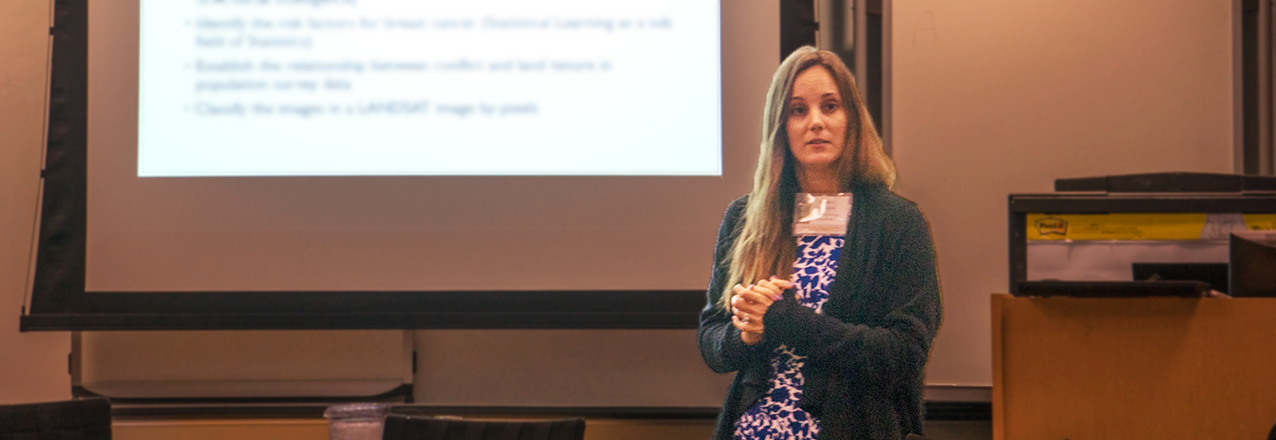
This session was streamed live from the World Bank Land & Poverty Conference with Her Royal Highness, Zambian Chieftainess Mkanda, who shared her thoughts and responded to questions on customary land tenure, land certification, gender, and geospatial technology. Tetra Tech’s Dr. Matthew Sommerville and Ms. Karol Boudreaux, one of the MOOC’s instructors, joined the discussion as well.


Your Land, My Land, Our Territory

Youth in Colombia use their voice to raise awareness about land restitution and land rights.

In 2016, Samir Balanta crossed a border in his own country. The 20-year-old community rapper and his crew performed in the town of Buenos Aires. Although the town is not far from his home in Lomitas, it has been off limits for most residents due to the lingering conflict. For decades, these two Northern Cauca towns—divided by a mountain—represented the invisible border where leftist guerrillas and paramilitary groups held their opposing fronts. Balanta and thousands of families were trapped on either side.

A neighborhood group in Buenos Aires had heard about Balanta after his song and the songs of other Cauca youths were featured on an album called “Your Land, My Land, Our Territory.” The rap album is the result of a joint effort between the USAID-funded Land & Rural Development Program and Colombian youth-empowerment NGO Familia Ayara Foundation. The songs are aimed at raising awareness about the ongoing land restitution process, which is benefitting hundreds of thousands of people across Colombia.

“It’s easier for some of us to express what we feel through music. The songs that we write talk about violence and peace, our freedoms, rights, and our land,” says Balanta. “And the people who listen learn more.

Familia Ayara led a series of rap workshops for 75 youth from five conflict-ridden municipalities in Cauca to inspire them to open up and learn about land rights and the land restitution process. After talking about their experiences and the violence they witnessed in their communities, participants were encouraged to write rap songs about displacement and violence, and their hopes for peace and reconciliation in their communities. Familia Ayara then provided beats and recorded participants’ songs and music videos.

“People living in violence and oppression aren’t used to expressing their opinions, but rapping and music allows them to do that, not in the name of politics but in the name of art,” explains Jeyffer Renteria, director of the Familia Ayara Foundation.

In total, these budding musicians created five music videos and sixteen songs on topics such as territory, identity, and land rights violations, with a special emphasis on restitution and territorial rights.

“I never rapped before and had no idea about how to do it. I’ve realize that we Afro-Colombians have our own culture, and our communities need to know that there is a way to recover the lands that were stolen from us during the violence,” says Balanta.


Request for Information/Sources Sought: Communications, Evidence and Learning Project

The U.S Agency for International Development (USAID), Bureau for Economic Growth, Education, and Environment (E3), Office of Land and Urban (LU) is issuing a Request for Information (RFI) which is intended to:

  • Obtain details concerning partner community interest in the E3/LU’s anticipated requirement described herein;
  • Obtain information on the level of capacity of potential contractors relative to the tasks and objectives described in the draft Statement of Work (SOW) titled “E3/Land and Urban Communications, Evidence and Learning (CEL)” project;
  • Solicit and obtain input, advice, knowledge, and best practices from organizations interested in participating in USAID’s evaluations, research, communications, knowledge management, training, and technical assistance within the land tenure, resource governance, and sustainable urbanization sectors.

The purpose of the Communications, Evidence and Learning project is to create, expand, and disseminate the results of evidence-based knowledge around: 1) land tenure, property rights, and resource governance, and 2) urban development, urban-based programming and sustainable urbanization. Project activities and results will guide USAID and U.S. Government program design and implementation, inform policy discussions, and improve decision making to maximize the effectiveness of limited development resources to accomplish key U.S. Government development objectives such as: mitigating conflict, fostering economic growth, promoting resilience, improving women’s economic empowerment, enhancing food security and nutrition, supporting climate change adaptation and mitigation efforts, improving urban service delivery, strengthening local and urban governance, and improving urban health.

USAID welcomes all segments of the public (in the U.S. and abroad) to respond to the RFI. Small businesses are highly encouraged to respond. Responses are due by April 7, 2017.

View the RFI here and instructions for responses here: USAID_Land_Tenure_RFI_SOL-OAA-17-000062

Ask the Expert: An Interview with Caleb Stevens, USAID

LandLinks caught up with Caleb Stevens at the USAID office in Washington, DC to talk about the Community Land Protection Program (CLPP) in Liberia and the more than 3-year long rigorous performance evaluation USAID is conducting of the program. The stages of the CLPP program include:

  • Stage 1: Laying the groundwork through legal education on rights and responsibilities of the community with respect to their land and resources;
  • Stage 2: Strengthening community governance by facilitating the development of land use plans and community by-laws with participation and input from all community members; and
  • Harmonizing boundaries and demarcating lands.

At USAID, Caleb is a Land and Resource Governance Advisor. He leads the E3/Land & Urban Office’s monitoring and evaluation portfolio, which includes six ongoing impact evaluations and the CLPP performance evaluation. He worked on community forestry and climate change mitigation, private sector engagement, and other property rights issues with the World Resources Institute (WRI) before joining USAID. He also served as Legal Advisor to the Liberian Land Commission, where he facilitated the development of Liberia’s national land policy.

Here is what Caleb had to say (this interview has been edited and condensed for clarity):

It’s a privilege to be part of the evaluation of CLPP I got into land tenure in Liberia seven years ago and on my first day the data knowledge gaps were just so extreme. We were trying to do national-level policy reform with basically a single report on forest tenure. The commitment since on the part of the government and even funders to an evidence-driven approach to try and add to that has been pretty impressive.

When I was in Liberia, I was responsible for shepherding the land policy, which was expressly designed to be evidence-based and the country’s land authority (which then was the Liberia Land Commission) has been very supportive. They recognized that if they’re going to scale the policy, as implemented through the pending Land Rights bill, we’re going to need a little more evidence on what the impacts are. The idea is not only will [the CLPP evaluation] answer larger knowledge gaps in the literature on formal recognition of customary tenure, but that it will provide very actionable evidence that will inform how the land policy and land rights act are rolled out across the country and what the Liberian government can reasonably expect by strengthening community land governance.”

The main CLPP intervention seeks to first, educate and raise awareness of what rights are under Liberian law/policy; second, identify, as a community through participatory land use planning where the community’s resources are; third, what are the customary system’s rules around these resources (these customary rules are really undocumented, they’re oral); and fourth, what are the boundaries of the community.

Like so many Sub-Saharan African countries, it was thought early on in the reform process that it was a dual tenure system in Liberia; private on coast and public in the interior. What we’ve found is the situation is much more complex and rich and a lot of Liberians have taken the initiative on themselves to document their land using tribal certificates.

The legal process for getting a deed in Liberia is very time consuming and expensive. Since at least 1956, all public land allocations must go through the president. Only the president can officially sign off on the right to obtain private ownership of public lands. Tribal certificates are evidence that a local traditional leader has signed off on the granting of the public land and these certificates have become the de facto ‘private deed’ for some individuals and some customary communities have used it in order to strengthen tenure at the household level. Even the president herself was shocked to learn that tribal certificates are not deeds because she has tribal certificates in her family.

So it is important to think carefully how to deal with these tribal certificates as part of the reform process.  The evaluation is asking questions about household possession of these tribal certificates and so will provide additional evidence on the extent of their use.

There are lots of experts committed to espousing community land protection as a good practice. Historically in sub-Saharan Africa, it’s always been presented as a fairly stark choice between land being held and owned and controlled by governments or pushing towards a more modern individualized system. Starting in 1998/1999, policies recognizing customary lands started to roll out. The African Union has embraced the idea that customary land should be respected and protected. Lots of funding, expertise, and international efforts are all geared toward protecting community lands.”

Are there specific tenure challenges that Liberia is facing in the customary sphere?

“Every challenge you can think of is probably present [in Liberia]. Palm oil is a particular challenge because the land impacted is so large. There’s also mining and commercial logging, and the manipulation of forest laws and customary governance institutions in order to acquire the land—all the more reason why we need a performance evaluation to see how can we improve community governance and the collective decision-making processes.”

The argument is we need to empower communities to engage with investors—that’s the win-win—but how do we build capacity and how do we know what was achieved? The performance evaluation will only get at that indirectly. It would be more about if we see improved accountability on the part of traditional leaders, for instance, vis a vis community members, or if we see reduced conflicts and can reasonably conclude that the community is much better off now because of that intervention; much more capable of negotiating successfully with investors.

The performance evaluation of CLPP is for those that want to see communities vested with land and those that challenge this approach—all the more reason to have data out there that really shows the benefits in a rigorous way. A common stereotype in sub-Saharan Africa is that customary tenure is unproductive, it’s not. It’s important to make sure that you challenge those stereotypes through rigorous evidence as much as possible because that discussion is happening right now in Liberia as we speak.

Our theory is that the importance of providing formal recognition of customary tenure is so that you can have these win-win scenarios where you have these improved livelihoods and productivity and you can get that without taking the land away or individualizing. But that’s just to say our evaluation supports that theory and does so indirectly. It could show reduced conflict, greater accountability, even greater perceptions of tenure security— all of which are key pieces to getting those longer term impacts on improved livelihoods and productivity.”

Are you finding a lot of partner opportunities with leaders in these customary communities that want to help out with the evaluation process or want more information?

“Criticism of these evaluations is [that] they are extractive. And that was one of the points raised by the Liberian land authority, so we’ve already started talking about how can we get this data back to the communities. We want to go to the communities which have been included in our treatment or control groups and think very carefully about what it is that they would like to know and what would help them, and make sure that it’s done in a way that is digestible and not “jargony.” So hopefully that will happen soon and that could really engender lots of good will not just among the communities, but all the partners in Liberia. It might also be the first time an evaluation has actually brought data back to the community respondents.

One of the challenges for researchers in trying to have an evidence-based, national or even sub-national policy approach is the extraordinary diversity that you’re dealing with. No two communities are alike. We’re collecting data in Lofa, River Gee, and Maryland counties in Liberia. If I were to list the key parts of Liberia that have seen the most active investments and most active land acquisitions, they would not be one of them. So there are limits to how much we can extrapolate our findings to other parts of Liberia.”

Any specific feelings of how you think the findings of this work are going to help shape other USAID activities and programming?

“I’m hoping that it can really be used internally—even outside Liberia—to bring home the relevance of customary tenure; it’s just such a dominant tenure type in sub-Saharan Africa and really in Asia and Latin America as well. It just can’t be ignored, and if our findings are positive, you can successfully work with communities to improve their governance if you want to satisfy or achieve certain development objectives. If we can show that, then that’s key evidence that we can bring into our discussions at USAID and when we help missions design projects.”

Read the evaluation design and baseline report, access survey instruments and learn more about the CLPP evaluation here.

USAID, Hershey’s and ECOM Help Cocoa Farmers Increase Production, Strengthen Land Rights, and Protect Forests

Everybody loves chocolate.

The beans that form the basis of chocolate are sourced from tropical cocoa trees, which are grown commercially in only a few developing countries. West Africa alone is responsible for over two-thirds of global production. In these countries, chocolate supports local livelihoods and incomes. But there is a bitter side to the chocolate industry: from the mid-1980s to 2004, global production of cocoa doubled primarily through expansion into naturally forested areas. This is the case in Ghana, the world’s second largest producer of cocoa, where cocoa farms have been driving deforestation and forest degradation, and a significant contributor to the country’s greenhouse gas emissions.

Cocoa is not the only commodity that contributes to tropical forest loss. Since 2014, over 400 businesses have made pledges associated with the New York Declaration on Forests to reduce the impacts of agricultural commodity supply chains on forests and forest communities, whether cocoa, palm oil, soy, or others. The Tropical Forest Alliance 2020 (TFA 2020)—a global public-private partnership between governments, the private sector and civil society—is working with many agribusinesses to support them in their goals to achieve deforestation-free supply chains.

One of the important challenges in making supply chains deforestation-free, and thus more sustainable, is land rights. Farmers who do not have secure land and tree rights have few incentives to invest in sustainable agriculture. Recognizing this, TFA 2020 is addressing constraints related to land rights, agricultural land use, and landscape-level planning and management in places like Ghana.

The Government of Ghana has pledged to reduce forest loss and cut greenhouse gas emissions by 45 percent in the cocoa forest landscape by 2030. To help make this a reality, Ghana is participating in the Forest Carbon Partnership Facility and proposing an ambitious Cocoa Forest REDD+ (Reducing Emissions from Deforestation and Forest Degradation) Program to reduce deforestation and forest degradation while increasing cocoa yields. Cocoa companies and international non-governmental organizations are partnering with the Government of Ghana and farmers to implement these programs.

New research from USAID shows that one of the key challenges to rehabilitation of aging farms is insecure land and tree rights of farmers. Cocoa production is dominated by smallholder farms, many of which have old cocoa trees with low yields—Ghana’s yields are half that of neighboring Cote d’Ivoire and one third of the yields seen in Southeast Asia. The obvious solution is to replant old farms with new trees to increase yields and farmer income, while reducing the need to clear more forest for new farms. In practice, however, a mix of barriers create a system of disincentives to this simple solution. Insecure customary land rights prevents many farmers from cutting and replanting old farms due to fear of eviction once the farm is cleared. Unclear tenure of shade trees results in removal of these trees, which reduces carbon stocks, biodiversity and the productive life of cocoa trees (though yields are boosted in the short term). The insecurity over land and tree rights is compounded by a lack of access to financing to clear and replant old farms, as well as lack of knowledge on best practices for replanting.

These problems are not insurmountable. For example, customary land rights arrangements can be mapped and documented with local authorities to clarify and strengthen rights, encouraging farmers to replant. Microfinance packages can be better targeted, based on the knowledge of where and how much non-forested land smallholders have access to. Cocoa agroforestry best practices already exist in Ghana but can be integrated into broader extension services. Many possible solutions exist but finding the right mix of policies, incentives, and support services can be challenging. Approaches should be studied in practice and the experiences widely shared.

The U.S. government, a founding member of TFA 2020, is partnering with the U.S. business Hershey’s, and local agricultural supplier ECOM, which supplies Hershey’s with Ghanaian cocoa, to test methods and generate empirical insights into strengthening land and tree rights within the Ghanaian cocoa supply chain to boost yields and improve sustainability. USAID’s partnership with Hershey’s and ECOM is implementing a small pilot in 2017 that will test a public-private approach to strengthen land and tree rights and help farmers replant their cocoa farms along with shade trees. The clearer rights and stronger incentives will help farmers grow and sell more cocoa, increase chocolate production, and, in the long run, reduce deforestation and degradation as well as increase forest carbon stocks. The pilot is also expected to provide supportive learning and practical experience for the Government of Ghana’s Cocoa Forest REDD+ Program that can also be broadly shared in the broader West African cocoa sector.

The lessons and experiences from this public-private partnership are likely to be relevant to other supply chains and perennial tree crops around the world, and USAID will share experiences among partners, including the World Cocoa Foundation and TFA 2020 members, globally over the coming years.

Strength in Numbers

A visionary information-sharing platform promises to reshape the Colombian government’s approach to land restitution.

Originally appeared on Exposure.

The tide is turning. Ten government agencies responsible for Colombia’s land-related issues are meeting regularly, bringing their engineers, their lawyers, and their administrators to do something that Colombia has never done: allow the real-time exchange of information among a group of institutions working on a common issue.

This ambitious endeavor, dubbed the Land Node, is the government’s official response to Colombia’s Victims Law, which requires that certain land-related agencies share information in real time to facilitate the land restitution process for victims of the armed conflict.

“I can’t imagine a future where people have to wait in lines to have their rights recognized, when we have the technology to avoid that,” says Luis Alberto Clavijo, director of technology at the Land Restitution Unit (LRU). “In the commercial and financial worlds, people often don’t even have to leave their houses. Why can’t it be the same for land services? Either we change the way things are being done, or the state isn’t doing its job.

The “end users” Clavijo is referring to are the thousands of victims of dispossession or displacement who need to fill out their applications in paper at a local land restitution office to initiate the process for getting their land back. This is one of the things the Land Node seeks to change.

But the real headaches are the silent and agonizing ones on the “provider” side: the onerous delays involved in the requesting, mailing, authorizing, and exchanging of information between agencies. This is where the Land Node seeks to be a pioneer.


Stand and Deliver

How Nasa leaders in Jambalo’s local govt are improving delivery on rural development initiatives.

Originally appeared in Exposure.

Every day, as Mayor Flor Ilva Trochez walks to her office, she passes the portrait of one of the most important heroes of the Nasa indigenous community in the municipality of Jambaló. Marden Betancur Conda was halfway through his four-year mandate when he was gunned down in 1996 by a leftist guerrilla group. The community’s first indigenous mayor had been pushing forth Jambaló’s Municipal Development Plan, which set out to strengthen indigenous land rights and give the community a larger say in local government.

Jambaló is unlike other Colombian municipalities: its population is nearly 100 percent indigenous, and for the past 25 years, political leadership has been intertwined with Nasa tribal leadership.

“Our most important weapon is community mobilization. After our mayor was assassinated, we never stopped carrying out development plans,” explains Trochez, Colombia’s first indigenous woman to become mayor.

Today, Trochez—who stepped into her role in January 2016—is building on nearly 30 years of Nasa collective memory to bring better infrastructure, agricultural projects, and culture and identity to the more than 17,000 people living in Jambaló. As she sees it, thanks to the ongoing peace process, Jambaló finally has the opportunity to improve the lives of its residents without fear of reprisal from the guerrilla and paramilitary groups that once patrolled the region’s hinterlands.

“After our mayor was assassinated, there was a 15-year period in which Jambaló was stagnant. We received no visitors. We were disconnected,” explains Trochez. “The conflict got deeper and deeper into our society. Children were recruited, and people were disappearing.

Today, the community’s overall objectives remain unchanged: unite Nasa tribal lands and ensure the people living on them are at the forefront of shaping the community’s future. To do this, community mobilization is critical. And nothing better reflects the community’s priorities than the Municipal Development Plan. Every four years, the mayor and her staff work with the community to revise the plan, which always reflects a broader 20-year indigenous “Life Plan” that spells out the community’s values and overall development vision.

The problem is that without technical expertise in development planning, the municipal government has seen its work double in size every four years as unfinished tasks accumulate from previous administrations.

In 2016, the USAID-funded Land and Rural Development Program began partnering with Trochez and her administration to restructure the Municipal Development Plan and carve out realistic goals based on the administration’s capacity.

“Today, we have set annual goals for each of the next four years. By creating a realistic development plan, we also win credibility with our community and no longer suffer the anxiety of not being able to complete our plans,” according to Trochez.


Land Rights Mark a New Frontier for Tanzania’s Rural Women

Originally appeared on USAID’s website.

In many ways, Kinywang’anga is a typical Tanzanian village. Located in the central region of the country, it is home to quiet countryside and to hospitable locals, most of whom earn their living from the land. This small community, however, has big changes on the horizon.

Whereas most rural Tanzanians lack documented rights to their land, residents of Kinywang’anga are, for the first time, claiming such rights to their land—and local women like Anita Mfilinge are benefitting as a result.

Like most women in her village, Mfilinge was once unaware of her rights as a landholder. Her ability to hold land, she suspected, was merely a privilege. And surely, she told herself, this privilege must depend on the will of her husband and male relatives.

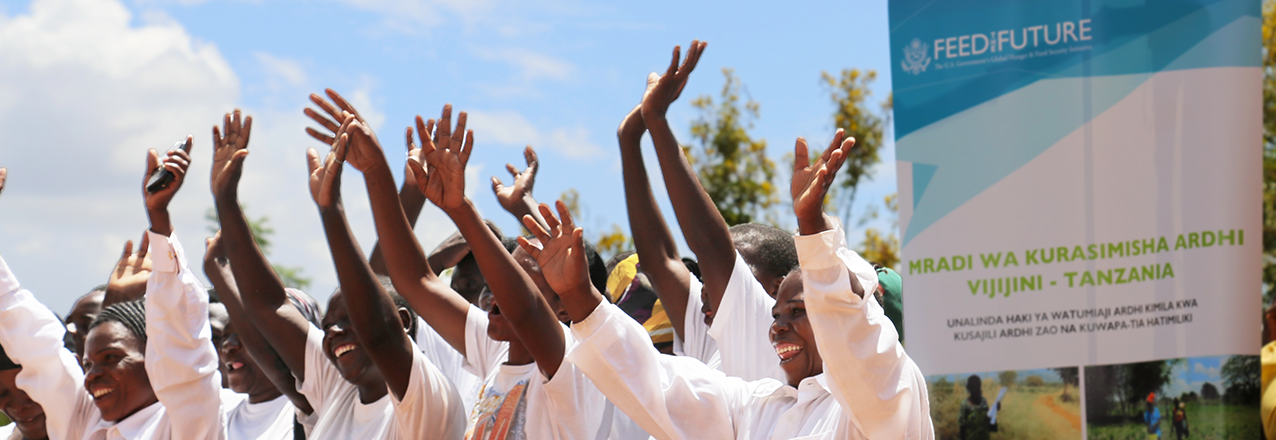
Mfilinge learned the extent of her rights when the Feed the Future Tanzania Land Tenure Assistance activity visited her community in September 2016. With the goal of registering claims on over 800 plots, the project got to work teaching men and women alike how to claim their land formally. Inspired, Mfilinge and her husband discussed their options, ultimately choosing joint tenancy. This gives her an equal stake in the couple’s properties. It also would secure her claim to them if her husband were to pass away.

Feed the Future is the U.S. Government’s global hunger and food security initiative. The project, which is implemented by USAID, is designed to reduce risks related to land tenure and pave the way for future agricultural investment in Tanzania’s rural heartland.

“This opportunity is a blessing for me. I now understand my right to access, own, use and transfer land,” Mfilinge said. “This gives me a reason to focus more on agricultural activities because I am a certified owner.”

These advances increase gender equality and economic growth alike. For women like Mfilinge, ownership spells greater security and independence; for communities, reduced conflict and better use of resources; and on a national scale, greater investment and agricultural productivity.

As the first community to participate in USAID’s land registration efforts in Tanzania, Kinywang’anga residents are also among the first to reap the rewards of this process. To date, over 350 villagers have registered land claims; more than half are women. What’s more, 68 percent of these women chose single occupancy, making them independent landholders.

“I now understand women’s land rights are fundamental human rights,” said Mfilinge. “Everyone has the right to own land alone or in association with others.”

The Feed the Future Tanzania Land Tenure Assistance activity, which runs from 2015 to 2019, aims to benefit over 14,000 villagers in 41 villages, registering an estimated 50,000 plots.