TGCC Zambia: Strengthening Land Rights for Sustainable Farming: Customary Land Documentation and Agroforestry in Zambia

Land is the most important asset that small-scale farmers have but without recognized and secure property rights, individuals’ farm investments may be at risk. In Zambia, USAID supported local farming communities by helping them secure land rights through low-cost, locally available tools and processes, and teaching techniques, like agroforestry, that are designed to improve their land’s productivity now and in the future.

Learn more about USAID’s Tenure and Global Climate Change project in Zambia.

TGCC Zambia: Uniting Tradition and Tenure Documenting Custom Land Rights in Zambia

Through its Tenure and Global Climate Change program, USAID worked with government, local civil society partners, chiefs and chieftainesses in Zambia to document land and support secure tenure for local communities. Together with these stakeholders, processes were developed and implemented which helped to unite customary land management with new mechanisms and documentation techniques.

Learn more about USAID’s Tenure and Global Climate Change project in Zambia.

TGCC Zambia: Stronger Together: Partnerships to Strengthen Land Rights in Zambia

Through partnerships with civil society, government, private sector and communities, USAID helped bring global best practices and low-cost mobile tools to document and administer land rights in support of Zambia’s economic development. Civil society partnerships led to immediate impacts toward securing land tenure, protecting wildlife and providing new technologies for communities and customary leaders on the ground.

Learn more about USAID’s Tenure and Global Climate Change project in Zambia.

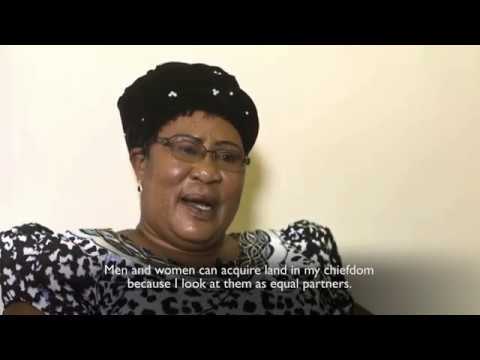
TGCC Zambia: In My Own Name: Empowering Women Through Secure Land Rights

Though the majority of its tribes follow matrilineal inheritance patterns, women’s land rights in rural areas are far from secure. In Zambia’s Eastern Province, USAID worked with traditional leaders and through local partners to strengthen the land rights of thousands of households, and placed women at the center of the process.

Learn more about USAID’s Tenure and Global Climate Change project in Zambia.

Understanding and Resolving Land Conflicts is the First Step

Q&A with Juliana Cortés, Director of Rural Land Tenure & Land Use Planning, National Land Agency

THE NATIONAL LAND AGENCY CURRENTLY HAS 23 LAND FORMALIZATION PILOT PROJECTS IN DEVELOPMENT. WITH THE FUNDING AND SUPPORT OF USAID, THE PILOT PROJECT IN THE MUNICIPALITY OF OVEJAS IN THE DEPARTMENT OF SUCRE IS THE MOST ADVANCED AND REPRESENTS AN OPPORTUNITY TO REACH THE GOALS OF THE PEACE ACCORDS, WHERE LAND USE PLANNING IS A TOP PRIORITY. JULIANA CORTES LEADS THE DIRECTORATE FOR RURAL LAND TENURE AND USE PLANNING AT THE NATIONAL LAND AGENCY (NLA) AND IN THIS INTERVIEW SPEAKS ON THE IMPORTANCE OF THE PILOT AND NEW STRATEGIES FOR SUSTAINABLY FORMALIZING PROPERTY IN COLOMBIA.

Q: How would you explain this massive land formalization pilot project in Ovejas to someone who is unfamiliar with land and property issues?

A: Previously, land formalization was done in a completely isolated and independent manner, and now this pilot project is changing how things are done in the rural sector. We selected the Municipality of Ovejas, in Sucre, and are focusing on resolving all the conflicts and situations regarding land in that area. To do this, we visit each plot of land to uncover these situations in order to find solutions. This is an innovative pilot performed on a massive scale and requires coordination among various agencies that know the area, such as the Agustin Codazzi Geographic Institute (IGAC), the Superintendence of Notary and Registry, and the community – especially community leaders. We received the support of USAID to establish the methodology we are using and to fund the pilot project.

Q: How important is land formalization to this administration?

A: This government is very committed to organizing property and formalizing land. We have a significant amount of national resources that have allowed us to cover more area than ever before in the history of Colombia. These resources have also allowed us to implement this massive land formalization methodology in many other municipalities. There is always a need for more resources, but we expect to achieve solid and well-structured results. And we hope that these types of programs continue in the next administration.

Q: How does the Ovejas Pilot Project fit in with the framework of the Peace Accords?

A: Rural reform is the backbone of the Havana Peace Accords, which has very ambitious goals for land formalization. The Ovejas Pilot Project represents a new way of operating. It uses the big picture approach, a massive sweep methodology, allowing us firsthand knowledge of the number of plots of land and the types of conflicts in the territory. This methodology also involves community participation, which is also a part of the Peace Accords.


Webinar: Private Sector Perspectives on Responsible Land-Based Investment, Part II

This webinar is over, but you can still watch the recording above. USAID LandLinks, Marketlinks and Agrilinks hosted the second webinar in a three-part series examining the constraints and opportunities surrounding property rights and responsible land-based investment (the first webinar took place in October with The Hershey Company and ECOM Agroindustrial Corporation).

This webinar discussed lessons learned from pilot activities in Mozambique where USAID’s Public Private Partnership for Responsible Land-Based Investment Pilot is working with Illovo Sugar, Ltd., Indufor, N.A., and Terra Firma to meet corporate commitments on land governance by improving land tenure security around their Maragra plantation. The pilot focused on sensitization, participatory mapping, verification of plot boundaries, certification, and application for government-issued rights of occupancy and use, as well as the development of a grievance mechanism for Illovo.

Can You Picture a Water Secure World?

USAID’s Global Waters team invites readers, implementers, mission personnel and other water professionals to help illustrate the next phase of USAID’s commitment to addressing the world’s water challenges as outlined in the newly released U.S. Government Global Water Strategy through photos. USAID is contributing to the Strategy through its Water and Development Plan by providing 15 million people with sustainable access to safe drinking water services and 8 million people with sustainable sanitation.

The #WaterSecureWorld photo contest will help highlight the many different people, places and activities that are part of USAID’s ongoing efforts to improve access to water supply, sanitation and hygiene (WASH).

The winning photos will be announced and displayed with full credits in USAID’s Global Waters magazine and promoted on Globalwaters.org and USAID.gov. Quality submissions may also be featured on the @USAIDWater Twitter feed and other water-related publications such as Water Currents, which collectively reach thousands of subscribers. Winners will also be featured on USAID’s Global Waters Flickr page.

All photographs must be submitted no later than 12 a.m. EST (New York time), March 9, 2018. For full contest details and guidelines visit USAID #WaterSecureWorld Photo Contest or download the pdf version.

We look forward to your submissions!

Ask the Expert: An Interview with Tao Van Dang, Tenure and Global Climate Change – Vietnam

Tao Van Dang has served as the activity manager for the Participatory Coastal Spatial Planning and Mangrove Governance project in Vietnam since 2015. With more than 20 years of project management experience, particularly in non-governmental organizations, Dang has overseen mangrove re-forestation and disaster preparedness projects throughout Vietnam.

Tell us about the USAID pilot project, “Our Coast – Our Future.”

I led a team to implement the “Our Coast – Our Future” activity under USAID’s Tenure and Global Climate Change program, which piloted a Participatory Coastal Spatial Planning process (PCSP), including a low-cost participatory spatial mapping for mangrove governance in three coastal communes of the Tien Lang district in Hai Phong municipality in Vietnam from October 2016 to December 2017.

Starting with stakeholder engagement, we introduced the project’s participatory mapping process to a range of stakeholders from local government, political and social organizations and coastal resource use groups. This first step in the process was to share the pilot’s objectives, processes, the current state of mangroves in the area and the planned benefits. From this step, more than 150 people were selected to continue the work on a Participatory Coastal Resource Assessment (PCRA) within the three coastal communes of Vinh Quang, Dong Hung and Tien Hung. The Participatory Coastal Resource Assessments were used to develop coastal profiles on current uses, management of coastal resources and tenure. Next, results of the Participatory Coastal Resource Assessments were combined with the instruction and creation of spatial maps to provide a clear picture of coastal resources uses and governance on the ground.

Through the Participatory Coastal Resource Assessments and mapping activities, we worked with commune members on identifying development goals and determine future coastal resource use, including how strategically placed mangrove plantations can help protect livelihoods and coastlines. Finally, we supported Tien Lang district to finalize their coastal spatial planning report and mangrove co-management report. These reports were shared widely with ministerial agencies and 25 coastal provinces of Vietnam. Thanks to great local-community participation, our team produced a toolkit, which included three guides for Participatory Coastal Spatial Planning, two gender briefs and one lessons learned brief to guide future projects.

Why is this work important?

In Vietnam, mangroves have experienced consistent deforestation pressures since the 1980s because of agriculture development, aquaculture farming and other infrastructure development. However, it is increasingly clear that mangrove forests hold considerable importance within Vietnam’s coastlines because they provide a buffer against intensifying coastal disasters such as typhoons and adapt to rising sea levels. They also provide important sources of livelihoods, including aquaculture, coastal gleaning and fisheries, as well as biodiversity conservation. The negative impacts of mangrove loss such as broken dyke sites, saltwater intrusion and farming failure become clear several years after mangrove deforestation. Therefore, mangrove replanting and conservation has been carried out since the 1980s, but to varying degrees of success. USAID’s “Our Coast – Our Future” pilot project is different because it promotes the design of coastal spatial scenarios to inform participatory, tenure-responsive approaches to coastal spatial planning. The pilot identified ways to improve the management of specific coastal natural resources by examining who has access, use, management and exclusion rights to specific resource areas of the coastal landscape.

What are key achievements/successes from Tenure and Global Climate Change’s work in Vietnam?

In Vietnam, the Tenure and Global Climate Change project developed many realistic best practices, including a toolkit, a refined process on strengthening tenure in coastal communities and a lessons learned report describing pitfalls to the pilot’s work in land tenure. These outputs will be used by the World Bank’s Forest Sector Modernization and Coastal Resilience Enhancement project in nine coastal provinces of Vietnam, scheduled from 2018 to 2022.

What were the key lessons learned?

  • During the stakeholder engagement step, it became clear to our team how “support from key leaders facilitates broader engagement.” This was essential to the project’s success. The Participatory Coastal Spatial Planning process requires substantial and wide-ranging stakeholder engagement, from the provincial to the village level. It showed us how essential it is to have the right representatives involved at each level to ensure participation and eventually, the acceptance of project results at the activity’s completion.
  • Another important lesson learned is how “community participation in mapping and coastal profile development yields robust plans.” The pilot project took steps to ensure that men and women from all coastal-area resource user groups participated at the commune-level workshops and activities. This was achieved by careful facilitation of event location and timing, as well as discussion content, to meet the needs of all the groups the project sought to engage.
  • The project also noted how “gender-targeted engagement leads to inclusive planning” as participatory spatial planning requires engagement from all social groups. Women and men access, use and manage coastal natural resources differently, and therefore, there was not, nor could there be, a one-size-fits-all approach.

Where can I find more information?

Project information and documents on Tenure and Global Climate Change‘s work in Vietnam can be found on the LandLinks project page, here.

Ask the Expert: An Interview with Catherine (Kitty) Courtney, Tenure and Global Climate Change – Marine Tenure

Catherine (Kitty) Courtney has more than 25 years of international and domestic experience in marine and coastal management, climate change adaptation and coastal community resilience.

Courtney has worked for Tetra Tech since 1990 and has supported federal and state agencies, nongovernmental organizations and private companies on projects to design, implement and administer coastal resource management and marine environmental research programs in temperate and tropical ecosystems throughout the Pacific.

What is USAID’s interest in marine tenure and small-scale fisheries (SSF)?

Through its commitment to reducing poverty and empowering communities to manage their own development, USAID is interested in developing a deeper understanding of the role marine tenure plays in supporting sustainable small-scale fisheries. Toward this end, USAID’s Tenure and Global Climate Change (TGCC) program developed a Sourcebook of good practices, emerging themes and entry points for programming in marine tenure. The Sourcebook drew upon the findings of scholarly research, policy documents, development projects and publications by development practitioners, researchers and nongovernmental organizations. In addition, the TGCC program developed a Primer and support tools for USAID staff and partners as a companion document to the Sourcebook. The Primer is designed to integrate consideration of marine tenure explicitly in the design of programs and projects involving small-scale fisheries by providing tools that can be applied at different phases of the programming cycle. The need for, types, and testing of these support tools were informed by stakeholder consultations and field visits in Bangladesh, Indonesia and the Philippines.

Why is this work important?

Largely invisible in development programming, small-scale fisheries contribute to a diverse array of development activities including economic development, biodiversity conservation, food security, and poverty alleviation. Small-scale fishers typically form the food security and economic backbone of coastal communities. Small-scale fishing is typically part of a family livelihood strategy that combines multiple livelihood activities employing different members of the household. Small-scale fishing not only supports subsistence household needs, but also engage in fish production for local and global markets. They are active all along the value chain from pre-harvest, harvest to post-harvest with both men and women undertaking specific tasks. As such, there is a need for development programs to look to the sea to secure marine tenure and sustainable small-scale fisheries.

Tenure and property rights problems can significantly undermine or prevent successful implementation of development programs. Small-scale fishers and coastal communities with secure tenure over a given fishery, fishing ground or territory have a strong interest in acting collectively to manage their resources sustainably. The diversity of community-managed marine tenure institutions in the world reflects the importance of adapting the details of marine tenure governance and resource rights arrangements to suit social, cultural, political, economic and ecological conditions. Although these marine tenure institutions are extremely diverse in terms of membership, governance systems, technology, leadership and geographic scope, understanding how they endure and identifying emerging threats provides lessons on how they can be strengthened in the face of new challenges such as climate change and globalization. As such, this work helps shine a spotlight on the need for explicitly integrating marine tenure in development programming.

What are key achievements/successes from this TGCC activity?

A key achievement of the work was the articulation of a theory of change for supporting sustainable small-scale fisheries that begins with secure marine tenure rights for resource users, supported by effective co-management arrangements and embedded in an ecosystem based management approach. This theory of change encapsulates key themes in the Voluntary Guidelines on Securing Sustainable Small-scale Fisheries in the Context of Food Security and Poverty Alleviation (SSF Guidelines; FAO 2015).

One of the support tools in the Primer is designed to help USAID staff and partners take stock of the status of implementation of the Securing Sustainable Small-scale Fisheries Guidelines and identify gaps and recommendations that can be addressed through program and project design. Though USAID staff and partners were aware of the SSF Guidelines, few had reviewed or applied them to take stock of the foundation needed to support sustainable small-scale fisheries in their own programs or projects. The development and field testing of an assessment framework based on the SSF Guidelines increased awareness for the need for a holistic approach to securing sustainable small-scale fisheries that includes marine tenure as a key element.

What were the key lessons learned by TGCC, particularly those that can be applied to other activities?

  • Sustainable small-scale fisheries can support multiple development objectives. USAID has a long history supporting an array of coastal and fisheries management projects to support biodiversity conservation objectives. The development context for sustainable small-scale fisheries, however, is much broader than biodiversity conservation. Development partners should seek innovative ways to diversify and align investment portfolios to support the enabling conditions for securing sustainable small-scale fisheries. This work identified opportunities for supporting a range of programs by focusing on the role marine tenure and small-scale fisheries can play in achieving multiple development objectives.
  • Responsible governance of tenure in small-scale fisheries needs to be considered explicitly in program and project design. Responsible governance of tenure involves respecting the rights of small-scale fishers and fishing communities to the resources that form the basis of their social and cultural well-being, their livelihoods and their sustainable development. National legal and policy frameworks, administrative and judicial systems, effective co-management arrangements, dispute resolution mechanisms, local participation and empowerment, and strengthened institutional capacity are all key ingredients of responsible governance of marine tenure. A more explicit approach would seek to (a) define and secure the full bundle of tenure rights, including exclusion, withdrawal/access, management, enforcement and alienation rights; (b) identify and build the capacity of national and local tenure governance bodies to secure these rights; and (c) invest in the generation of social-ecological system knowledge to better characterize the complexities through supporting baseline assessments and monitoring. The integration of marine tenure in situation models and theories of change will strengthen development programming in rural coastal areas.
  • Marine tenure systems need to be supported by effective co-management arrangements and embedded in an ecosystem approach to management. There are many social, economic and environmental drivers of change that are beyond the capacity for small-scale fishers and coastal communities to address. For marine tenure systems to be resilient under changing conditions, they need to be embedded within effective co-management arrangements with government and other partners who maintain a demonstrated capacity to recognize and support the community’s resource use rights. As such, if macro-scale drivers of change and ecosystem-scale pressures beyond the control of local resource users and communities, such as population growth and urbanization in the coastal environment, overfishing from competing large-scale fishers, habitat degradation from land-based pollution and land reclamation and climate change are identified and addressed at multiple scales of governance for multiple sectors, then community-scale marine tenure institutions will have the capacity to support a range of broader development goals including economic growth, food security and resilience.

Where can I find more information?

Project information and documents on TGCC marine tenure and mangrove management work can be found on Land-Links.org here

Ask the Expert: An Interview with Matt Sommerville, Tenure and Global Climate Change – Global

Dr. Matt Sommerville is the chief of party of the USAID Tenure and Global Climate Change (TGCC) program, which has implemented research and pilot activities to improve sustainable land management through strengthening land and resource rights. The program was active in Zambia, Burma, Vietnam, Ghana and Paraguay. From 2014 to 2017, Sommerville was based in Zambia, backstopping a customary land certification process that resulted in the documentation of over 15,000 parcels of land across five chiefdoms in Zambia’s Eastern Province.

Tell us about the Tenure and Global Climate Change project in Zambia.

USAID began supporting customary land documentation in Zambia to test a simple question: Does the documentation of land rights influence farmers’ decision to adopt sustainable farming practices? The intervention was designed as a randomized control trial impact evaluation, and includes almost three hundred villages that were split between four treatment groups: one that participated in a land-tenure-strengthening intervention, a second that participated in an agroforestry intervention, a third that participated in both land tenure and agroforestry interventions and a control group.

As TGCC began to work with local chiefs, it became apparent that there was national interest across Zambia, from chiefs, civil society, and the Ministry of Lands, in low-cost, mobile technology-based, robust processes to document the land rights of Zambia’s millions of landholders. With the Urban and Regional Planning Act of 2015 and the Forest Act of 2015, new opportunities emerged for coordination between state and customary leaders on land use planning and resource management. Based on this, USAID began supporting civil society partners to undertake land documentation at scale. In addition, we also worked across interest groups to build communication and transparency between chiefs, communities and government ministries to improve land and resource management.

Why is this work important?

Zambia has historically been a large land area / low population country and land has been perceived as abundant. However, since liberalizing land markets in the mid-1990s, demand for land has skyrocketed, both from large-scale investments, as well as from middle and upper-class Zambians looking to access small farms in Zambia’s rural customary land.

Zambia’s centralized land record system is incomplete on government administered leasehold land, and is non-existent in the majority of the country under customary management. Incomplete records alongside limited transparency or communication between customary and state systems has created conflicts, disadvantaged women who lack documentation of their rights, reduced economic investment from the private sector, and robbed government of tax revenue.

Customary land documentation and increased transparency between the state and customary systems and presents a solution to the above challenges. With more complete land records and tax systems, the Ministry of Lands can contribute to the national Treasury. With the clarity of land allocations and existing customary rights on land, communities and district councils will be able to undertake land use planning, particularly in peri-urban customary areas, which will subsequently inform private investors, and reduce risks of conflicts related to their developments.

What are key achievements/successes from TGCC’s work in Zambia?

TGCC has contributed significantly to opening up communication among government, civil society, donors, chiefs and communities on land issues, and created opportunities to find common objectives. Through this process, TGCC has supported over thirty consultations across the country on Zambia’s draft land policy, which has evolved significantly over the past three years as a result and is expected to be sent to Cabinet in 2018.

TGCC’s support to the Petauke and Chipata District Land Alliances, local civil society organizations, has demonstrated the ability of civil society organizations to play an active role in delivering land-administration services, acting as an honest broker between chiefs, communities and the district government. Through this work, the two district land alliances have mapped over 15,000 land parcels and documented individuals with ownership and other interest rights in that land. Nearly half of the parcels have a female landholder associated with the parcel, representing equal rights of ownership over the land.

Zambia’s government accepted these customary land parcels into the same national spatial data infrastructure that houses state land. For the first time, this allows the general public to see customary and state land allocations together.

Based on business as usual, the task of documenting the land rights across of Zambia’s land surface would take over 1,000 years. USAID’s participatory process and mobile tools developed under TGCC could bring this work down to under a decade. However, the costs would be substantial. To address this, TGCC has helped coordinate donor engagement with government and among each other to leverage investments in the land sector, and develop tools that can be cost-effectively replicated by government.

With respect to the impact evaluation goals of the program (testing how stronger property rights affect a farmer’s decision to practice climate-smart agriculture, including agroforestry), evaluators found success in each intervention. In terms of strengthening tenure security and increasing investment in agroforestry practices, however, the interactions among the two are more ambiguous. TGCC found some evidence that households with secure land rights invested more in some sustainable land-use practices and that women with secure land rights were marginally more engaged in agroforestry adoption. Indeed many factors go into the decision to adopt sustainable land use practices. However, it is clear that land tenure impacts take time to be felt.

What were the key lessons learned?

  • The process of carrying out customary land documentation can be as important or more important than the document itself, because it can help farmers identify and resolve their long-standing disputes, and involves jointly walking boundaries.
  • Inter-ministerial coordination is essential to resolving land and resource governance disputes as no single ministry has complete authority over land and resources in an area.
  • While mobile tools can support data collection and data entry, they do not replace the need for paper receipts and reference maps in the field.
  • The social dimensions of building understanding of customary land certification processes and goals, and the use of local civil society partners for implementation is essential to build trust and partnerships from local communities.

Where can I find more information?

The Tenure and Global Climate Change program in Zambia developed an abundance of resources including:

  • Films documenting the work on:
    • aligning land-tenure activities with traditional land governance (forthcoming)
    • women’s empowerment (forthcoming)
    • the strength of partnerships (forthcoming)
    • how land tenure helps promote better farming techniques (forthcoming)

These resources and more information about the TGCC program in Zambia can be found at Land-Links.org here.