

Whose name goes on the land certificate? Who can decide whether to lease the land? Who receives the income from a harvest or a carbon project? Those are three different questions. The distinction ran through the November 17 People-Centered Land Governance session at COP31 in Antalya. In covering the conference for TenureSecurity.org in partnership with the Global Land Alliance, I have been asking what people can do once their land rights are recognized. This session showed why we have to ask that question of women directly, including women within communities whose collective rights are already recognized.
The discussion took place during the International Year of the Woman Farmer and in the first year of the Belém Gender Action Plan. The International Development Law Organization (IDLO), Landesa, the World Rural Forum, and the Global Land Alliance organized the official side event. The Stand for Her Land campaign partnered on the discussion, with support from the International Land Coalition, the Forest & Climate Leaders’ Partnership, and Earth Insight.
What a woman can do with a right
Opening the session, moderator Nupur Prakash of IDLO set out the test: “What really matters is ensuring that women’s land rights can be exercised and defended in practice.” That takes legal knowledge and support so women can negotiate and make claims, local budgets and plans to put national reforms into effect, and places to resolve disputes. Prakash included customary institutions alongside courts because both can determine whether women can defend a claim where they live.
Esther Wanjiku Mwaura Muiru, global advocacy director for Stand for Her Land, traced the campaign back to the work of getting women’s land rights into the Sustainable Development Goals. While advocates were negotiating global indicators, rural and pastoralist women were already fighting to keep land in their communities. The campaign put its effort into helping those women use the law and challenge practices that prevent them from exercising their rights. She cautioned that digitizing a land register can entrench the inequality it already contains. She applied the same scrutiny to infrastructure built in the name of climate action: “They are going to be sitting on land. Whose land are they going to sit on?”
In Ethiopia, Azeb Kelemework Bihon of the Union of Ethiopian Women and Children Associations described social accountability committees that mapped who held land in their neighborhoods, including who held the most fertile plots. Her organization brought religious leaders and public officials into the discussion and helped women’s groups understand the rules they could use. “They start to advocate themselves. They start to claim their right,” she said. Ethiopia’s experience with joint certificates brings the issue into focus. Putting both spouses’ names on a certificate and requiring consent for a lease are meaningful steps. Bihon asked what happens at harvest: does the woman have a say over the produce or the income? She also described working with authorities to secure access to land for women’s groups, alongside support for irrigation, land restoration, and bookkeeping.
Follow the money and see who sets the terms
In carbon projects, the name on a land record can determine who gets paid. “Climate finance will not reach women by accident. We have to be intentional,” said Dr. Moses M. Ama, a Nigerian forester and former REDD+ coordinator. He proposed settling tenure questions before selling credits, using joint titling where appropriate, and defining carbon rights in law. He called for benefit-sharing agreements that name women as beneficiaries, guarantee a share paid directly to them, and give them an accessible way to challenge decisions. Project reporting should show who received payments. Otherwise, paying a presumed head of household can pass for reaching an entire family.
Elizabeth Nsimadala, a Ugandan smallholder and president of the Eastern Africa Farmers Federation, described how its women’s chapters give farmers a place to identify shared problems and propose solutions. “They can set their own agenda and they can champion their own agenda.” The federation developed its women’s strategy with input from grassroots members and is working to formalize the chapters in its own structure, alongside leadership opportunities and mentoring in mainstream farmers’ organizations. Nsimadala also put a specific idea to lenders: where a farmer cannot offer a land title as collateral, could her production records from the past four or five seasons help her qualify for finance? It was a proposal to test and to judge by the terms women actually receive.
Rochom Munny of the Cambodia Indigenous Women Association asked funders to work with the institutions communities already have and let residents design the projects themselves. She described learning from her mother and explained what is lost when people can no longer reach the ancestral land where that knowledge is practiced. The same question of authority applies to information collected for research, monitoring, or new technologies. “All the people that collect our data need to make sure that they have consent from us,” she said. She wants young Indigenous women to help set climate priorities and governments to report back to their communities before COP32 on what actually changed after consultation.
Measure who holds power after recognition
“The legal recognition alone is not enough,” said Florencia Librizzi, deputy director of Earth Insight. The organization’s report on the Intergovernmental Land Tenure Commitment documents how formally recognized territories can still face mining, logging, or oil and gas concessions. She called for decisions on concessions and infrastructure to respect free, prior, and informed consent, and for direct funding that communities can use over time. She also called for better data broken down by gender and cautioned that the way it is gathered and used must respect Indigenous Peoples’ authority over their own data. That is a useful distinction for anyone designing a monitoring system: collecting more information cannot substitute for asking who controls it.
Nadia B. Ahmad of the KAPSARC School of Public Policy drew four proposals from the discussion. Put tenure safeguards into the eligibility rules for climate funds and carbon standards. Use existing environmental and human rights frameworks to press for enforceable obligations. Work with customary and religious institutions where families resolve inheritance and land disputes. And track who can decide how land is used and who receives the income. “We really have to measure the control,” she said. She proposed testing these safeguards in at least one major carbon standard or fund by COP32 and financing the institutions that help women use their rights, including community paralegals and women’s chapters in farmers’ organizations.
What I’ll look for before COP32
There is an early opportunity to act on this discussion. The UNFCCC’s timeline for national gender and climate assessments calls for findings in March 2027. Mwaura Muiru urged governments to include women’s secure tenure and control over natural resources in those assessments. She also made a point funders should take seriously: “Not all climate solutions can be addressed through market approaches.” Organizing, legal support, and the work of keeping women’s groups going all need financing of their own.
By the next COP, I’d look for governments to show where women gained the power to make or challenge a land decision, for funders to show whose accounts received payments and on what terms, and for Indigenous women and youth to be able to point to decisions they shaped. Those tests belong alongside the hectares counted under the land tenure commitment. They tell us something a hectare total cannot: whether people have the authority and means to use the rights that have been recognized.
Watch the official UNFCCC webcast or read my companion recap, What it takes to deliver land rights.
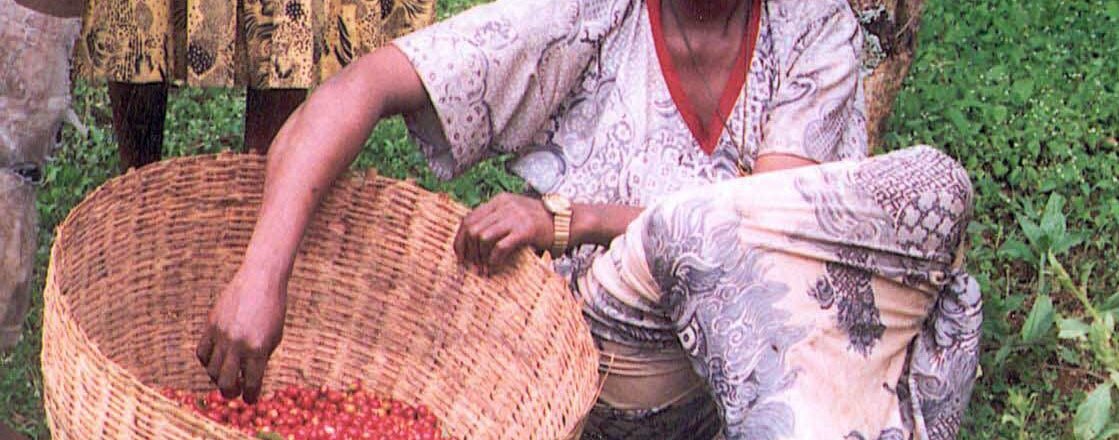
Featured photo: A coffee farmer in Ethiopia, photographed in 2011 by the USAID Africa Bureau. Public domain in the United States.
