


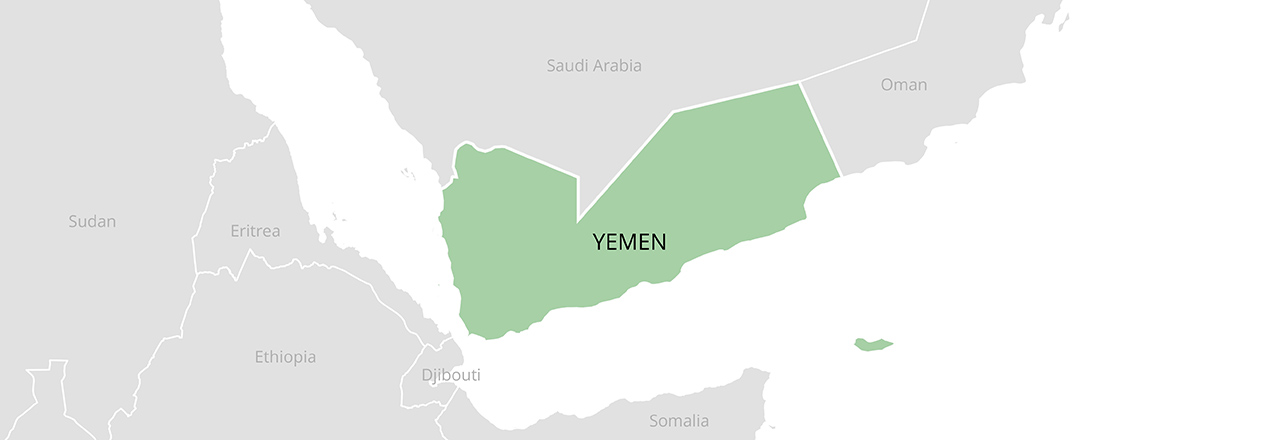
Overview
Yemen’s land rights are shaped by statutory law, Islamic legal principles and local customary practices. Private holdings, state land, religious endowments, communal grazing areas and tenancies overlap with water rights and obligations. The 1990 unification brought together different legal and administrative histories; years of armed conflict and political fragmentation have since damaged records, displaced families and made access to authorities uneven. Alaghbari, 2023.
In a country with little reliable rainfall and no permanent rivers, control of a field is often inseparable from access to a well, a seasonal watercourse or an irrigation turn. Land rights are also central to shelter, agriculture, grazing and recovery after displacement. A formal document can provide important evidence, but many households depend on older deeds, witnesses and local recognition. An effective response must protect both documented interests and legitimate uses that are difficult to record in a single title. UNDP, water access, October 2025.
Conflict and Political Economy
Years of armed conflict, economic decline and competing authorities have weakened public services and access to land administration. ACAPS reported in 2023 that displaced people faced difficulties determining which authority could issue replacement papers. The March 2026 humanitarian plan records continuing barriers to civil documentation and protection for marginalized groups. Procedures and access can vary by location. ACAPS, April 2023; OCHA, March 2026.
War interacts with older inequalities. Land, water, public office, customary influence and access to armed protection can reinforce one another. Households without money, documents or powerful connections may find it difficult to contest occupation or a competing deed. The World Bank’s May 2026 economic update reports continuing pressure on public finances and blocked oil exports, limiting resources available for services and reconstruction.
Legal Framework
The Land Register Law No. 39 of 1991 describes private, public and endowed property and provides for land registration using records and maps. Its provisions address registration of real rights and inheritance, objections and replacement of lost documents. The State Lands and Real Estate Law No. 21 of 1995 addresses state property. Statutes operate alongside civil law, Islamic law and local custom; the effect of a specific document depends on its history, applicable rules and the competent forum.
The legal framework should be distinguished from the reach of an office or register in practice. Rural transactions may be evidenced by locally prepared documents and witnesses without a complete modern cadastral record. The 2023 land-sector assessment by Wael Alaghbari, published by UN-Habitat describes the range of tenure forms and the importance of local records. Nonregistration alone should not be treated as proof that an area has no legitimate user, although registration can have important legal consequences.
After unification, claims in the former South Yemen could reflect earlier redistribution and later efforts to address disputes over agricultural land. The FAO/ECOLEX legislative record identifies Resolution No. 221 of 1997 on agricultural-land dispute settlement in the southern governorates. It would be misleading to assume that a person’s present possession, an earlier reform record or a later deed automatically answers every competing claim without examining the relevant history and decision.
Customary and Communal Tenure
Customary institutions regulate many relationships among families, neighbors and communities, including boundaries, access to grazing and the distribution of water. A person’s rights may arise through inheritance, purchase, long use or a community arrangement. Oral testimony, older written deeds and knowledge of landmarks can all matter when records are incomplete. The weight and acceptance of such evidence vary between institutions and places. Corriveau-Bourque, Aero and Abdullahi, 2019.
Communal or tribal land can support grazing, collection, passage and other shared uses. Its boundaries and rules are not necessarily represented by a deed naming each user. A grant or construction project that treats a pasture as empty can disrupt access for households with no individual document. Community representatives can help identify existing uses, but they should not be assumed to speak equally for women, tenants, minority groups or absent displaced people. The Norwegian Refugee Council’s assessment examines the interaction of formal and informal dispute institutions.
Endowments and Tenancy
Waqf or awqaf property is endowed for a specified religious, charitable, family or other purpose under the applicable rules. A person may cultivate or occupy endowed land without owning the underlying property. The terms of an endowment and the identity of its administrator matter to leasing, management and the use of income. State, private and endowed land should not be treated as interchangeable categories. (Waqf Law No. 23 of 1992, Articles 2–5, 24 and 32; World Bank, 2009, pp. 32–35.)
Tenants and sharecroppers may depend on negotiated arrangements for a house or a cultivated field. Their security can be affected by the length of an agreement, access to water, the sharing of costs and the landlord’s ability to terminate it. Conflict and displacement can weaken long-standing arrangements or leave written evidence behind. Any reconstruction or restitution process should identify tenants and users as well as the person named in a deed. World Bank, 2009, pp. 37–39; ACAPS, April 2023.
Women’s Land Rights
The Personal Status Law recognizes inheritance interests for women, including spouses and daughters, with shares that depend on the family circumstances. Social pressure, costs and missing papers can make a share difficult to claim. The Yemen case below illustrates the distinction between an inheritance interest and control of the property. Personal Status Law, inheritance provisions; ACAPS, April 2023.
A UN-Habitat account describes sisters in Abyan whose brothers agreed, after mediation, to sell the family home and share the proceeds. It illustrates both the potential value of legal information and the time and social pressures involved. The account is an individual example, not a national measure of outcomes.
Women may work family farms, manage water and care for households without being named in a land record. Widows, women heading displaced households, divorced women and women whose relatives are missing can face additional barriers. Accessible legal advice, safe ways to raise disputes and documentation that recognizes each claimant can support rights without assuming that every household member has the same interests. ACAPS, April 2023.
Administration and Land Records
Land administration involves registration offices, state-land authorities, courts, endowment institutions and local actors. The 1991 land register law contemplates property records, maps, notices and objections. In practice coverage and access are uneven, and a document may be held by a family, a local notary or another institution rather than a central registry. Earlier land reform and later changes in the south add another layer to some claims. Land Register Law No. 39 of 1991.
Conflict can destroy a home and its papers, interrupt a transaction or prevent an owner from visiting the relevant office. Displaced people may have copies, tax receipts, photographs or witnesses rather than an original deed. Reconstructing records requires protecting personal information and allowing competing claims to be heard. A new digital database can preserve copies, but it cannot establish a boundary or resolve ownership by itself. ACAPS, April 2023.
The ACAPS’s April 2023 assessment identifies documentation and access to remedies as important housing, land and property challenges. Recovery programs should record the basis and limitations of evidence and provide a route to correction rather than turning missing papers into an automatic loss of rights.
The registration law allows a personal register or a parcel-based register. It provides for a map, notice of first registration and investigation of an application, including objections. Article 30 describes a procedure for replacing a lost or damaged property instrument. The existence of a procedure does not establish that the office, newspaper notice or supporting witnesses are accessible to a displaced person during conflict. The law’s treatment of registration is a reason to preserve records and obtain advice, not a reason to ignore other evidence of an existing claim. Land Register Law.
Land and Water Disputes
Disputes can arise over inheritance, boundaries, sales, state land, access to wells, irrigation turns and occupation during displacement. Courts and customary mediators may both play a role. Community mediation can be accessible and locally legitimate, but it is not necessarily neutral or equally accessible to every party. An outcome reached without a woman, tenant or displaced owner may not settle that person’s claim. Corriveau-Bourque, Aero and Abdullahi, 2019.
The Norwegian Refugee Council’s 2019 study documents how disputes over land, housing and natural resources interact with conflict and examines formal and informal resolution. Fair processes require notice, an opportunity to present evidence, safety from coercion and a means to challenge a decision. They also need to account for the fact that parties may live in different places or under different authorities.
Displacement and Housing
UNFPA’s January–March 2026 situation report states that more than 5.2 million people were internally displaced. This is a humanitarian estimate at a particular time, not a count of individual land disputes. Many families live for prolonged periods with relatives, in rented accommodation or in informal settlements. Insecurity, damaged housing, lack of income and disrupted services can all prevent a safe return.
Displaced people may face eviction, high rents, occupation of their homes or the loss of documents. Hosts and landowners also have legitimate concerns about land use, payment and the duration of an arrangement. Clear voluntary agreements for temporary sites, protection from forced eviction and pathways to legal assistance can reduce disputes. A durable solution may involve return, local integration or settlement elsewhere according to people’s informed choices and circumstances. ACAPS, April 2023.
Members of the Muhamasheen and other marginalized groups can face discrimination in housing and dispute resolution. A UK Home Office’s March 2025 country policy and information note summarizes reported barriers affecting displaced women and marginalized communities. National statistics should not be used to imply that all affected households experience the same conditions.
Return and restitution can involve several overlapping claims: an owner may seek a damaged home, a tenant may have occupied it before displacement, and another displaced family may have taken shelter there. A fair process should hear each affected party and distinguish temporary shelter assistance from transfer of ownership. Replacing civil papers and maintaining copies of property evidence can help households pursue remedies even when immediate return is not possible.
Explosive Hazards and Return
Landmines and other explosive remnants of war can make land unsafe to use even when rights are recognized. In its 2025 update, the UN Mission to Support the Hudaydah Agreement reported incidents involving civilians, including people attending farmland in Hudaydah. UNMHA Annual Mine Action Update 2025.
Safe return therefore requires more than a decision about title. Risk education, assessment and clearance by qualified authorities, accessible information and restoration of basic services all affect whether land can actually be used. A person should not lose a claim simply because a dangerous site cannot yet be occupied or cultivated.
Urban Land and Housing
The World Bank’s 2020 assessment documented conflict damage and pressure on urban services in cities including Sana’a, Aden and Taiz. ACAPS reported threats of eviction among displaced tenants in 2023. A shelter-repair program should identify who can authorize work and how existing occupants will be protected after repairs. World Bank, 2020 needs assessment; ACAPS, April 2023.
Urban land can also be subject to overlapping private, state and endowed claims. Planning, records and infrastructure decisions require coordination among authorities and affected residents. Rebuilding without checking existing rights can entrench an earlier dispute; waiting for every claim to be conclusively resolved can leave people without shelter. Temporary arrangements, documented consent and accessible grievance procedures can help manage this tension. Alaghbari, 2023.
Agriculture and Pastoralism
Yemen’s rural livelihoods include terraced and irrigated cultivation, livestock and activities such as honey production. The IFAD country strategy describes different roles for agricultural land, rangelands and coastal livelihoods. Repairing a farm can therefore require restoring irrigation channels and access routes as well as the land itself. IFAD Country Strategy Note, 2025–2027.
Qat provides income for many producers and traders, but irrigated cultivation also competes for scarce groundwater. A World Bank water-security policy note, Charting the Course describes pressures from groundwater extraction and the expansion of qat in some areas. Reducing water use requires attention to farmers’ incomes and alternatives, not simply an instruction to change crops.
Rangelands provide fodder for cattle, camels, goats, sheep and donkeys. Restrictions on the routes that connect grazing areas and water can affect how herders use those resources. Identify shared and seasonal uses before granting exclusive access or planning restoration. IFAD Country Strategy Note, 2025–2027.
Water Rights and Groundwater
Yemen relies heavily on rainfall, seasonal flows, springs and groundwater. UNDP describes acute water scarcity and the burden of obtaining water in rural communities. Competition among domestic use, irrigation and other needs is intensified when aquifers decline or infrastructure is damaged.
Water Law No. 33 of 2002 recognizes existing water-use rights and traditional arrangements for rain and spate irrigation, while establishing a system of regulation and licensing. Law No. 41 of 2006 amended the water law, including article 35 on authorization for drilling or deepening wells and specified works; amended article 45 retains a limited exception for manual wells no deeper than 60 meters for drinking water, subject to protective conditions. These statutory provisions must be read with applicable regulations and local implementation; access to a well in practice may depend on ability to pay for drilling and pumping.
Solar pumps can reduce fuel costs and improve access, but cheaper pumping can also increase withdrawals where controls are weak. Basin-level information, cooperation among users and support for alternative livelihoods are important to managing that risk. Irrigation turns and downstream users should be considered when rehabilitating a diversion or channel. World Bank water-security policy note.
The 2002 law also addresses established rights in springs, natural streams and certain shallow wells, and recognizes the relationship between traditional spate-water rights and agricultural land. A change to an upstream diversion can affect many downstream households even when their fields are not acquired. Local assessment should identify the sequence of irrigation, the maintenance obligations for channels and the consequences of a proposed well or structure for neighboring users. The 2006 amendment is particularly relevant when describing drilling and deepening requirements; the original text should not be presented as if it were the only applicable provision. Water Law amendment No. 41 of 2006, articles 29 and 35.
Forests and Biodiversity
IFAD identifies Yemeni woodlands as sources of fuelwood and fodder and as wildlife habitat. It identifies deforestation, overgrazing and soil erosion among the pressures on land. Restoration agreements should specify which uses will change, who will maintain the site and how benefits will be shared. IFAD Country Strategy Note, 2025–2027.
The Socotra Archipelago is a UNESCO World Heritage site recognized for exceptional terrestrial and marine biodiversity. Conservation there involves the livelihoods and knowledge of resident communities as well as the protection of endemic species. Tourism, infrastructure, grazing and climate risks should be considered in the context of local rights and management arrangements rather than treating the islands as an unoccupied reserve.
IFAD describes the role of rangeland vegetation in limiting erosion and identifies mangroves, seagrass and other coastal habitats around Yemen. Its strategy lists terrace maintenance, mangrove replanting and fisheries management among the adaptation priorities. Projects should identify customary uses and how restrictions and benefits will be shared. IFAD Country Strategy Note, 2025–2027.
Climate and Carbon
Floods, drought, heat and changing rainfall affect food production, water supplies, roads and housing. Climate shocks interact with conflict and poverty: a family that has already lost a home or livelihood may have fewer resources to recover from a flood. Adaptation can include repair of terraces and irrigation systems, watershed management, safer settlement sites and support for livelihoods, provided affected people can participate in the choices. IFAD Country Strategy Note, 2025–2027.
Land restoration and any future carbon project must identify who uses the land and water, the duration of restrictions, benefit sharing and the process for resolving claims. A project boundary or an agreement with one authority does not automatically establish the rights of every affected household. Information should be accessible to women, herders and displaced people as well as recorded owners.
Mining, Energy and Investment
Yemen’s Mines and Quarries Law No. 22 of 2010 addresses mineral licensing, effects on landowners and environmental obligations. Prime Minister Decision No. 1 of 2012 issued its executive regulations. For any specific project, review the mineral authorization, surface rights and environmental obligations separately. Mines and Quarries Law No. 22 of 2010; ECOLEX, Prime Minister Decision No. 1 of 2012.
Land acquisition, roads, pipelines and extraction can affect fields, water sources, grazing and settlements beyond the fenced site. Project planning should identify all affected users, disclose proposed boundaries and provide for compensation, grievance handling and restoration. The World Bank’s 2026 assessment notes that oil exports remained blocked. Revenue prospects do not replace the need to address local rights and environmental impacts.
Public-purpose acquisition and negotiated investment raise different questions from a mineral license. A review of the site should establish whether occupants are owners, tenants or users of shared resources, and whether alternative routes and water remain available. Compensation and livelihood restoration should be described in project documents and assessed against the relevant law and any commitments made by the project. In a fragmented operating environment, the identity and capacity of the implementing authority are material to delivery.
Sources
Legislation and land administration
- Land Register Law No. 39 of 1991; State Lands and Real Estate Law No. 21 of 1995.
- Water Law No. 33 of 2002; Water Law amendment No. 41 of 2006; Republic of Yemen, Mines and Quarries Law No. 22 of 2010, Board English text; Prime Minister Decision No. 1 of 2012, Mines and Quarries executive regulations (Arabic facsimile); FAO/ECOLEX record for Resolution No. 221 of 1997; Republican Decree-Law No. 20 of 1992, Personal Status Law (Arabic).
- Alaghbari, Wael. 2023. Assessment of the Land Sector in Yemen: Background Paper. UN-Habitat and the Arab Land Initiative; prepared with the Urban Training and Studies Institute, Housing and Building National Research Center, Egypt. Edited by Nikola Stalevski; BMZ funded the program.
- World Bank. 2009. Land Tenure for Social and Economic Inclusion in Yemen: Issues and Opportunities, Report 54923-YE, December 1, 2009, especially pp. 32–39. J. Bruce is identified as main author; Lelia Croitoru led the team.
- Republican Decree-Law No. 23 of 1992 on the Lawful Endowment, March 29, 1992, original Arabic text hosted by Yemen’s National Information Centre, especially Articles 2–5, 24 and 32.
Rights, disputes and displacement
- Corriveau-Bourque, Alexandre, Evelyn Aero, and Liban Abdullahi. 2019. Repairing Fractured Landscapes: Challenges and Opportunities for Resolving Disputes over Land, Housing, Water and Other Natural Resources in Yemen. Norwegian Refugee Council, April.; ACAPS. 2023. Yemen: Challenges to Housing, Land, and Property Rights. April 14..
- UN-Habitat, women’s inheritance case; UN OCHA, Yemen Humanitarian Needs and Response Plan, March 2026; UNFPA Yemen. 2026. Situation Report on the Crisis in Yemen – January to March 2026. April.; United Nations Mission to Support the Hudaydah Agreement, Annual Mine Action Update 2025.
Climate, water and economy
- World Bank, Charting the Course: A Policy Note for Water Security in Yemen (information through December 2023); UNDP, water access and climate.
- UNESCO, Socotra Archipelago; World Bank, Yemen economic update, May 2026; IFAD, Republic of Yemen Country Strategy Note 2025–2027; World Bank, Yemen Dynamic Needs Assessment: Phase 3, 2020 Update.
Update Log
October 2026: Updated the legal framework and added analysis of conflict, displacement, women’s property rights, water, climate, land records and economic conditions. Humanitarian figures are attributed to their reporting period.
Confidence Assessment
High confidence: The cited historical statutes and the general importance of water scarcity, displacement and customary tenure are supported by published legal and institutional sources. Moderate confidence: The availability of offices and remedies, local application of law and the status of particular claims vary by location and can change with conflict. National humanitarian estimates are snapshots rather than complete records of every displaced household.