


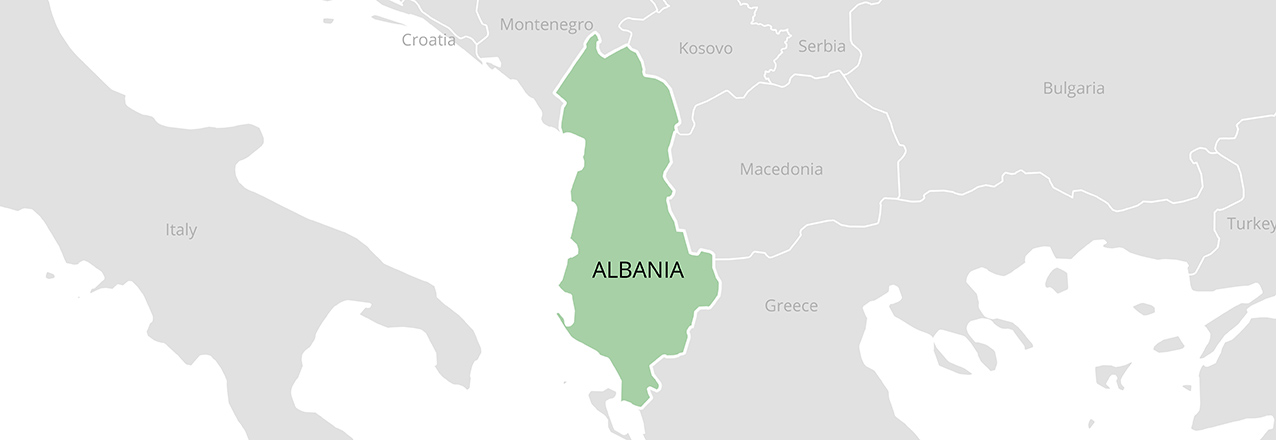
Overview
Albania’s land system reflects the redistribution of agricultural land after the end of state socialism, the return or compensation of property nationalized under the former regime, and rapid urban and coastal development. Many families hold small, fragmented parcels, while competing records and unfinished registration continue to complicate transactions.
The State Cadastre Agency administers property registration; separate institutions handle compensation and land-use planning. A deed, a cadastral map and a compensation decision serve different purposes. Legal recognition can improve security, but inaccurate records and unresolved claims still affect owners, occupants and investors.
History and Political Economy
Under the communist system, private agricultural land was collectivized and many other properties were nationalized. After 1991, agricultural cooperatives were dismantled and land was distributed to rural families, while former owners sought restitution or compensation. The resulting claims can overlap: a family farming redistributed land and a former owner’s heirs may both rely on state decisions issued at different times.
Migration from rural areas and abroad, urban construction and tourism have changed land demand. Long-standing disagreements about ownership are also connected to the capacity of courts, municipalities and national agencies, the cost of registration, and unequal access to information.
Legal Framework
The 1991 Land Law 7501 was central to distributing former cooperative land to rural households. The State Cadastre Agency identifies that law as repealed; its historical allocation documents remain relevant to the examination of rights. Later legislation addresses property registration, transitional ownership processes and compensation.
Law 20/2020 concerns completion of transitional ownership processes, and Law 133/2015 governs the treatment of property and completion of compensation. A Council of Europe account notes that 2025 amendments extended deadlines for reviewing and executing pending compensation applications. A deadline extension should not be described as completion of all claims.
Tenure and Community Use
Land may be privately owned, leased, possessed under an incomplete or disputed claim, or held by public bodies. Agricultural households can use several parcels, while municipalities administer substantial forest and pasture areas. Local users may depend on access to grazing, fuelwood and water even where they do not own the underlying land.
Family co-ownership, inheritance and informal arrangements can be important in practice. A parcel registered in one person’s name does not necessarily capture all members’ interests. Local use arrangements vary and should be documented without assuming that Albanian municipal forests are owned collectively by their users.
Land Administration and Data
The State Cadastre Agency maintains property information and provides registration services. Registration, surveying, legalization of an informal building and resolving an ownership dispute are distinct activities. Inconsistent cadastral maps and deeds, incomplete first registration and missing records can cause overlapping claims or delay transactions.
The EU for Property Rights project, launched in 2025, supports modernization and a pilot land parcel identification system. Its planned activities are not evidence that all properties have been registered or that existing disputes have been resolved. Digitization needs accurate underlying records, a correction process and access for people who cannot easily use online services.
Land Parcel Identification Systems support agricultural administration and should not be confused with a definitive register of ownership. Linking spatial and legal records can make discrepancies visible, but the agencies must resolve those discrepancies using the relevant evidence and procedures. Returning migrants and heirs living abroad may face additional costs in obtaining documents or participating in decisions.
Women’s Land Rights
Albanian law recognizes women’s property rights, including rights arising from marriage and inheritance, yet documents and decisions may still be controlled by men. A 2025 FAO and UN Women assessment examines gaps in data and the practical exercise of women’s rights.
The redistribution of agricultural land was generally recorded in a household representative’s name. A 2016 FAO gender profile documented how this could obscure women’s interests, along with inheritance practices and limited awareness of legal rights. Joint registration, affordable legal assistance and participation in local decisions can help women exercise rights already recognized in law.
Restitution and Compensation
Claims for property nationalized before the transition involve former owners and heirs, current occupants, state bodies and, sometimes, later purchasers. Restitution in kind is not always possible; the applicable framework also provides for compensation. A favorable administrative or judicial decision is different from receiving land or payment.
In Ramaj v. Albania, the European Court of Human Rights considered failure to enforce decisions recognizing a property claim. In 2026 the Council of Europe reported closure of its supervision of a separate case, Kasmi v. Albania, concerning a restituted dwelling. Closure of that case is not proof that all restitution disputes are resolved.
Agriculture and Food Security
Small farms produce vegetables, fruit, olives, livestock products and other crops. Holdings may consist of several separated plots, increasing travel and limiting mechanization. Land fragmentation is linked to the post-1991 distribution and later inheritance; it can make consolidation or cooperation useful where participation is voluntary and rights are respected.
A World Bank analysis identifies fragmented land, uncertain documentation, limited finance and rural infrastructure as constraints. Tenure security is only one part of productivity: irrigation, extension, processing and market access also influence whether a household can invest.
Cooperation among producers can make irrigation, storage and marketing more efficient without requiring families to surrender ownership. Rental markets may also help farmers work contiguous land, but informal or short-term leases can discourage improvements. Policies should consider the rights of both owners and tenants and ensure that women can participate in producer organizations.
Pastoralism and Shared Pastures
Sheep, goats and cattle use lowland and upland pasture, with seasonal movement varying by region. Forest and pasture areas transferred to municipalities may be managed through plans, permits and local user arrangements. A user association’s ability to graze or manage resources is distinct from ownership of the land.
Competition over access can arise when tourism, construction, conservation or fencing changes traditional routes. Fair planning should identify seasonal users and water points and provide for local participation, maintenance and dispute resolution. Women’s work with livestock and forest products should be visible in those decisions.
Land Conflicts and Displacement
Disputes may involve overlapping titles, inheritance, boundaries, restitution, informal construction or public acquisition. Some households are affected when access to land or a livelihood is restricted even if they do not physically move. Court delays and administrative complexity can make a technically recognized right difficult to exercise.
Where a project requires acquisition or relocation, affected owners, tenants and occupants need timely information, applicable compensation and access to remedies. The position of occupants should be considered alongside the rights of former owners and other claimants. A planning approval does not itself establish that every claim has been settled.
Different claimants may rely on a pre-nationalization title, a post-1991 allocation, a building legalization or a later registered transfer. The priority and remedies depend on applicable law and the facts of the case. Making all relevant records accessible helps prevent a technical correction from silently excluding someone with a legitimate interest.
Urban Land and Housing
Tirana and other cities expanded rapidly after 1991. Informal housing and construction on land with uncertain title created demand for legalization and services, but legalization of a building does not automatically settle every underlying ownership or compensation claim.
Urban planning must connect secure occupancy with roads, drainage, water, sanitation and safe buildings. The 2019 earthquake highlighted the importance of safe construction and equitable reconstruction. Redevelopment and infrastructure should account for residents’ livelihoods and the rights of renters as well as owners.
Water and Fisheries
Albania’s rivers, lakes, groundwater and Adriatic and Ionian coast support drinking water, irrigation, fisheries, hydropower and tourism. The Drin, Shkumbin and Seman river systems and shared lakes such as Shkodër and Ohrid link communities and ecosystems across administrative boundaries.
Hydropower, irrigation, pollution and construction can change water availability and fish habitat. River management requires attention to downstream users, seasonal flow and cross-border cooperation. Land ownership and authorization to use water are separate questions.
Mountain watersheds are important for hydroelectricity as well as agriculture and biodiversity. The location of a dam, diversion or road may affect people far from the project footprint. Assessments should consider cumulative effects, flood risk, fisheries and the availability of water during dry seasons, with information accessible to affected communities.
Forests and Biodiversity
Forests and pastures provide timber, fuel, fodder, water regulation and habitat. Municipalities have responsibilities for large areas transferred from the state, while local associations and households use and manage particular resources under applicable arrangements.
The World Bank’s 2023 project results describe support for forest and pasture user associations, management plans and the registration and transfer of forest and pasture land to municipalities. These results concern a defined project period; they do not establish that every local management plan is funded or effective.
Climate and Carbon
Floods, drought, wildfire and erosion affect farms, settlements and infrastructure. Land management in upland watersheds can influence sedimentation and downstream water supplies, while urban development can increase exposure to floods. Adaptation requires secure access to land and functioning local institutions as well as finance.
Albania submitted NDC 3.0 in September 2026. Forest restoration and carbon initiatives should specify land rights, local participation, benefit sharing and monitoring. A national climate commitment or estimated emission reduction is not the same as a verified payment to a particular community.
Mining and Minerals
Chromium, copper, nickel-bearing ores and oil are significant resources. Mining and petroleum activities may create jobs and public revenue but also affect land, water, health and landscapes. Surface ownership, mining rights and environmental approvals are separate legal matters.
Older extraction sites and waste can leave liabilities that persist after production ends. Public information, impact assessment, financial provision for rehabilitation and access to complaints are important for communities near operations. A license or announced investment is not proof that extraction has begun or that environmental safeguards have been met.
Investment and Coastal Land
Tourism, agriculture, housing, energy and infrastructure compete for land, particularly along the coast and near cities. Conflicting records can delay responsible investment and leave residents uncertain about ownership or compensation. Due diligence should identify former-owner claims, current occupants, boundaries and environmental restrictions before land is acquired.
Agreements and public decisions should make land area, compensation, water use, environmental responsibilities and grievance procedures clear. Transparent consultation and consistent enforcement help address the different interests of residents, municipalities and investors.
Sources
Law and administration: Historical Land Law 7501; State Cadastre Agency guidance; Council of Europe on property compensation; European Court of Human Rights, Ramaj v. Albania.
Land rights and development: UNOPS property-rights project; FAO and UN Women landownership assessment; World Bank agricultural analysis.
Environment and climate: World Bank forest and pasture results; Albania’s NDC 3.0.
Update Log
October 2026: Updated land administration, restitution and compensation, women’s rights, agriculture, forest and pasture management, climate and investment.
Confidence Assessment
Confidence is highest in the cited legal and institutional sources. The status of an individual property claim depends on its documents, applicable decisions and circumstances. Local use and implementation vary among municipalities.