USAID Webinar Shares Lessons around Land Tenure and Disasters

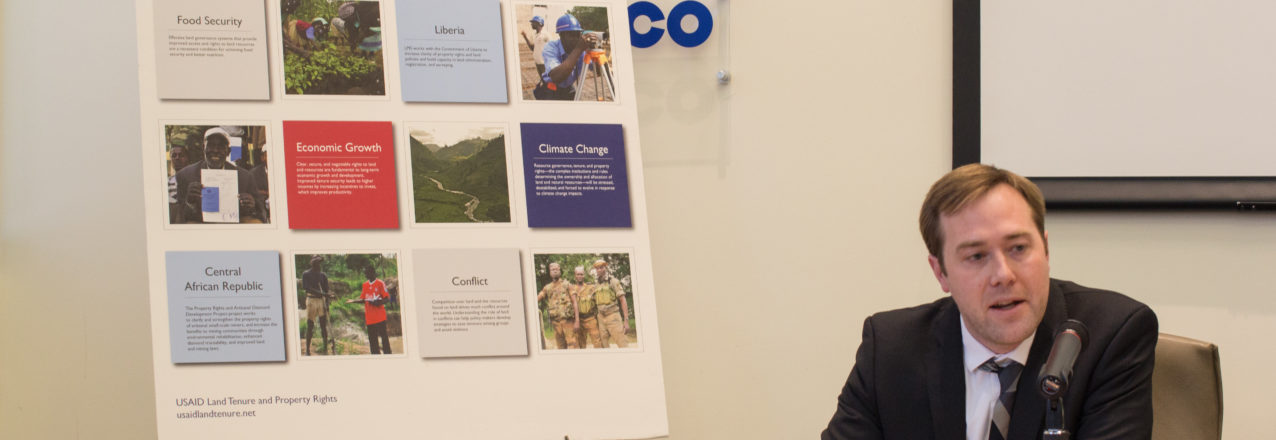
On Friday, February 13, 2015 USAID sponsored a panel discussion on the topic: Land Tenure and Disasters. The event highlighted the important linkages that exist between land tenure and disaster planning and recovery. Among the key takeaways from the event were the importance of proactively addressing land tenure as a part of disaster risk reduction activities (for example by supporting community enumerations to record property claims); the need to pay greater attention to the tenure rights of women and other vulnerable groups (which are too easily overlooked in post-disaster reconstruction efforts); and, the difficulties of helping people rebuild in environments where land governance is weak. By drawing on their personal experiences in Haiti, Sri Lanka, and Indonesia the panelists underscored the message that addressing land tenure concerns before and after disasters is critical for building resilience and reducing the human and social costs associated with disaster relief.

Panelists included Dr. Cynthia Caron of Clark University (co-author of USAID’s Land Tenure and Disasters Issue Brief), Ms. Adriana Navarro-Sertich of the United Nations Office of Project Services (UNOPS), and Independent Contractor Mr. Bharat Pathak (formerly of Mercy Corps). Mr. Tim Fella, Land Tenure and Conflict Advisor in USAID’s Land Tenure and Resource Management Office moderated the discussion, which included nearly 100 in-person and on-line participants.

You can view a recorded video of the panel discussion here. If you would like to be added to the LTRM mailing list to be notified of upcoming events click here.

Webinar: Land Tenure and Disasters

After a disaster, land and property rights are often overlooked in response and rebuilding efforts. The lack of clear rights often leads to conflict, delay, and higher costs. But we can address these problems before a disaster strikes. We can:

  • Create projects that strengthen the capacity of land administration institutions and staff;
  • Build resilience by identifying safe and secure spaces for reconstruction;
  • Include communities in documenting land rights and creating solutions for shelter; and
  • Recognize the rights of vulnerable communities living in informal housing.

Learn how in a breakfast panel discussion. Experts shared their experiences in Sri Lanka, Haiti, and Indonesia. Panelists:

  • Dr. Cynthia Caron, Assistant Professor of International Development and Social Change at Clark University
  • Adriana Navarro-Sertich, Housing and Urban Planning Advisor at UNOPS Haiti-Washington
  • Bharat Pathak, Independent Disaster Risk Reduction and Climate Change Adaptation Consultant (Former Director at Mercy Corps in Indonesia)

Understanding Artisanal Mining through Participatory Diagnostics

Continuing our series on participatory approaches to stregthen land tenure programming, this week, we will share the final example from our work in Guinea.

USAID’s Property Rights and Artisanal Diamond Development (PRADD) II project in Guinea, conducted a participatory review of the artisanal diamond mining sector as part of an exercise to identify areas that may contain alluvial diamond deposits (diamonds carried downstream and deposited by rivers). The review examined mining activities and economies at the local level as well as claims to surface lands and sub-surface resources. These claims were assessed under both the formal and customary tenure regimes to identify any gaps or conflicts between the systems.

To perform the participatory review, a team from the Ministry of Mines and Geology, other government ministries, and civil society organizations were trained in rural rapid appraisal (or participatory rural appraisal) assessment tools. They adopted tools including community mapping, semi-structured interviews, and transect walks (used to create a map showing the location and distribution of resources, features, landscape, and main land uses along a given route). These participatory tools were used to collect data on diamond operations, resource rights both above and below ground, and the identity of miners and their place within the communities, among other information.

Following the participatory review, the assessment team and local stakeholders formulated pragmatic policy and program recommendations to: improve the governance of the artisanal mining sector; strengthen tenure rights; diversify and improve livelihoods; and promote environmental rehabilitation. Because the review approach involved government and civil society partners, there is now widespread support for the project activities in Guinea.

PRADD II supports the Government of Guinea in its compliance with the Kimberley Process Certification Scheme—the international mechanism to halt the trafficking of conflict diamonds.

For more information on participatory approaches in land tenure and property rights programming, please visit the following commentaries:

  • Participatory Approaches Strengthen Land Tenure Programming
  • Technology and Participatory Mapping in Rural Tanzania
  • Using Participatory Approaches to Ensure Women’s Access to Justice
  • Behavior Change Communication in Kosovo to Expand Women’s Land Rights

Five Years After the Earthquake, Reflecting on Land Tenure Issues in Haiti

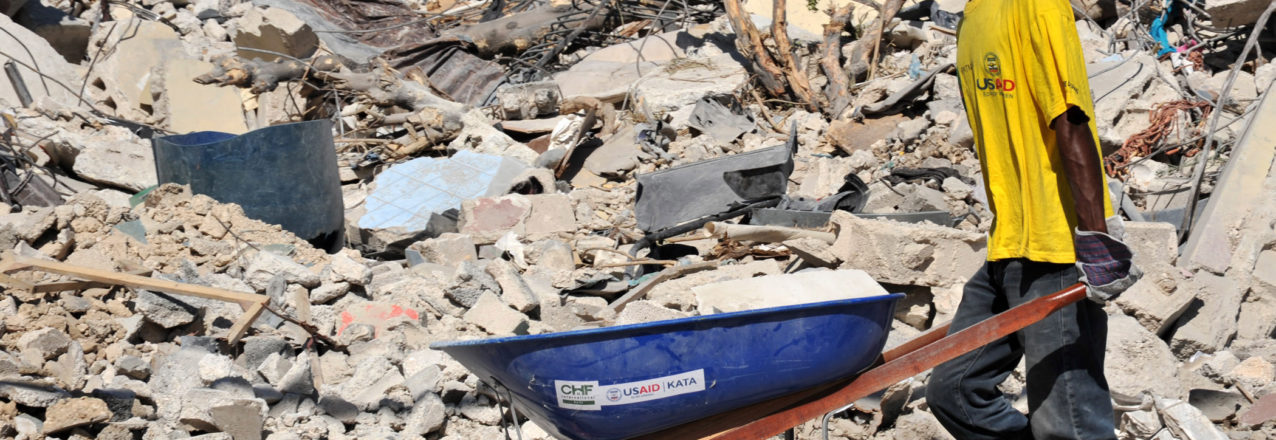
Five years after the devastating January 2010 earthquake, land tenure and property rights issues remain central to ongoing recovery, reconstruction, and broader development efforts in Haiti. Weak land administration systems, capacity issues, and a complex legal system have led to confusion, insecurity, and disputes over who has what rights to which pieces of land. These challenges greatly impede the Government of Haiti and the international community’s efforts to rebuild infrastructure and housing, enhance food security, improve resilience to future disasters, and reduce extreme poverty.

On the five-year anniversary of the Haiti earthquake, we spoke with Jane Charles-Voltaire, a lawyer in Haiti and member of the Haiti Property Law Working Group, about her experiences working on land tenure and property rights issues.

Question: Can you tell us about your work on property rights in Haiti, particularly in relation to the aftermath of the 2010 earthquake?

Charles-Voltaire: My work on property rights supports efforts by USAID’s legal team to advise USAID housing, agriculture and energy programming in Haiti. After the creation of the massive [refugee] camps due to the earthquake, a lot of international organizations invested in social housing projects. While these projects were much needed, organizations realized that they did not understand the procedures for acquiring land or transferring land, and that often, there is little consensus among the various government agencies that oversee different aspects of land tenure. This greatly slowed the recovery effort and was the context in which the Haiti Property Law Working Group was founded. The group seeks to clarify the processes of land transactions, as they currently exist.

Question: What have you found to be the biggest challenges about property rights and the rebuilding efforts?

Charles-Voltaire: Major challenges of land rights still occur in and around Port-au-Prince. While many people have been able to move out of the temporary camps, the government was not able to identify locations for these people to move. As a result, people have migrated on their own to the areas north of Port-au-Prince and in neighborhoods with informal housing throughout Port-au-Prince.

Because of the centralization of earthquake relief efforts in Port-au-Prince, the distribution of food, water, medical kits, and other supplies, internal urban migration has increased. Many people left their rural homes to benefit from all the relief resources distributed in Port-au-Prince.

To solve these housing challenges, government, communities and advocates need to take a deep look at the land tenure systems and make the necessary adjustments to facilitate better development projects.

Question: Five years after the earthquake, what has changed and what still needs to change in terms of land tenure and property rights in Haiti?

Charles-Voltaire: It’s important to recognize that land tenure has been an underlying issue in Haiti for many years. There have been attempts at reform throughout the 20th century, but the earthquake really pushed land to the forefront. People are much more aware of land issues today.

Now, for the first time in a very long time, we are able to start having an open discussion about land. People understand that land rights can no longer be overlooked because it is closely linked with other critical issues such as sanitation, health, and investment.

In terms of what needs to change, I believe that the government needs to identify where people can and should live. For example: How can we help people living in dangerous coastal areas that are vulnerable to another disaster? How can we create innovative housing options that connect people to transportation, infrastructure and jobs? We still need clearer planning at both national and local levels for addressing these challenges.

For more information on this topic, see USAID’s Issue Brief: Land Tenure and Disasters or participate in USAID’s upcoming panel discussion on Land Tenure and Disasters: Response, Rebuilding, Resilience.


Behavior Change Communication in Kosovo to Expand Women’s Land Rights

Last week, we shared an example of an innovative participatory project design in Kenya. This week, our example of an innovative participatory project design comes from Kosovo.

In Kosovo, the gap between formal legal protection of women’s property rights and actual practice remains large. To address this gap and help support women’s claims to land and other property, USAID is using participatory approaches in the design of a strategic social and behavior change communication campaign. The campaign aims to shift attitudes and actions around women’s land rights and increase women’s ability to access and own property. Although formal laws and clear enforcement procedures protect women’s rights to land and other property, behavioral barriers—including strong cultural pressures for women to renounce family inheritances—prevent women from acquiring property in practice. To better understand the experiences of those affected and to create behavior change communication interventions that will resonate with the public, the design of USAID’s campaign includes target audiences, women’s organizations, and other key players in the property rights space—giving voice to marginalized groups and building local ownership and sustainability of the program.

During the initial phase of the project, USAID convened a participatory consultation workshop with key stakeholders to listen to local experience, segment and prioritize audiences, analyze needed changes in knowledge, attitudes, and behaviors, and identify key messages that will help reduce pressures on women to renounce their family inheritance. The workshop was also an opportunity for participants to share communications lessons learned and research results, and identify broad gaps in knowledge. Feedback from participants informed the design of a Knowledge, Attitudes, and Practices Survey targeting key campaign audiences, which, when launched, will be used to further understand audience experiences, barriers to change, and behavioral incentives—all critical information that will enable the program to bring audiences toward the “tipping point” for change.

USAID will be working across the country with a broad network of community-based civil society and non-governmental organizations to build their capacity to design, lead, and implement this important campaign to better ensure local ownership, sustainability, and the accuracy, relatability, and effectiveness of messaging.

Using Participatory Approaches to Ensure Women’s Access to Justice

Kenya_Spotlight


Last week, we featured an innovative participatory approach that uses technology to record land rights in Tanzania. This week, we have an example of an innovative participatory project design from Kenya.

In 2010, Kenya’s Constitution gave women new legal rights to own property. The Constitution also looked to traditional local leaders, such as elders and traditional authorities, to play a more formal role in dispute resolution. The Enhancing Customary Justice Systems in the Mau Forest, also known as the Kenya Justice project (KJP), brings these two threads together by teaching women, men, and children about the Constitution, women’s rights to property, and the role elders play in upholding these rights.

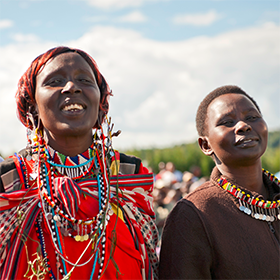
The project piloted a new approach for improving women’s access to justice, particularly related to women’s land rights, by concentrating on teaching male elders the importance of women’s access to justice and women’s land rights. This participatory approach was adapted with an aim to increase sensitivity to, and respect for, women’s land rights through traditional justice systems – such as dispute resolution systems governed by village elders. The project delivered legal literacy trainings to – and facilitated dialogues with – chiefs, elders, women, and youth. An impact evaluation found that the pilot led to increased legal awareness, particularly women’s legal knowledge and men’s knowledge of women’s rights, as well as women’s familiarity with the local justice system and alternative dispute resolution. Further, the project led to an increase in women’s confidence in both the fairness and outcomes of the local justice system, respect for women’s rights by men in the community, an increase in women’s access to land, and most notably, the election of several women to elder positions, for the first time in the Maasai and Kalenjin communities.

Following the inital success, additional funding was allocated in 2014 to produce an implementation guide to make the model replicable across Kenya. The improvement in women’s access to justice and land rights seen in the pilot community of Ol Pusimoru could be spread throughout Kenya through the broader implementation of the project model.

Check back next week to learn how USAID is using participatory approaches to influence attitudes and behaviors around women’s land rights in Kosovo.

Technology and Participatory Mapping in Rural Tanzania

phones
The mobile technology used by USAID in Tanzania features spatial visualization of parcels.

Last week, we described how USAID uses participatory approaches to strengthen and secure land rights. This week, we highlight an innovative participatory approach to formalizing land rights using mobile phones.

In Tanzania, USAID is piloting a promising participatory approach to document and record land rights information using low-cost mobile technology. We are training local community members to gather geospatial and land rights data, such as information about who has legitimate rights to land, parcel locations, and boundaries in rural and underserved areas. We are then working with officials, using our mobile technology, to deliver land titles based on this data. Using low-cost and readily available devices, such as GPS-enabled smart phones and tablets, coupled with participatory data collection methods, the project leverages local knowledge to build a reliable database of land information. This database can then be verified by the government so that formal documentation can be issued in a more transparent, cost-effective, and timely manner, to increase land tenure security for local individuals and communities.

By using accessible mobile technologies to capture land information, USAID will improve understanding of household land assets at the village level. This information will improve land tenure security for community members, and will help communities and local officials improve the process of transferring and allocating land rights, leading to increased land tenure security. It should also help avoid conflicts related to overlapping or conflicting land claims.

Check back next week to learn how participatory legal trainings were used to ensure women’s access to justice and land rights in Kenya.

Progress on Land Rights in 2014: Our Year in Review

From negotiations over responsible agricultural investment in Rome to new research on gender equality in Rwanda to important steps in legal reform in Tajikistan, land rights continued to be a priority issue for the global community in 2014. Here are some of our favorite pieces on land rights from USAID and our partners from the past year.

  1. Investing in Smallholder Farmers to Feed the Future
    By Tim Fella (Devex)
     
  2. Progress Report: USAID Support for the Voluntary Guidelines
     
  3. Improving Donor Coordination to Amplify Impact
    By Gregory Myers (The Guardian)
     
  4. To Strengthen Women’s Land Rights, Don’t Forget Boys and Men
    By Cynthia Caron
     
  5. Video: Assessment of Rwanda’s Gendered Land Rights Informs New Approach
    By Anna Knox
     
  6. Issue Brief: Land Tenure & Disasters
     
  7. Issue Brief: Land Tenure in Urban Environments
     
  8. Does Devolving Rights to Communities Improve Forest Conditions?
    By Matt Sommerville
     
  9. Climate Change Impacts Felt By Poorest Communities
    By Robert Primmer
     
  10. Harmonizing Land Tenure in National Protected Areas in Honduras
    By Christopher Seeley
     
  11. Tajikistan: Legal Aid Boosts Food Security & Agricultural Investment
    By Tiernan Mennen
     
  12. Property Rights for Every Woman and Man
    By Gregory Myers (The Chicago Council’s Global Food for Thought Blog)
     
  13. Grading Donors on Land Rights – Voluntary Guidelines, RAI
    By Gregory Myers (The Guardian)
     
  14. Aerial Mapping of Diamond Sites Aims to Reduce Conflict, Benefit Miners – Guinea, Côte d’Ivoire, and Central African Republic
     

To Strengthen Women’s Land Rights, Don’t Forget Boys and Men

Guest commentary by Dr. Cynthia M. Caron, Assistant Professor of International Development and Social Change, Clark University.

On Human Rights Day (December 10), civil society organizations around the world wrapped up the 16 Days of Activism Against Gender Violence campaign. This annual campaign focuses on gender-based violence as a rights’ violation, draws attention to forms of institutionalized inequality and discrimination, and gives us a chance to ask what we’ve learned about the causes of violence against women and what strategies work to reduce it. One takeaway for the development community should be that when we create programs to strengthen women’s land rights, we should also think about how control of land affects gender relations and how empowering women with land rights affects men and boys.

One way to think about gender is as a relationship between men and women. And one critical element in this relationship, no matter where, is the control of valuable assets. Who controls what matters a great deal in a relationship. It can affect how a husband treats a wife, but it can also affect how a husband, father, son understands his own identity—and this may be particularly important when it comes to control of land.

Land inheritance laws and practice provide a good example. Women and increasingly girl-focused development programming often focus on educating women and girls about their legal rights and develop their leadership and social networks to do so, but too often men are excluded from these activities. When boys and men are included, it is typically to “educate” about the benefits of empowering women and girls. But, how do these efforts—which hope to change the traditional status quo—influence the way men and boys think about their masculine identity or what it “means to be a man?”

That men and boys are not asked these questions is, unfortunately, not surprising; development programs often employ the ‘win-win’ rhetoric. In the case of land rights, a ‘win’ of a land transfer from a brother to a sister should not be seen as a loss for the brother; it should be seen as a ‘win’ for the family or for society on the whole. But we must ask whether men and boys are able to see this as a ‘win-win’ situation or whether changes in inheritance practice are seen as redistributing land from men to women.

This is important because threats to masculinity can become excuses for committing acts of violence. And so, recognizing that men’s very sense of what it means to be a man might be directly tied to land ownership and control of this asset needs to be carefully integrated in our development efforts. Sustainable programming aimed at empowering women and girls with land rights needs to ask new and unexpected questions of and from men in order to move forward our collective understanding about men’s relationships with land. Development professionals need to know how men and boys engage with messages of gender equality, the extent to which they try to act on new knowledge, and if they choose not to try, why not.

A recent evaluation of gender equality programming with boys in Bolivia demonstrates how boys struggle to use new knowledge about equal rights for girls when it directly contradicts what they are learning about what it “means to be a man” from how their own fathers. A November 2014 ICRW report shows how notions of masculinity figure into the desire for sons and how this desire may be greater in agricultural rural-based economies due to boys’ potential to inherit land (55).

What this suggests is that the development community needs to think much more carefully about how control of land affects gender relations and how to creatively include men and boys as active participants in programming that empowers women with land rights. This means contemplating how women’s empowerment programming affects men’s identities and also supporting men through potential identity shifts. Adopting this perspective may help programming better achieve longer term goals and limit potential harms to women.

By thinking more strategically about gender relations and including both men and women in programming and planning we can help ensure that our activism around gender-based violence extends far beyond 16 days.

Dr. Cynthia Caron is a Gender Specialist for the Cloudburst Consulting Group, and also an Assistant Professor of International Development and Social Change at Clark University in Massachusetts. On December 9, she presented “Gender & Land Rights: Don’t Forget Men & Boys,” a webinar co-hosted by USAID’s Offices of Land Tenure and Resource Management, and Gender Equality and Women’s Empowerment as part of the #16Days of Activism Against Gender Violence.

Webinar: Gender and Land Rights

Webinar: Gender and Land Rights: Don’t Forget Men and Boys
When: December 9, 2014 at 12:00 PM EST

This recorded webinar is open to the public.

Summary:
In many developing countries a sense of identity, particularly for men and boys, is tied to control of land and other natural resources. As a recent International Center for Research on Women (ICRW) study finds, in some countries what it means to “be a man” is associated with property ownership. At the same time, USAID programming is increasingly attentive to the need to secure women’s rights to land and other valuable resources. This may put Agency programming in conflict with deeply held local norms and may, in some cases, strain gender relations and negatively impact women’s access to land. An important challenge to this programming is how to engage men and boys so that they support, rather than hinder, the recognition and documentation of women’s rights to land. With the support of men and boys, USAID’s efforts to empower women with land rights is more likely to be sustainable and impactful. Dr. Cynthia Caron will discuss these challenges and how USAID can address these concerns in its programming.

Speaker bio:
Cynthia Caron, PhD, is an Assistant Professor of International Development and Social Change at Clark University. Dr. Caron also serves as a gender specialist on the Evaluation Research and Communication program under USAID’s Office of Land Tenure and Resource Managment implemented by Cloudburst Consulting Group. A political and environmental sociologist, she holds a PhD in Development Sociology from Cornell University and a Master’s Degree in Forest Science from Yale University. Dr. Caron has held several professional posts in development programming in India, Bhutan, and Sri Lanka including: managing a team of engineers and social workers to successfully execute a community-based housing construction resettlement program in North East Sri Lanka (i.e., she is handy with a hammer), establishing the Applied Research Unit for the United Nations to coordinate and implement multi-sector assessments following complex emergencies such as the 2004 Indian Ocean tsunami and the 2008 floods in Pakistan. As Senior Research and Evaluation Manager at Landesa, she directed a cross-national research portfolio on land tenure security in Rwanda, India, and Ethiopia. Dr. Caron has written on various forestry and environmental issues publishing in Society and Natural Resources, Agroforestry Systems, Land Tenure Journal, Journal of Asian and African Studies, and Energy for Sustainable Development.