Top 5 Things to Look for in 2016

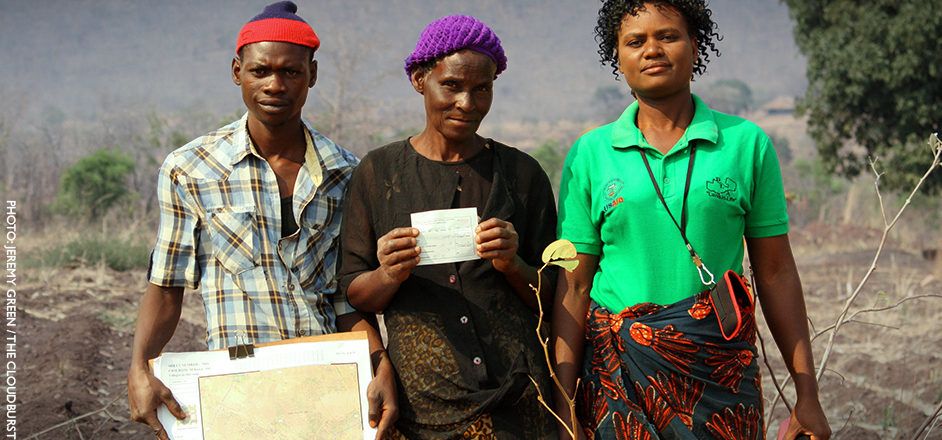
From a mobile application to secure tenure in Tanzania, to property rights and miracle trees in Zambia, to the passage of the Sustainable Development Goals in New York, land rights remained a critical issue throughout 2015.

As a fundamental issue that underpins economic growth, food security, conflict mitigation and efforts to address climate change, land rights will continue to feature prominently on the global development stage in 2016. Here are the top 5 things to look for in the new year from USAID’s Land Office:

1) REDESIGNED WEBSITE WITH EVALUATION DATA
USAID is currently conducting rigorous impact evaluations of land tenure programs in Ethiopia, Guinea, Liberia, and Zambia. These evaluations involve large-scale, detailed surveys that are yielding large amounts of valuable data on topics such as agricultural productivity, conflict, natural resource management, and of course, perceptions of tenure security. In 2016, USAID will launch a redesigned Land Tenure website that will make these data sets open, available and free to use for all. Researchers and other interested parties will be able to explore and analyze the data sets – along with data codebooks and survey instruments – building new knowledge and improving learning and decision making in the land sector and beyond.

2) MOOC VERSION 2.0
In 2015, USAID launched the first ever Massive Open Online Course on Land Tenure and Property Rights. The response was overwhelming. Two thousand people from 62 countries signed up to take the course, bringing together valuable knowledge, experiences, insights and perspectives from across the globe. In 2016, USAID will launch an updated version of the MOOC, with revisions to the content and structure based on participant feedback from version 1.0.

3) NEW COUNTRY PROFILES
USAID’s Land Tenure country profiles are one of the most valuable resources for understanding the nuances of various countries’ laws, policies, norms, strengths, weaknesses, challenges, and needs with respect to land and resource governance. In 2016, USAID will begin updating some of our 65 country profiles with new research, information and analysis to reflect current, on the ground realities. The first batch of country profiles to be updated in the first half of 2016 will be: Burkina Faso, Cote d’Ivoire, Ethiopia, Ghana, Kosovo, Peru, Philippines, Rwanda, Tanzania, and Zambia.

4) NEW ISSUE BRIEFS
Why does land tenure matter to energy infrastructure projects? What are the social impacts and concerns related to land tenure projects? In 2016, USAID will release new issue briefs examining these and other issues, adding to our existing library of 20 land tenure-related issue briefs. The first of these new issue briefs, Land Tenure and Energy Infrastructure, will be released in January, with additional issue briefs, including Land Tenure and Social Impacts, planned for later in 2016.

5) NEW RESEARCH AND ANALYSIS
Building on research and analysis from a round of recent land tenure impact evaluations, USAID and its partners will publish new findings examining the empirical evidence around critical topics in the land sector. In 2016, USAID will publish papers looking at issues such as: how land rights relate to conserving resources and preventing deforestation; how gender norms, governance systems and economic incentives affect development projects involving land; and whether land rights act as an effective incentive for smallholder farmers to adopt climate smart agriculture. The first round of research will be available in March at the Annual World Bank Conference on Land and Poverty, with additional publications to be released throughout the year.

Five Reasons Land Mattered in 2015

Land and resource rights had an increasingly important role in 2015 due to growing evidence and recognition that having clear, secure land rights is an essential component of reducing extreme poverty, eliminating hunger and addressing climate change. That is why we are looking back at five reasons land mattered in 2015.

  1. Land is included in the Sustainable Development Goals (SDGs) as a target to eradicate poverty, end global hunger and obtain gender equality
    The SDGs define global development priorities through 2030. Now, with a land rights indicator in one of the goals, land is formally recognized as a crucial measure of progress on some of our most pressing development issues.
  2. The Girls Count Act of 2015 becomes a law and prioritizes land rights for women and girls
    Signed into law by President Obama in 2015, the Girls Count Act calls for support to programs that help secure land rights for women and girls, helping them to obtain a key asset that can lead to greater control over decision-making and positive outcomes on food security, child nutrition, health and education.
  3. Thousands join an open online course on land rights
    In September, USAID launched the first-ever Massive Open Online Course (MOOC) on land tenure and property rights. Nearly two thousand participants from over sixty countries— including representatives from donors, governments, civil society, and the private sector—have taken part in the first iteration of the course. This is the first time that a free, shared, global education tool has been developed to help development practitioners and others understand the complex challenges created by insecure land rights–and the evidenced-based global best practices for addressing them.
  4. New mobile open-source technologies are deployed by USAID to help communities map and document their rights and analyze their land.
    In many countries, it is prohibitively difficult or expensive for citizens to map and document their land, or to find out what their land can be best used for. New open-source technologies, such as readily available GPS-enabled smartphones and tablets, can help address this problem, and bring the benefits of land mapping and analysis to rural communities. In 2015, we saw a suite of Mobile Applications to Secure Tenure (MAST) launched, in Tanzania, in Kenya and Namibia, and in Zambia. These technologies are opening new doors for transparently and efficiently recording rights, documenting claims, mapping parcels and sharing information and they have the potential to dramatically lower the costs of these services.
  5. 2015: A year of good guidance on responsible investment
    In 2015, several organizations issued new guidance designed to reduce risks and increase benefits associated with private sector investments in land. These documents outline best practices related to land tenure due diligence, community consultations, mapping exercises and they provide guidance on how to develop appropriate benefit sharing arrangements. In March, USAID released its Operational Guidelines for Responsible Land-based Investments. The Operational Guidelines provided a strong basis for a tool released in August by the New Alliance on Food Security and Nutrition called the Analytical Framework for Responsible Land-based Agricultural Investments. In June, the Interlaken Group released a guidance tool supporting businesses aiming to respect land and forest rights, and in October, the FAO and OECD followed on with guidance on Responsible Agricultural Supply Chains. Taken together, these documents contribute to an expanding body of best practices for land investments.

Ask the Expert: Dr. Matthew Sommerville

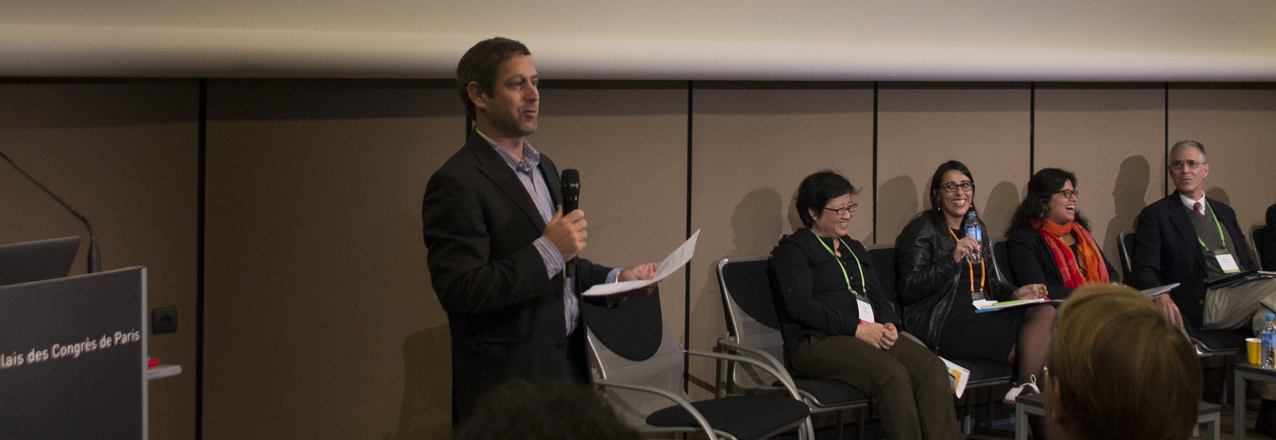
Matthew Sommerville, PhD, is the Chief of Party of USAID’s Tenure and Global Climate Change Program. This week, Dr. Sommerville presented on USAID’s work to clarify and strengthen land and resource tenure for REDD+ projects at the Global Landscapes Forum in Paris. Dr. Sommerville also demonstrated a new open-source technology that USAID currently using to map, record, and certify rights to customary lands in Zambia. As part of our Ask the Expert series, we asked Dr. Sommerville to describe some of his work on climate-change and tenure for USAID.

Question: Tell us about yourself, what is your professional background?

Answer: I manage a multi-country project for USAID that explores the relationship between secure land and resource tenure with climate change mitigation and adaptation primarily through two pilot projects in Zambia and Burma.

I have an academic background in the behavioral economics of natural resource management, particularly around structuring positive incentives (payments) and negative incentives (law enforcement), which included field research on payments for biodiversity conservation in rural Madagascar.

In 2009 when there was a big push for a climate agreement, I was part of an organization that was tracking international environmental negotiations and for the next two years, I worked on UN climate negotiations, where I developed a fond place in my heart for the unique world that the Global Landscapes Forum is a part of. When USAID started the first generation of Reducing Emissions from Deforestation and Forest Degradation (REDD+) projects in 2010, there was a lot of momentum for a cap-and-trade compliance market for credits in the US and I had the unique opportunity to work on consolidating the lessons learned from early adaptation and REDD+ as well as land tenure projects.

Question: You have done a lot of research on REDD+ and land and resource tenure. What is REDD+ and why is it important?

Answer: Changes to land-use is one of the largest emitters of greenhouse gases globally and for many of the countries where USAID works, deforestation and forest degradation are by far the biggest contributors to greenhouse gases. REDD+ projects promise economic incentives for reducing or reversing deforestation and forest degradation and early versions of these projects were assumed to be a low-cost way to reduce emissions.

However, over the past decade it has become increasingly clear that REDD+ is not strictly about stopping deforestation in isolated patches of forest within countries, but rather that REDD+ requires a much larger national or jurisdictional scale and often significant policy and capacity development, including in regards to land tenure. While national policy engagement adds a complex layer to project implementation, it provides great opportunities to achieve broader land use governance objectives.

Question: Why does land tenure matter for REDD+?

Answer: REDD+ is not only about providing people with financial incentives to stop cutting down trees, it is also about developing effective forest governance by establishing and implementing rules at the national and jurisdictional levels and applying monitoring and enforcement for these incentives.

Structuring positive incentives largely boils down to land and resource rights. If a stakeholder has legitimate rights, then she may be entitled to receive a payment or compensation, but if she lacks legitimate land and resource rights, she will bear the costs of enforcing her rights.

One of the main challenges that we face with land tenure and natural resource policies is that existing legal frameworks may not recognize the de facto rights of local stakeholders. So improving the legal framework to include customary land use practices is important to develop secure tenure systems and prevent deforestation.

Question: What are some ways that strengthening land and resource tenure benefits REDD+ implementation?

Answer: Clarifying and strengthening land and resource rights for local members of communities that neighbor forests provides these groups with stronger negotiating power to REDD+ activities. It allows local actors to receive greater benefits and places more responsibilities with these local stakeholders. Strengthening tenure is increasingly being recognized as a crucial component of REDD+ implementation where, for example, community lands will be demarcated or officially recognized prior to establishing land and natural resource management agreements.

Question: Describe USAID’s work under the Tenure and Global Climate Change Program in Zambia. What does this project plan to achieve? What are some of the key challenges and lessons learned so far?

Answer: In Zambia, USAID’s Tenure and Global Climate Change project works with district land alliances to support traditional leaders by mapping customary lands for land certificates to communities and households within their chiefdoms.

This mapping of village boundaries, resources and individual household land rights, provides a powerful tool for land-use planning and helps some chiefs better understand the remaining wetland and forest resources within their jurisdiction. It also helps these chiefs engage in longer-term land-use planning, management and monitoring of the resources within the chiefdom.

Increasingly, the Zambian government is interested in supporting chiefs and rural communities to manage their resources. The availability of registered rights provides a powerful tool for resource planning and creates incentives for households to engage in climate-smart agricultural practices, like agroforestry.

Question: How do you think open-source technology can help secure land rights and help prevent deforestation?

Answer: Putting tools in the hands of local decision makers is an important step in truly testing whether local communities can manage their resources as effectively or more effectively than central governments. There is a great deal of information and tools to help with decision making at the local level and providing local actors with access to these tools information is a challenge that open-source technology can help resolve.

Question: Community participation is an integral part of the mapping technology being used in Zambia, why do you think community participation is key to this process?

Answer: USAID’s work on the Tenure and Global Climate Change project is an attempt to document existing resource rights that have been negotiated over decades by community members, village leaders, and chiefs. A crucial part of this project is creating multiple stages that allow for community feedback to improve the process. While we are trying to map land rights at a low cost, we are also ensuring that local institutions have a real chance to verify claims.

Question: Why is the Global Landscapes Forum important? Why do you think it is significant that USAID’s Tenure and Global Climate Change project be presented here? What do you hope people take away from your presentation?

Answer: The Global Landscapes Forum is likely the biggest annual gathering of people who make decisions regarding the integration of climate change, forests, agriculture and land-use planning. There are too many people who believe that while land tenure is a critical issue, it is also too complex, too political or too sensitive to deal with. USAID’s Tenure and Global Climate Change is at the Global Landscapes Forum to stress that strengthening land tenure and resource governance does not require dramatic agrarian land reform, but rather that there are incremental steps that can support strengthening rights over time. By sharing these experiences, particularly from a wide range of USAID projects, we hope to create a momentum for strengthening land rights as both an enabling condition for adaptation and mitigation interventions and also as a key element of successful interventions.


Certifying Zambia’s Future

Documenting land rights to reduce conflict, address climate change.

Originally appeared on Exposure.

OUR MOST IMPORTANT ASSET IS LAND

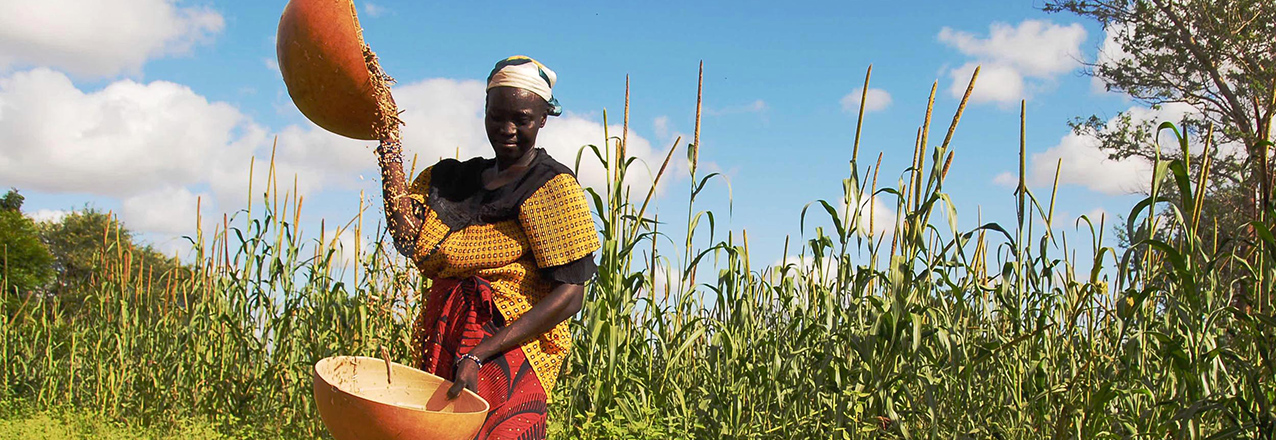
In Zambia, agriculture supports the livelihood of over 70 percent of the population, including 78 percent of women.

For women and men in Zambia – as in much of the developing world – land is one of the most important assets. Clear, secure rights to land empower people to make long-term investments that reduce extreme poverty, improve food security and address climate change.


BUT RIGHTS TO LAND AND RESOURCES ARE OFTEN UNCLEAR AND INSECURE

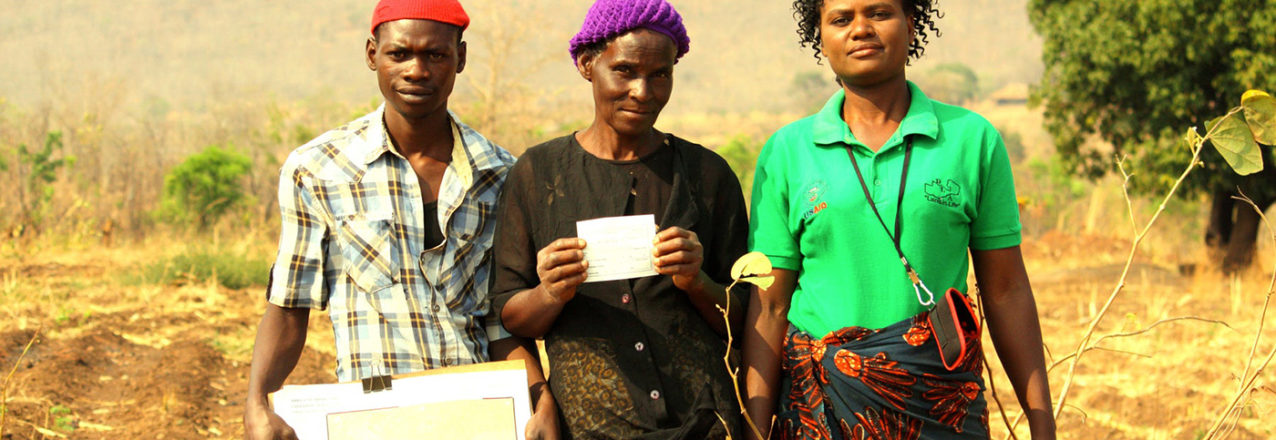
About 90 percent of the land in Zambia is under customary control outside of the formal legal system, administered by traditional authorities, such as chiefs and headmen. The vast majority of rural Zambians live on these customary lands without formal property documentation.

Maps showing the boundaries of fields, forests or villages are often inaccurate or non-existent. The result is a lack of clarity over rights and responsibilities.

In a recent survey in Zambia’s Eastern Province, 91 percent of rural people stated a desire to acquire some form of paper documentation for their land.

Read the full photo essay on Exposure.

Land Rights: A Recipe for Success

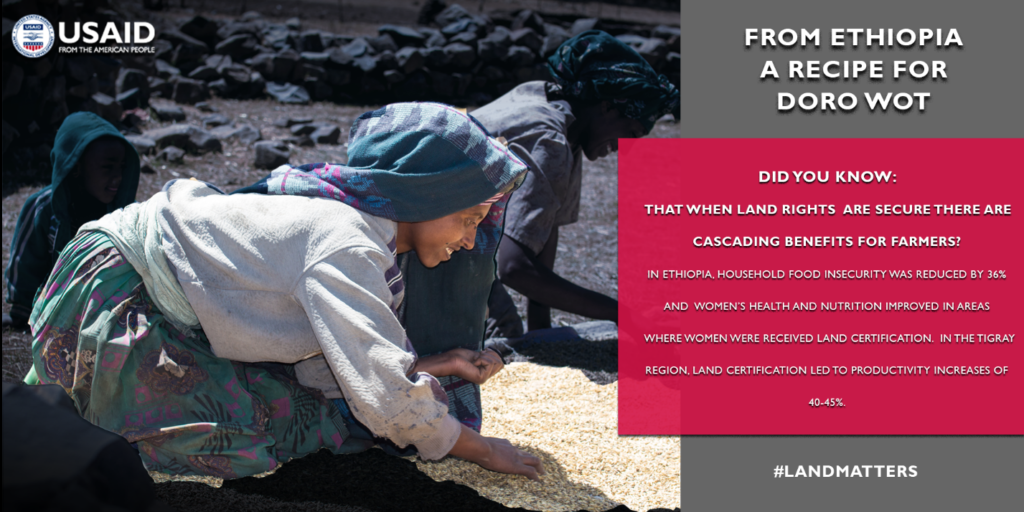
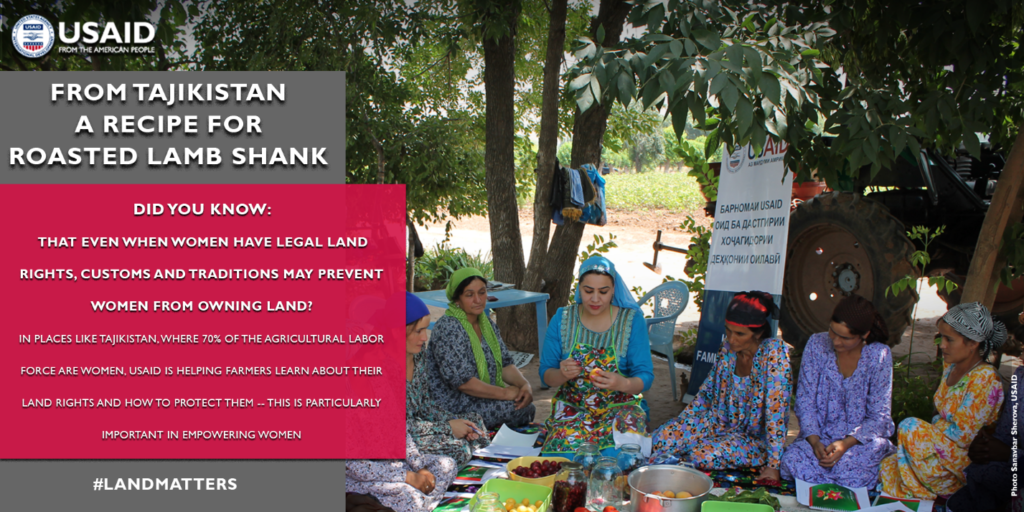
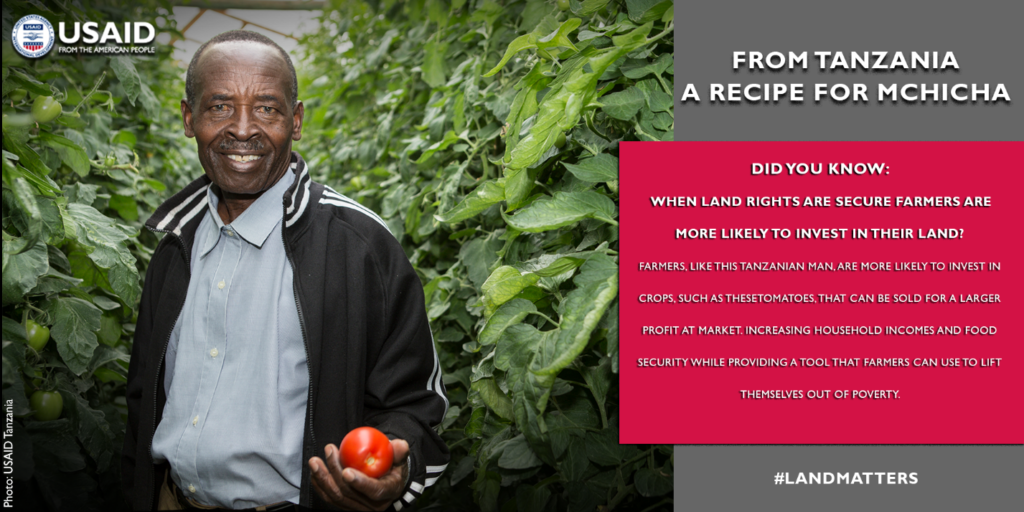
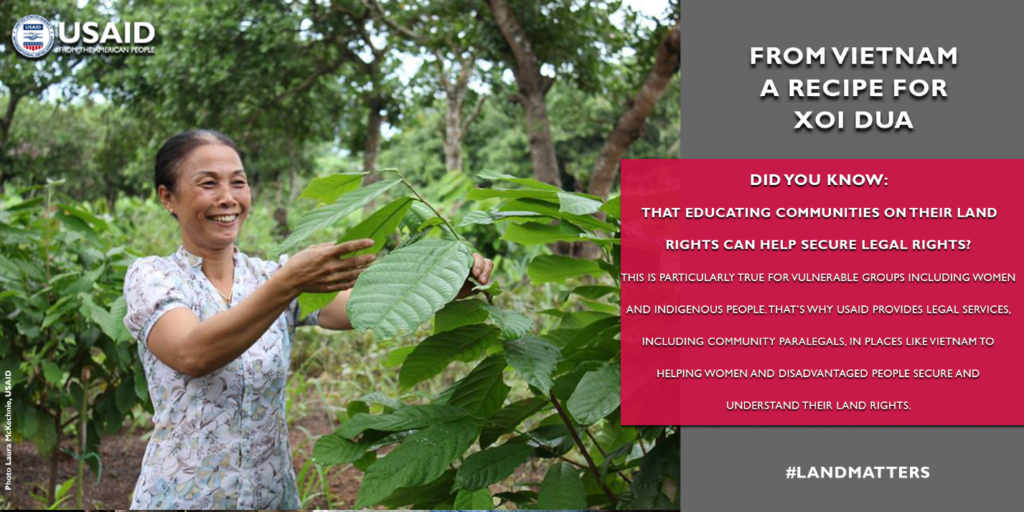
Secure land rights play a vital role in improving food security and nutrition while reducing extreme poverty and hunger. We know that farmers who are confident that their rights to the land they cultivate will be respected in the future, are more likely to invest in improved production practices, such as soil and water conservation or tree planting, that can help boost their yields and ensure their land will remain fertile for years to come. When secure property rights can be traded, whether through sales or leases, the most capable farmers, including women and the poor, are also able to acquire more land to grow their successful farms – and their neighbors can access capital to invest in off-farm enterprises that have knock-on effects and are an important building block to create more resilient rural economies.

That’s why USAID’s Land Office is committed to help secure land rights for farmers and rural communities. Today, in recognition of Feed the Future’s progress, we are sharing traditional recipes from some of the countries where USAID’s land rights programs have helped women and men improve their harvests and increase their incomes. Bon appetit!


Doro Wot (Red Chicken Stew)
From Ethiopia
Ethiopia_wr

Ingredients
(10 Servings)

  • 5-8 pounds of chicken drumsticks and thighs skinned and cleaned
  • 8 large onions finely chopped
  • 2 cups of vegetable oil
  • 5 teaspoons minced or powdered garlic
  • 2 teaspoons minced or powdered ginger
  • ½ cup of authentic Ethiopian berbere
  • ¼ cup of paprika
  • 2 teaspoons korerima
  • 2 teaspoons wot kimem/mekelesha
  • 2 teaspoons salt (as needed)
  • 1-3 cup of water

Directions

  1. In a large pot, simmer onion, garlic and ginger with vegetable oil till lightly brown.
  2. Add berbere and paprika, continue to simmer for about 15-20 minutes at low heat stirring occasionally and adding a touch of water as needed to avoid sticking.
  3. Add chicken and simmer until chicken is done while adding the remaining water as needed.
  4. Finish simmering and add salt, korerima, wot kimem (mekelesha).

Serve hot with injera (Ethiopian flat bread made of teff).


Roasted Lamb Shank
From Tajikistan
Tajikistan_wr

Ingredients

  • 1 teaspoon salt
  • ½ teaspoon ground cumin
  • ½ teaspoon ground coriander
  • ¼ teaspoon chili pepper
  • 3-4 small lamb shanks
  • 3 tablespoons olive oil
  • 1 pound of tomatoes, quartered
  • 2 teaspoons chopped parsley & basil

Directions

  1. Heat oven to 300 degrees Fahrenheit.
  2. Mix the salt, cumin, coriander, and chili pepper together.
  3. Season the lamb shanks with the spice mixture on all sides.
  4. In an ovenproof pan over high heat, sauté the meat in the oil until brown on all sides. Add the tomatoes, cover with a lid, and cook for 2 ½ hours.
  5. Remove the lid, and cook for another 30 minutes, flipping the shanks halfway through.
  6. Take out of the oven, and let rest 10 minutes.
  7. Pull the meat from the bones, trying to keep it in large chunks.
  8. Remove the skin from the tomatoes.
  9. Garnish with chopped parsley and basil.

Serve over flatbread – with cooking liquid as desired.


Mchicha (Spinach & Peanut Curry)
From Tanzania
Tanzania_wr

Ingredients

  • 2 pounds of spinach
  • 1 ½ ounces of peanut butter
  • 1 tomato
  • 1 medium onion
  • 2 teaspoons curry powder
  • 1 cup coconut milk
  • 3 tablespoons butter
  • 1 teaspoon salt

Directions

  1. Wash and chop spinach. Peel and chop tomato and onion.
  2. Mix peanut butter and coconut milk in a separate bowl and set aside.
  3. Heat butter over medium heat in sauté pan. Add onion, tomato, curry powder and salt to pan and sauté until onions are soft – approximately 5 minutes.
  4. Add spinach and cook until wilted. Add peanut butter and coconut milk mixture to pan. Gently simmer for 5 minutes. Serve with rice, chapati.


Xoi Dua (Sweet Sticky Rice)
From Vietnam
Vietnam_wr

Ingredients

  • 2 cups of glutinous or rice (soak in warm water for at least 1 hr.)
  • 1 cup of water
  • 1 cup of lite coconut milk
  • 3 drops of green food coloring
  • ¼ teaspoon of salt
  • 4 teaspoons of sugar
  • ¼ cup of unsweetened shredded or shavings of coconut (optional)

Directions

  1. Drain the glutinous rice in a colander.
  2. Place drained rice in a mixing bowl and add salt, sugar, and food coloring. Mix well until all the grains have an even color.
  3. Add water, coconut milk and rice mixture to a non-stick pan with a lid. Turn heat to medium high and place the lid on, periodically removing it to stir the rice. Rice is done when it is sticky and translucent green.
  4. Remove the rice from the stove and let it cool for about 5 minutes. Stir in shredded coconut if desired. Serve at room temperature.

Recipe from: Simply Vietnamese


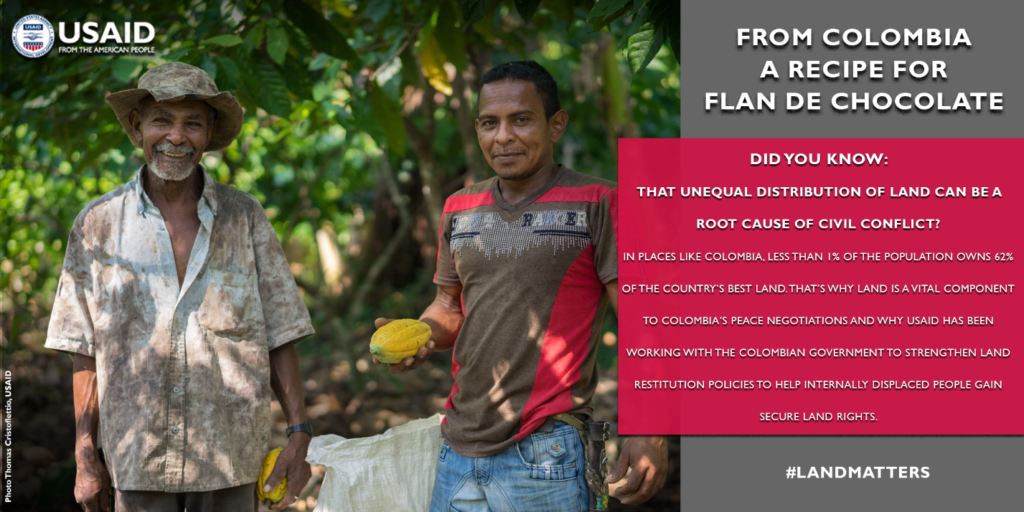
Dessert: Flan de Chocolate
From Colombia
Colombia_wr

Ingredients
(6 Servings)

Caramel

  • 1 cup sugar
  • ¼ cup water

Flan

  • 5 eggs (whites and yolks)
  • 2 egg yolks
  • 1 can sweetened condensed milk
  • 1 can evaporated milk
  • 1 cup heavy cream
  • 1 ½ tablespoon sugar
  • ¾ cup cocoa powder

Directions

  1. To prepare the caramel, put 1 cup of sugar in a small pot with ¼ cup of water. Bring to a boil over high heat. Stir once and reduce the heat to medium and cook about 5 minutes or until the syrup turns a caramel color.
  2. Immediately pour an equal amount of the caramel into each ramekin or any ovenproof mold you want to use. Swirl each dish to coat the base with the caramel, work fast as the caramel will harden quickly as it cools. Place all the ramekins in a large roasting pan and set aside.
  3. Preheat the oven to 350 F.
  4. In a medium bowl, using an electric mixer, mix the eggs, egg yolks and 1-½ tablespoons of sugar for 2 to 3 minutes. Add the condensed milk, heavy cream, evaporated milk and cocoa powder and mix for 1 more minute.
  5. Carefully pour an equal amount of the flan mixture into the caramelized ramekins in the roasting pan. Then add hot water to the roasting pan, not to the ramekins, until the water comes halfway up the sides of the ramekins.
  6. Place the roasting pan in the oven and bake for 1 hour or until a knife inserted in the center of the flan comes out clean.

Recipe from: My Colombian Recipes

Ask the Expert: Dr. Agnes Quisumbing

agnes_quisumbing_cropped

Question: Dr. Quisumbing, tell us about yourself; what is your professional background?

Answer: I am an economist by training, and have worked on intrahousehold and gender issues, land and property rights for 20 years at the International Food Policy Research Institute (IFPRI). I came to IFPRI after working at the University of the Philippines and the World Bank. At IFPRI, I led the gender and intrahousehold research program, and co-led work on poverty and economic mobility and gender and assets.

Question: You have researched women’s land rights in a variety of countries in Africa and Asia. What does your research show about the importance of women’s land rights in these different contexts, and their relationship with other important development issues?

Answer: Women’s land rights play out differently in different countries and contexts. The importance of women’s land rights to poverty, economic mobility, and sustainable agriculture crucially depends on country and context, including the women’s ability to own and invest in other types of assets (including their own human capital) and the availability of non-farm economic opportunities. In Bangladesh, for example, our work on the intergenerational transmission of poverty shows that it is the husband’s land that matters for the household’s ability to move out of poverty in the long run—but that is because very few women own land in the first place. In the Philippines, which has a more egalitarian inheritance system, parents tend to bequeathe land to sons, but invest in daughters’ education, enabling daughters to move out of agriculture into better-paying non-agricultural jobs. In Ghana and Ethiopia, stronger land rights for women are associated with women’s greater ability to undertake investments in soil productivity, such as tree planting and adoption of climate smart agricultural practices. Decisionmaking rights are also important: in Uganda, we found that that adoption of orange sweet potato, which has been disseminated to reduce vitamin A deficiency, is more likely on plots that are jointly owned by the husband and wife, but in which the wife has the primary decision-making role on what to grow. The fact that women’s land rights have different implications in different settings means that we need to understand the social and cultural context of land rights when designing the appropriate intervention to strengthen women’s property rights—not just land rights, but rights over resources, more generally speaking.

Question: What are some of the key challenges faced by women in acquiring stronger land rights?

Answer: The biggest challenge comes from deep-seated gender norms that discriminate against women by denying them rights to property, particularly land. There still are entrenched beliefs that women should not own land, because they are not farmers. Obviously, this has no basis in reality, because many women farm, but old beliefs die hard. There also are other beliefs that women depend on men and should not own property in their own right. And even if legislation mandates equal property rights between men and women, in many cases women are not aware of their legal rights. For example, even after a successful community land registration effort in Ethiopia, the gap between men and women in knowledge about different dimensions of land rights is quite large.

Question: How are these challenges being dealt with? What steps should donors and practitioners take to help secure women’s land rights and ensure that their programming does no harm?

Answer: These challenges are being dealt with in creative ways. There are efforts being undertaken by national or state governments, such as reforms of inheritance law and family law in India and Ethiopia, respectively, joint titling efforts in Vietnam, as well as efforts being undertaken by local governments, NGOs, and civil society organizations. In a Helen Keller International homestead food production program in Burkina Faso, where men do not believe that women are farmers or should hold land, the program negotiated with community leaders to lease land for a community garden, where women were able to plant vegetables. Women were also taught how to plant nutritious vegetables in their own home gardens. In intervention areas, qualitative work found that attitudes towards women as farmers, and as land owners, had shifted favorably—a change in attitudes that wasn’t found in areas where the program did not work. In West Bengal, Landesa’s Nijo Griha, Nijo Bhumi (NGNB) program allocates land to poor households and promotes the inclusion of women’s names on land titles. Finally, in Tanzania and other parts of Africa, community-based legal aid programs employing paralegals are helping to educate women about their legal rights as well as providing assistance in claiming these rights. These are just a few examples of what can be done, both at the policy level and on the ground.

Question: Moving forward, what do you see as the key research questions that need to be examined further with regards to women’s land rights?

Answer: I think that we still need to document more systematically the nature and extent of women’s land rights, over the entire spectrum of use and control rights to full ownership. We also need to understand more fully how such rights are shared with men, and exactly what joint control and ownership means in different contexts. It would be good to know what types of policies and interventions work best to strengthen women’s land rights, and what are the short- and long-term impacts of interventions to strengthen these rights. We often focus only on short-term impacts, not recognizing that interventions that affect asset ownership and control often have effects that unfold over time, and even over generations.

Question: Finally, how do you think the SDGs will impact the issues of women, land and food?

Answer: There is an explicit SDG on gender equality (SDG5), and one of its targets has to do with gender equality in “rights to economic resources, as well as access to ownership and control over land and other forms of property, financial services, inheritance and natural resources, in accordance with national laws.” But some countries still have laws that discriminate against women in terms of property and inheritance rights, and customary practice may still be gender-biased even if statutory law mandates equal rights to own land. Gender inequality is not an issue that is confined to SDG 5, but cuts across the other SDGs, for example, SDG1 on ending poverty, SDG2 on ending hunger, SDG3 on health and well-being, SDG 13 on climate change, etc. Achieving gender equality is a goal in itself, but also helps to attain other development goals.

Why Land Matters for the Sustainable Development Goals

For the world’s poor, particularly the rural poor, land is their most critical non-labor asset. This important asset needs to be protected and respected by the public and private sectors to reduce vulnerabilities and conflict and promote empowerment and economic growth. This is why the global community’s unanimous endorsement three years ago of the Voluntary Guidelines on the Responsible Governance of Tenure of Land, Fisheries and Forests (VGGT) was such a milestone. The VGGT recognize that: “The eradication of hunger and poverty, and the sustainable use of the environment, depend in large measure on how people, communities and others gain access to land, fisheries and forests.”

Secure access to and control of land and other valuable natural resources provides women and men, the elderly and youth, indigenous peoples, pastoralists and other vulnerable groups with positive incentives to conserve their lands and to invest to enhance its potential. Secure land rights help to increase agricultural productivity and food security, contributing to more resilient rural economies. More secure rights also reduce costly conflicts – conflicts that take lives, destroy property and constrain economic growth. And with secure rights, communities contribute in important ways to protecting forests and biodiversity – lessening the harmful impacts of global climate change.

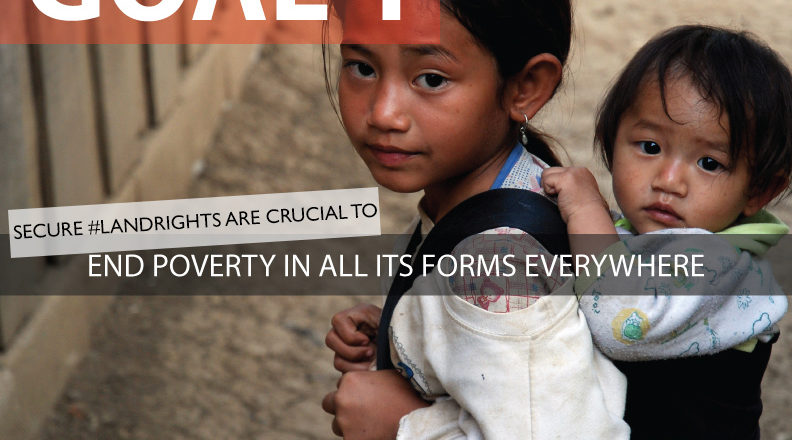
This is why it is so important to ensure that a land indicator remain as part of the effort to track progress on SDG 1: Ending Poverty in All Its Forms Everywhere.

Today 75% of the world’s poor live in rural areas where poverty rates are substantially higher (at 29%) than they are in urban areas (13%). Many of these rural poor depend upon agriculture for their livelihoods. Unfortunately, these livelihoods are constrained by poor infrastructure, lack of inputs, weak credit markets and, in many cases, weak land governance. By addressing these constraints and by securing rights to land and natural resources we can make progress in increasing agricultural growth, which we know is particularly effective at reducing poverty As the World Bank notes: “Access to land, water, and human capital critically determine the ability of households to participate in agricultural markets, secure livelihoods in subsistence farming, compete as entrepreneurs in the rural nonfarm economy, and find employment in skilled occupations.”

Given the importance of secure rights to land and natural resources for the world’s poor, we strongly encourage the Inter-Agency and Expert Group on Sustainable Development Indicators to include a robust and measurable land indicator under Goal 1:

Percentage of people with secure tenure rights to land (out of total adult population), with legally recognized documentation and who perceive their rights to land as secure, by sex and by type of tenure.

As USAID knows, land matters for ending poverty.

Measuring Change: A Look at the Impact of Property Rights on Farmers

It seems natural to believe that secure property rights affect a farmer’s willingness to make longer-term investments. If farmers do not have secure property rights, they will be less likely to plant and sustain trees, conserve resources or make long term improvements to the soil because their land might be taken away from them before they can reap the benefits of these investments. But does this relationship play out in reality, particularly for the millions of smallholder farmers across the developing world?

This question is important because these types of long-term investments are critical for reducing extreme poverty, improving food security and nutrition, and addressing climate change. Understanding the degree to which property rights affect incentives to invest and conserve is important for policy makers and donors. Which is why USAID is attempting to answer this question in Zambia through a randomized controlled trial – the gold standard of rigorous, scientific impact evaluations.

Agriculture supports the livelihood of over 70% of the population in Zambia, including 78% of women. Relative to other countries in the region, it has an abundance of fertile land, water, and a favorable climate for agricultural production. Yet, despite these favorable conditions, crop yields are well below global averages and 80% of rural Zambians live in extreme poverty.

Improved conservation agriculture and agroforestry practices – such as planting fertilizer trees between crops – would help improve crop yields. However, adoption of these “climate-smart agriculture” practices has been low. In eastern Zambia’s Chipata District, agroforestry tree species were planted on only 6% of fields. One reason why might be that many farmers in Zambia do not have secure land rights. The vast majority of rural Zambians live on customary land without formal documentation of their land rights.

To address this, USAID works with four local chiefs and the Chipata District Land Alliance, a local NGO, to 1) map, demarcate and certify the customary land rights of local farmers and 2) promote sustainable agroforestry practices that facilitate tree planting and survivorship.

To rigorously measure the effectiveness of these approaches, USAID randomly assigned 75 villages to receive the agroforestry extension, 75 villages to receive the land certification program, 75 villages to receive both, and 75 villages to receive neither (the control group). By conducting extensive surveys in these villages over a three-year period, before and after activities take place, the impact evaluation will be able to rigorously measure changes over time. The results will help answer the question of “How do changes in property rights that strengthen a farmer’s perception of long term security over farmland affect a farmer’s decision to practice climate smart agriculture, including agroforestry, on their own farms?”

For USAID – and for the millions of people in the developing world living without secure rights to land and resources – the answer to this question could be an important part of shaping efforts to end extreme poverty, reduce hunger, and address a rapidly changing climate.

Learn more: view a presentation on the baseline findings from this impact evaluation from the American Evaluation Association conference here.

Ask The Expert: Heather Huntington

Heather Huntington, PhD

Dr. Heather Huntington is an Impact Evaluation Specialist on USAID’s Evaluation, Research and Communication project, implemented by The Cloudburst Group. She leads the design and implementation of impact evaluations for land tenure and natural resource management projects in Ethiopia, Guinea, Liberia and Zambia. Dr. Huntington is among the authors of the 2015 World Bank Paper: Perceptions of Tenure Security and a presenter at the American Evaluation Association (AEA) Conference discussing impact evaluations testing improvements to land tenure in the context of climate smart agriculture in Zambia, artisanal diamond mining in Guinea and community forestry management in Zambia. As part of our Ask the Expert series, we asked Dr. Huntington to describe some of the processes that go into designing and implementing an impact evaluation for USAID:

Question: Tell us about yourself, what is your professional background?

Answer: I design and implement impact evaluations related to land tenure and natural resource management, service delivery and local governance. I received a PhD in Public Policy and Political Science from the University of Michigan and my dissertation was an impact evaluation of a USAID water demand management project in Southern Kyrgyzstan. After graduate school, I served as a full time Democracy Fellow for USAID’s Center of Excellence on Democracy, Human Rights and Governance, where I continue to have an affiliation. My role in the Center was as an impact evaluation specialist for democracy- and governance-related projects.

Question: Why are impact evaluations significant to USAID’s land tenure work?

Answer: Impact evaluations are an important tool to measure the effectiveness of programs in achieving their desired results. Specifically, they can improve USAID’s programming by refining an intervention to an outcome of interest, such as higher agricultural productivity or lower levels of conflict. Impact evaluations help decision makers identify and address holes in the logic of a program’s design.

In addition, well-designed impact evaluations often involve a large number of household surveys and thus produce a large amount of useful data that can serve multiple purposes. This includes testing the program theory and hypotheses, but also exploring many other research questions in depth.

Question: What are some of the key take-aways from the land tenure impact evaluations you are presenting at the AEA conference?

Answer: One take-away is that it it is important to plan for an impact evaluation at the initial design stage of a program, including conducting a cost-benefit analysis, to help determine the type of impact evaluation the program should use. This is important because rigorous experimental designs require that the program implementation design be written into the fabric of the program design as early as the project’s approval stage. Quasi-experimental impact evaluations are generally the easiest to carry out from implementation standpoint, however,  from a research perspective, these methods have numerous drawbacks and present multiple methodological challenges.

Considerations such as if the impact evaluation includes a community listing, or pre-census, of the study areas under evaluation is often imperative for the sampling design and needs to be factored in at the budgeting and planning stage. Additionally, factors including the preferred data collection method, should be examined. In our experience,  electronic data generally produces higher quality data than paper data collection but requires significant preparation, programming and training for local data collection firms..

Finally, a rigorous impact evaluation requires very close collaboration between the evaluation team,  program implementer and donors. While the evaluation should be led by independent third-party groups, communication and coordination regarding timing, interventions and geographic scope is essential between the evaluation team and implementing partner.

Question: Why is the American Evaluation Association Conference important and why is it significant that USAID’s land tenure impact evaluations are presented at this conference?

Answer: I believe that development partners and researchers will be interested in learning about our data and research products and that other evaluation specialists and firms will be interested in learning about our process and methods. In addition to ‘getting the word out’ about what we are doing and what we have learned, it is helpful for us to know what other work is being done in the field of  land tenure and natural resource evaluation.

From the Field: Climate Change Impact Evaluation in Zambia

Persha_LLauren Persha, PhD, is an Assistant Professor in the Department of Geography at the University of North Carolina at Chapel Hill, and a Research Advisor at The Cloudburst Group. In her role as an advisor, she provides research and technical guidance on a portfolio of USAID-funded impact evaluations in the land and resource governance sectors – including impact evaluations of land tenure projects in Ethiopia, Zambia, Guinea, and Liberia.

Dr. Persha has been involved in evaluation work in Eastern Zambia since 2014, where she contributes to the design and implementation of a randomized controlled trial impact evaluation of USAID’s Tenure and Global Climate Change project.

SET UP
Conducting rigorous, field-based, mixed qualitative and quantitative methods impact evaluations at scale–as we are currently doing for the impact evaluation of USAID’s Tenure and Global Climate Change project in Zambia–is no easy task. This particular evaluation collects data with smartphones and Open Data Kit to survey 3500 households across 300+ villages, and has enumerator teams conduct focus group discussions and key informant interviews across a range of important village groups. The logistics of an intense rollout of data collection across a large geography, with many survey administrators, in a condensed time frame, can be quite a challenge.

SURVEY INSTRUMENTS
These types of evaluations are built upon a comprehensive set of survey instruments, which must be tailored to local contexts while also allowing for an eventual broader comparability. In addition to being unique, yet generally comparable, these evaluations must also adequately capture information on a range of indicators and potential mechanisms by which households are impacted by project activities over time. Close collaboration between the third-party evaluation team and project implementers is essential, as is the careful timing of the evaluation with the sequencing of project activities.

SURPRISES
Unexpected field challenges are par for the course, so flexibility is key. For example, developing an appropriate sampling frame for the household surveys was a challenge in Zambia, where the evaluation team had only lists of village names to work with because comprehensive information around villages and their locations did not exist. Verifying village information during survey implementation uncovered inevitable discrepancies–such as villages listed under multiple names or located outside the project area–and led to the evaluation team eventually conducting its own full listing of communities in other project areas prior to roll-out.

SWEET SUCCESS
The broader payoff to the development sector in undertaking impact evaluation work is high. The benefits of using rigorous and direct evidence to grow the knowledge base around the impacts by which innovative land tenure programming may achieve its development objectives extend far beyond that of any individual project. Given the current visibility and growing acknowledgement of the role that land tenure issues play on household welfare–as well as potential knock-on effects for governance, land use sustainability, food security, female empowerment, and so on–such evaluations also contribute valuable evidence on how to increase effectiveness of future development programming across a wide range of sectors.