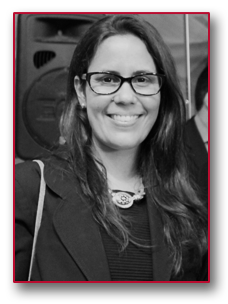
Tolima is Making a Greater Impact on Communities

Q&A with Director of Human Rights in Tolima, Colombia.

Originally appeared on Exposure.

SINCE EARLY 2016, USAID HAS WORKED SHOULDER TO SHOULDER WITH TOLIMA’S GOVERNMENT TO SHAPE RURAL DEVELOPMENT AND VICTIM-FOCUSED PLANS. JULIANA JURADO PEÑA, TOLIMA’S DIRECTOR OF THE OFFICE OF HUMAN RIGHTS UNDER THE SECRETARIAT OF INTERNAL AFFAIRS, SPEAKS ABOUT THE PROCESS AND RESULTS.

Q: Tell us about the importance of territorial action plans and their relationship with land administration.

A: Territorial action plans specify the actions that departmental and local governments are planning to undertake with the aim of promoting compliance with Colombia’s Victims Law. Tolima is home to more than 160,000 victims who are eligible for reparations through technical assistance, truth and justice, and guarantees of non-repetition. The territorial action plan is connected to Tolima’s development plan—if we don’t incorporate comprehensive assistance for victims, we won’t be able to provide the right solutions to ensure development and progress.

Q: How has your collaboration with USAID’s Land and Rural Development Program affected the Tolima government’s capacity to handle the restitution process and compliance with restitution rulings in particular?

A: Together with USAID, we have helped Tolima’s government achieve a greater impact for restituted communities. Thanks to USAID’s support, we’ve developed various mechanisms that allow the departmental government a clearer idea of the steps involved in complying with restitution rulings and in achieving objectives that go beyond simply placing victims back on their land.


Land Matters Media Scan – 3 January 2017

Here are the recent land tenure and resource management media items:

US Government

  1. Can the new US National Action Plan encourage responsible business under Trump? (12/19/16)
    Source: Business & Human Rights Resource Centre

Global

  1. Women’s Rights in Land Investment Decisionmaking: Interview with Celine Salcedo-La Viña (January 2017)
    Source: Food Tank

Africa

  1. AfDB plans to safeguard women property rights (12/22/16)
    Source: Daily Nation
  2. Tanzania: Land Rent Defaulters Face Public Exposure Starting Next Month (12/30/16)
    Source: AllAfrica / Tanzania Daily News
  3. Nigeria: Lagos development boom sparks fear that slum dwellers will be left homeless (12/21/16)
    Source: Thomson Reuters Foundation
  4. Zambia: Traditional land will not be put on title-Mutati (12/19/16)
    Source: Lusaka Times

Americas

  1. US: New S.C. property tax law protects family land rights (1/2/17)
    Source: WCSC
  2. US: In a victory for Native American tribes, Obama names new monuments in Utah and Nevada (12/28/16)
    Source: PBS NewsHour / AP
  3. Ecuador: U.N. experts slam Ecuador over forced closure of land rights group (12/30/16)
    Source: Thomson Reuters Foundation
  4. Mexico’s Maya point way to slow species loss, climate change (12/30/16)
    Source: Thomson Reuters Foundation

Asia

  1. Myanmar: profit clouds army pledge to return seized land (1/2/17)
    Source: Morung Express / Reuters
  2. China Reassures Homeowners Worried About Land Rights (12/26/16)
    Source: New York Times
  3. India: Women farmers in northern India battle tradition, self-doubt to own land (12/29/16)
    Source: Thomson Reuters Foundation
  4. Cambodians push for transparency over large land deals (12/23/16)
    Source: Thomson Reuters Foundation

Pacific

  1. Indonesia: A village’s first female chief ended illegal logging with spies and checkpoints (12/30/16)
    Source: PRI

Land Matters Media Scan – 19 December 2016

Here are the recent land tenure and resource management media items:

USAID

  1. Open Position: LandPKS Lead Programmer
    Source: LandPKS website
  2. Open Position: Global Coordinator
    Source: University of Colorado website
  3. US Releases First National Action Plan on Responsible Business Conduct (12/19/16)
    Source: USAID LandLanks
    Related: National Action Plan on Responsible Business Conduct
  4. The Human Element of Mangrove Management (12/16/16)
    Source: USAID LandLinks
    Related: Mangroves: Where Land Meets the Sea
  5. Land, Conflict and Sustainable Development (12/7/16)
    Source: USAID LandLinks
  6. USAID Land Tenure and Property Rights MOOC (12/6/16)
    Source: LANDac

Africa

  1. Rwanda: New app to boost land conflict resolution (12/19/16)
    Source: Rwanda Eye
  2. Tanzania Adopts New Policy To Curb Land Grabbing – Analysis (12/19/16)
    Source: Eurasia Review
  3. Uganda: Poor Landowners Caught Up in Fight for Land in Oil-Rich Buliisa (12/19/16)
    Source: AllAfrica / The Monitor

Americas

  1. Top Guatemalan beauty spot mired in indigenous rights conflict (12/17/16)
    Source: The Guardian
  2. Mexican ranchers and indigenous people urge government to solve land conflict (12/19/16)
    Source: Thomson Reuters Foundation
  3. Brazil: EXPERT VIEWS – What impact will Brazil’s plan to allow foreign ownership of land have? (12/15/16)
    Source: Thomson Reuters Foundation
  4. Colombia: Peace can transform Colombia into breadbasket for world, president says (12/15/16)
    Source: Thomson Reuters Foundation
  5. Colombia: FAO, World Bank to Support Land Reform in Colombia (12/13/16)
    Source: IISD
  6. Colombia: UN agriculture agency to support land reforms at core of Colombia’s new peace deal (12/8/16)
    Source: UN News Centre
  7. Haiti – Justice : National Forum on Land Security in Haiti (12/16/16)
    Source: Haiti Libre

Asia

  1. India: Corruption, caste keep poor from owning land in northern India (12/14/16)
    Source: Thomson Reuters Foundation
  2. Cambodia: Millions of Cambodian farmers receive land titles under state plan (12/12/16)
    Source: Thomson Reuters Foundation

Pacific

  1. Philippines: Mediate on land, farmers, Lorenzo firm told (12/19/16)
    Source: The Inquirer
  2. Fiji: Claims of a foreign land grab in Fiji denied (12/15/16)
    Source: Radio New Zealand
  3. Malaysia: the Murut struggle against palm oil, for land and life (12/12/16)
    Source: The Ecologist

US Releases First National Action Plan on Responsible Business Conduct

Originally appeared on Medium.

On December 16, the United States published its first National Action Plan on Responsible Business Conduct, following a thorough two-year process that included consultations with stakeholders from around the country, as well as significant coordination among federal agencies, including USAID. The National Action Plan promotes responsible business conduct for U.S. companies operating abroad.

Responsible business conduct is the idea that businesses can perform well while doing good and that governments should set and facilitate the conditions for this to take place. Central to this concept is emphasizing positive contributions businesses make to economic, environmental, and social progress, while recognizing and avoiding adverse impacts of business conduct and addressing them when they occur.

The National Action Plan outlines how the U.S. government, business, labor, civil society, foreign governments, and other stakeholders will strengthen efforts to work together to promote high standards of open and accountable business practices, respect for human rights, and a commitment to transparency.

Land Rights and Responsible Investment

USAID has long been a leader in promoting responsible investment in agriculture in the developing world. Through initiatives like the New Alliance for Food Security and Nutrition, we are partnering with the private sector to accelerate investment in food production while reducing hunger and extreme poverty.

These initiatives sometimes involve land-based investments in countries where the systems that govern land and property rights are weak. Acquiring rights to use or own land in these environments can carry substantial risks. Unclear, undocumented or overlapping claims to land, lack of transparency, and the potential for land-based conflict can undermine investment projects and threaten the rights and livelihoods of local communities.

Read the full story on Medium.

The Human Element of Mangrove Management

Originally appeared on Medium.

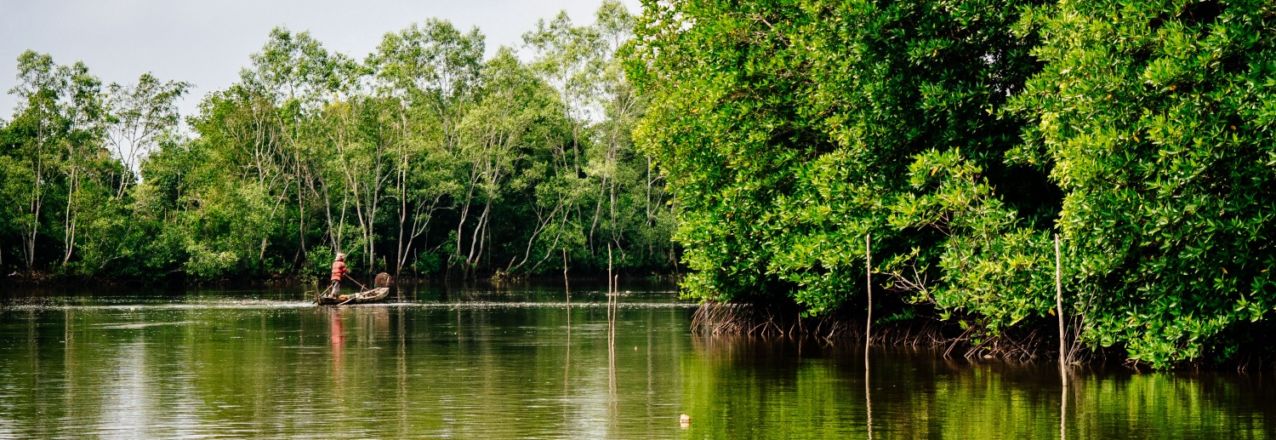
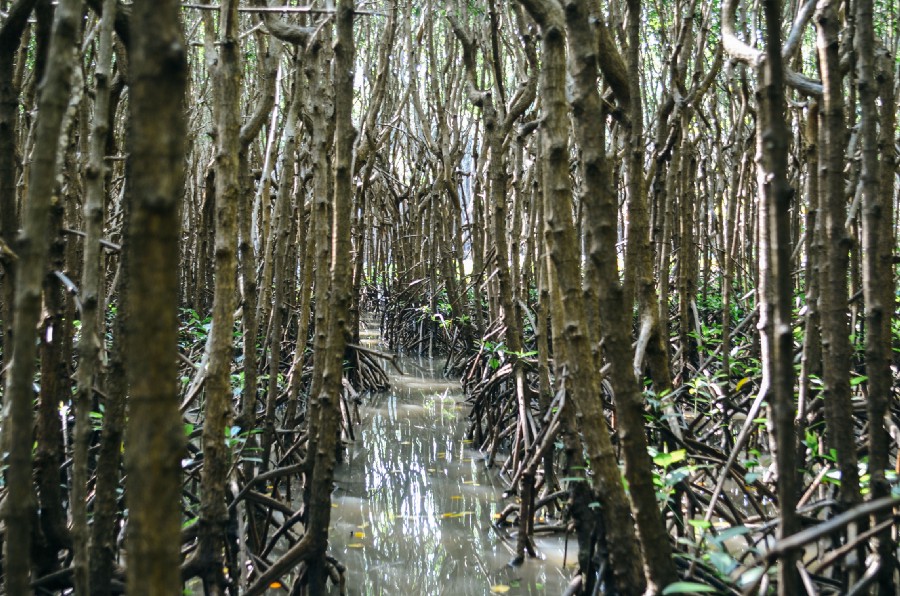
As global climate change continues to threaten coastal communities in the tropics, governments have increasingly focused on the promotion and conservation of mangrove forests for their protective qualities. Mangroves — trees and shrubs that grow in tropical estuaries — are among the world’s most productive ecosystems and, compared to other forest systems, have an impressive capacity to sequester and store carbon at high rates. They also serve as an important physical buffer, protecting coastal areas from storm surges and acting as “bioshields.” Despite these clear benefits, since 1980 the world has lost approximately 20 percent of its mangrove forests. With this in mind, there is a growing need to understand the factors, both biophysical and societal, that contribute to sustainable mangrove management.

Property boundaries in community-managed mangrove forests of Sulawesi, Indonesia.
Property boundaries in community-managed mangrove forests of Sulawesi, Indonesia. Photo credit: Stephen Brooks/USAID

To date, discussions around mangrove forest conservation and rehabilitation have been highly technical, and focused primarily on ecological conditions under which mangroves can be planted and promoted. Lacking from this conversation is a more robust analysis about the ways land governance, resource rights arrangements, and land use planning — the social aspects of the conservation challenge — affect mangrove conservation and rehabilitation.

Compared to terrestrial forests, mangroves’ unique placement straddling land and sea has led to great ambiguity as to the specific jurisdictional agency overseeing their management (i.e. Forest, Aquaculture, and Marine) in many countries. Regardless, local land and resource governance systems often determine the ultimate success or failure of resource conservation efforts.

Read the full photo essay on Medium.

Video: Artisanal Mining, Property Rights, and Development

This online event will explore the key issues around artisanal mining, including its relationship to land rights, conflict, economic growth, as well as how artisanal mining may have devastating environmental consequences. And we’ll delve into how local and regional contexts for different mining commodities—such as diamonds and gold—may change how development practitioners address issues faced by artisanal communities. Register today to attend this event.

Join the discussion live on Tuesday, December 13 at 10 am EST, submit a question or comment to the panel using the form below, and connect on Twitter using the hashtag #ArtisanalMining.

Meet the Moderator

Jane Dennison, PhD Name: Jane Dennison, PhD

Affiliation: Mercury Program Officer, U.S. Department of State

About: Dr. Dennison has been the Mercury Program Officer at the U.S. Department of State for 6 years, focusing primarily on artisanal and small-scale gold mining, overseeing the grant process for 12+ projects, and participating in the organization of workshops and conferences on ASGM. Previously, she was a desk officer in the Bureau of African Affairs for Mauritania, Mali, Niger, and Guinea. Prior to the State Department, she owned and operated a commercial environmental air testing laboratory where she analyzed environmental samples. She holds a Ph.D. in inorganic chemistry from Purdue University, is a member of the New Jersey Bar Association, and is a Certified Industrial Hygienist.

Meet the Panelists

Kim Thompson Name: Kim Thompson

Affiliation: Natural Resources Management Officer, USAID/DRC

About: Kim Thompson is a Foreign Service Environment Officer at the U.S. Agency for International Development (USAID) and currently serves in the Democratic Republic of the Congo. She specializes in environmental governance and the linkages between natural resources and conflict. At USAID/DRC, she focuses on promoting responsible mineral supply chains for tin, tantalum, tungsten and gold. She also serves on the Governance Committee for the Public Private Alliance for Responsible Minerals Trade. Prior to joining USAID, Kim worked at the World Resources Institute and the International Sustainable Development Studies Institute. She holds an MA in Environmental Policy and International Development from the London School of Economics.

Catherine Picard, PhD Name: Catherine Picard, PhD

Affiliation: CBRMT Project Manager, Tetra Tech/ARD

About: Dr. Catherine Picard is an Associate with Tetra Tech/ARD’s Land Tenure and Property Sector, serving as the Project Manager for a USAID-funded project addressing conflict minerals and establishing responsible artisanal mining chains in the DRC. Prior to joining Tetra Tech, Catherine served for three years with the U.S. State Department’s Bureau of African Affairs, covering conflict diamonds and minerals and the transboundary management of the Nile Basin and has lived and worked throughout sub Saharan Africa for 15+ years. Catherine holds a Ph.D. in Political Ecology from Yale University and a Masters and Undergraduate degree from University of Michigan and the University of California at Berkeley, respectively.
Maina Martir-Torres, PhD Name: Maina Martir-Torres, PhD

Affiliation: Climate Change and Biodiversity Specialist, USAID/Peru

About: Dr. Maina Martir-Torres joined the U.S. Agency for International Development in 2013 as a Science and Technology Policy Fellow, assigned to the Peru Mission. While in Peru, Dr. Martir-Torres has served as the technical expert on illegal gold mining issues with a focus on the environmental degradation. In addition, she serves as the Agreement Officer Representative for the USAID-funded project “The Center for Amazonian Scientific Innovation.” Before joining USAID, Dr. Martir-Torres worked for the U.S. Department of State supporting trade-related environmental cooperation programs in Latin America and Asia. She holds a Ph.D. in Soil Science and Biochemistry from Penn State University.

Land, Conflict and Sustainable Development

Originally appeared on Medium.

When I arrived in Liberia six years ago, I was tasked with facilitating the development of the country’s first national land policy. Of the many reasons why such a policy was needed — improving the enabling environment for economic growth; advancing better land and resource management in a country rich in natural resources — none was more striking than the prevalence of land disputes. Virtually every single Liberian has been touched in some way by a land dispute. Although disputes over land and natural resources played an important role in the 14-year civil war that ended in 2003, today the majority of land disputes do not grab headlines. But they are nevertheless a source of real anxiety and insecurity. No one can be sure that their land is free of disputes without clear laws governing who can own what land and under what conditions. And clear laws and policies need to be complemented by an accurate and up-to-date land information system that can tell you with a reasonable degree of certainty who owns what pieces of land and where the boundaries are.

According to a 2008 survey, 59 percent of Liberians said that violent land conflicts arise ‘often’ or ‘always.’ And 62 percent said that land was the most important cause of violent conflict between communities. This is confirmed by 2013–2014 baseline data from USAID’s impact evaluation of a program to strengthen community land governance. That data showed that almost every community surveyed described an ongoing, protracted land dispute.

Read the full photo essay on Medium.

The Thief – A Hip Hop song by Colombian youth about their experiences with conflict and displacement

This song was produced during a USAID and Ayara Foundation youth empowerment and outreach activity called “Tu Tierra, Mi Tierra, Nuestro Territorio.” The activity fostered ethnic pride; taught youth in conflict-affected areas of Colombia about land rights, collective territories, and land restitution; and empowered them to express themselves peacefully through hip-hop. The adolescents co-wrote and produced music about their experiences with conflict, displacement, and violence and their hopes for peace and reconciliation in their communities. These activities cultivated a cohort of 75 young leaders who will now disseminate land-rights concepts and advocate on behalf of their communities.

For more videos from USAID’s Land and Rural Development Program, visit their YouTube channel.

We want – A Hip Hop song by Colombian youth about their experiences with conflict and displacement

This song was produced during a USAID and Ayara Foundation youth empowerment and outreach activity called “Tu Tierra, Mi Tierra, Nuestro Territorio.” The activity fostered ethnic pride; taught youth in conflict-affected areas of Colombia about land rights, collective territories, and land restitution; and empowered them to express themselves peacefully through hip-hop. The adolescents co-wrote and produced music about their experiences with conflict, displacement, and violence and their hopes for peace and reconciliation in their communities. These activities cultivated a cohort of 75 young leaders who will now disseminate land-rights concepts and advocate on behalf of their communities.

For more videos from USAID’s Land and Rural Development Program, visit their YouTube channel.

Beautiful Land – A song by Colombian youth about their experiences with conflict and displacement

This song was produced during a USAID and Ayara Foundation youth empowerment and outreach activity called “Tu Tierra, Mi Tierra, Nuestro Territorio. (Your land. My land. Our territory.)” The activity fostered ethnic pride; taught youth in conflict-affected areas of Colombia about land rights, collective territories, and land restitution; and empowered them to express themselves peacefully through hip-hop. The adolescents co-wrote and produced music about their experiences with conflict, displacement, and violence and their hopes for peace and reconciliation in their communities. These activities cultivated a cohort of 75 young leaders who will now disseminate land-rights concepts and advocate on behalf of their communities.

For more videos from USAID’s Land and Rural Development Program, visit their YouTube channel.