Land Matters Media Scan – 31 July 2017

Here are the recent land tenure and resource management media items:

USAID

  1. Rwanda: RISD Embarks on New Formula for Land Conflict Resolution – mentions USAID’s Rwanda LAND project(7/22/17)
    Source: Rwanda Eye

Global

  1. How Could Land Tenure Security Affect Conservation? (7/20/17)
    Source: Cool Green Science
  2. Want to protect forests in poor nations? Pay landowners not to cut, study says (7/20/17)
    Source: Thomson Reuters Foundation
  3. Using the Tenure Guidelines for Action Research (7/26/17)
    Source: Transnational Institute

Indigenous Peoples

  1. Australian Court Rules in Favor of Indigenous Group in Fortescue Mining Land Case (7/20/17)
    Source: Thomson Reuters Foundation

Africa

  1. Africa’s Land Commissions Commit To Securing Community Land Rights (7/20/17)
    Source: New Business Ethiopia
  2. Ghana: COCOBOD implores chiefs to release land for ‘Youth-in-Cocoa Farming Programme’ (7/20/17)
    Source: My Joy Online
  3. Ghana proposes a land access policy to boost Africa’s Growth (7/18/17)
    Source: News Ghana
  4. Kenya: State to introduce land lease models to attract youth to agriculture (7/21/17)
    Source: The Star
  5. Kenya: Squatters battle Kenya’s ex-president and charities over wildlife park (7/21/17)
    Source: Thomson Reuters Foundation
  6. South Africa: OPINION : Changing lives of people for the better in rural areas (7/20/17)
    Source: Business Report
  7. South Africa: Place Animations: Upgrading lives in South Africa (7/19/17)
    Source: Thomson Reuters Foundation
  8. Uganda: Government Seeks to Run Roughshod over Ugandans’ Land Rights (7/24/17)
    Source: Human Rights Watch
  9. Uganda’s plan to allow forceful takeover of private land stirs anger (7/26/17)
    Source: Thomson Reuters Foundation
  10. Zimbabwe: Land Tenure Systems Under Review (7/21/17)
    Source: The Herald
  11. Zimbabwe farmers’ union leader warns S.Africans to share land (7/25/17)
    Source: Thomson Reuters Foundation

Americas

  1. Belize: Garifuna Members Meet with Belize Delegates to Build Ties (7/19/17)
    Source: TeleSUR

Asia

  1. Cambodia: Push for an end to sugarcane land row (7/20/17)
    Source: Khmer Times
  2. India plans overhaul of colonial-era land titles (7/26/17)
    Source: Thomson Reuters Foundation
  3. India: How Tree Plantations Are Violating Citizens’ Land Rights in an Odisha Village (7/20/17)
    Source: The Wire

Europe

  1. Serbia May Give Youngsters Land To Revive Countryside (7/21/17)
    Source: Balkan Insight

USAID Land Champion: Kim Kim Yee

Each month, we will feature profiles of Land Champions within USAID to learn about their work on land tenure, property rights, and resource governance. This month’s Land Champion is Kim Kim Yee, who is the Land Team Leader for USAID’s E3/Land and Urban Office. She also manages the Property Rights and Artisanal Diamond Development project.

Tell us about yourself.

I am currently the Land Team Leader in the Land and Urban Office within USAID’s Bureau for Economic Growth, Education, and Environment (E3). I manage an incredibly talented group of land tenure and property rights experts. I also manage the Property Rights and Artisanal Diamond Development (PRADD) project, which focuses on conflict diamonds in Cote d’Ivoire and the Central African Republic. I spend a lot of time working with my land and urban colleagues thinking about how best to integrate land tenure and property rights into USAID activities, as well as coordinating with and learning from other experts in the field.

Why is land important to USAID?

In the US, we take for granted that when you buy or rent a home, your property rights are very clear – the parameters of the contract you enter are well defined and enforceable. With these clear and secure rights, you are more likely to make long-term investments in your property (remodeling, landscaping, etc). In many countries where USAID works, most people’s rights to the land where they live or farm is undocumented and often insecure. This fundamentally impacts their investment choices; evidence shows that when farmers feel secure in their rights to their land, they tend to make choices that are more sustainable, like letting their land lie fallow or choosing less resource intensive but slower growing crops for example. Strengthening women’s property rights also has direct impact on their economic opportunities. For example, women with stronger land rights are more likely to work off-farm and earn higher incomes. Stronger property rights, coupled with well functioning institutions to protect these rights, also increases sustainability of USAID investments by minimizing risks caused by contestation over land use and access rights, securing transactions, ensuring infrastructure developments, and other types of investments are inclusive and avoid harm.

Many people think of land rights primarily in connection to agriculture and rural development. What is the connection between land tenure and property rights and other development issues, like conflict minerals?

A lot of our work at USAID is focused on agriculture, food security, and rural development, which does evoke land rights. But land rights are truly cross-cutting, including for the importance of clarifying rights to resources – like diamonds, gold, and other minerals – to prevent conflict and criminal exploitation. In the Property Rights and Artisanal Diamond Development (PRADD) project, our strategy is that clarifying and strengthening property rights to land with high-value natural resources will reduce conflict over the control and benefits of these resources. In Cote d’Ivoire, where diamonds once funded violent and deadly conflict, we are working with diamond mining communities to ensure rights to these resources are clarified and understood, as well as strengthening the communities’ abilities to collect taxes used for community development projects. We are also helping these communities develop land use plans to help people transition away from depleting diamond stocks and we are identifying ways to rehabilitate mined out areas. Clarifying property and resource rights is critical for preventing conflict and can increase revenues to local communities.

What is the role of USAID’s E3/Land and Urban Office?

Our primary role is to provide quality technical expertise to USAID missions to increase sustainability of their investments. We can help design stand-alone land activities or integrate land tenure and property rights into other activities. We also engage with other land experts through various platforms, including the Global Donor Working Group on Land and the Committee on World Food Security, to ensure USAID is contributing to and employing global best practices. We are also very focused on building and disseminating evidence on land and resource governance, including through the seven rigorous impact evaluations that our office has commissioned.

What are some of your biggest accomplishments in the land sector?

USAID has been working in the land tenure sector for many years. Collectively, we have helped strengthen the land rights of 182 million people since 2013 through new laws and policies; supported the U.S. business community by developing and testing practical guidance on best practices for making land-based investments less risky and more sustainable; created tools and guidance to mitigate root causes and triggers of conflict over land, such as compulsory displacement and resettlement; and partnered to develop low-cost, easy-to-use mobile technology tools that allow local governments to more easily map, document, and manage land rights and administration.

Final thoughts?

There is a slight misperception that land tenure activities are insurmountable and have to include country-wide formal land titling efforts using expensive technologies. The Land Team has evidence and approaches that clearly counter this argument. We have a wide range of rapid, cost-effective, and locally sustainable interventions, each with proven results. For example, simply ensuring two lines (one for the husband and another for the wife) are included on land documents can help women retain land rights if she becomes widowed. We ascribe to the “secure enough” tenet, believing that customary and formal tenure systems can co-exist and generate positive compounding effects as long as people believe their rights are not arbitrarily contested and have incentives to invest and benefit from their investments.


Land Matters Media Scan – 21 July 2017

Here are the recent land tenure and resource management media items:

USAID

  1. Colombia: IT Systems Facilitate Our Work by Offering Stability, Agility, and Transparency (7/20/17)
    Source: USAID Colombia LRDP
  2. Colombia: Starbucks Partners with NGOs to Invest Nearly $5 Million USD in Colombian Coffee Industry (7/13/17)
    Source: Finance Colombia

Reports and Publications

  1. Four land activists killed each week in 2016 in bloodiest year on record (7/13/16)
    Source: Thomson Reuters Foundation
  2. Related report: Defenders of the Earth (7/13/17)
    Source: Global Witness

Events

  1. Webinar: The Ogiek Victory: A Closer Look at Strategic Litigation for Land Rights (August 2nd) (8/2/17)
    Source: Namati
  2. Sustainable Development Goals: a time for innovations and investment in land administration and management (8/10/17 – 8/11/17)
    Source: Land Portal

Global

  1. HLPF Reviews Implementation of SDGs 1, 2, 3 and 5 (7/13/17)
    Source: IISD
  2. Green Climate Fund steps up to reduce deforestation and forest degradation (7/14/17)
    Source: CIFOR

Indigenous Peoples

  1. Canada: What is the significance of acknowledging the Indigenous land we stand on? (7/12/17)
    Source: CBC News

Africa

  1. Ghana: Regional Workshop on Securing Community Land Rights opens (7/17/17)
    Source: Ghana News Agency
  2. Namibia: Consultations Crucial for Land Conference – Nujoma (7/12/17)
    Source: AllAfrica / New Era
  3. Sierra Leone: The price of palm oil in Sierra Leone (7/17/17)
    Source: DW
  4. Swaziland: Human Rights Committee Discusses Implementation of Civil and Political Rights in Swaziland (7/10/17)
    Source: OHCHR
  5. Tanzania: Farmers pushed off their land to save Tanzania’s Great Ruaha River (7/18/17)
    Source: Thomson Reuters Foundation
  6. Uganda: Can tech help Uganda’s women combat land corruption? (7/16/17)
    Source: Land Portal
  7. Zimbabwe: A new land administration system for Zimbabwe (7/17/17)
    Source: Zimbabweland blog

Americas

  1. Brazil: New data shows 49 land rights activists were killed last year in Brazil (7/13/17)
    Source: Thomson Reuters Foundation
  2. Guatemala: The Canadian company mining hills of silver – and the people dying to stop it (7/13/17)
    Source: The Guardian

Asia

  1. India’s land conflicts will persist until acquisition policy is inclusive, says expert (7/17/17)
    Source: Thomson Reuters Foundation
  2. India: PLACE : Animation Conversations – Bina Agarwal on women and land in India (7/18/17)
    Source: Thomson Reuters Foundation (video)
  3. For Pakistan, China’s huge energy investments may have serious political costs (7/14/17)
    Source: The Conversation
  4. Thailand’s women land defenders face risk of rising violence, rights groups say (7/19/17)
    Source: Thomson Reuters Foundation
  5. Timor-Leste island community fears large-scale tourism development on Atauro (7/17/17)
    Source: ABC

IT Systems Facilitate Our Work by Offering Stability, Agility, and Transparency

Q&A with the Restitution Coordinator at the Superintendence of Notary and Registry — SNR

Originally appeared on Exposure.

NEW ELECTRONIC INFORMATION SYSTEMS AT COLOMBIA’S SUPERINTENDENCE OF NOTARY AND REGISTRY (SNR) ALLOW THE AGENCY TO MEET DEADLINES SOONER FOR THE LAND RESTITUTION PROCESS WHILE CREATING BETTER PROTECTION FOR ITS INFORMATION. IN THIS INTERVIEW, PATRICIA GARCÍA, RESTITUTION COORDINATOR AT THE SNR, EXPLORES THE ENTITY’S COLLABORATION WITH USAID.

Q: Why the focus on information systems to support land restitution in Colombia?

A: In general, the SNR has needed to modernize and become stronger in order to carry out its functions under the Victims Law. These information systems increase the security and safety of information that was previously stored only on paper. And they help deliver this information more quickly to entities working on land restitution. Stronger, faster systems also benefit the work of other entities, such as the Land Restitution Unit and the Victims Unit.

Q: How was the first system—the Landowner Search System–developed with USAID’s support?

A: As part of evidentiary material needed for restitution, the Land Restitution Unit often asks us to look up what properties a person has within Colombia’s national territory. Normally, they ask this when the person does not have the property registration number or when the judge needs information related to land formalization. USAID helped us develop an electronic system that allows us to perform this search automatically throughout our 195 local registry offices.

Q: What about the Exemptions System? What does that information system do?

A: When an entity working on restitution or formalization needs to certify that a property is unencumbered, they’re not supposed to pay for this certificate. But you need to have very precise controls in place to be able to issue the certificates for free. Normally this is done via the local public registry offices because they link the fee waiver to their daily cash flows and need to annex a justification for why the requesting entity wasn’t charged. The Exemptions System was very difficult to develop, and USAID helped us figure it out. Now this system delivers these certificates electronically and free of charge to the entities that need them.


Land Matters Media Scan – 14 July 2017

Here are the recent land tenure and resource management media items:

USAID

  1. Land Rights are Women’s Rights (7/5/17)
    Source: USAID Colombia LRDP
  2. Getting Answers (6/21/17)
    Source: USAID Colombia LRDP
  3. Kenya’s nomads swap guns for tourist dollars to end turf wars – mentions USAID’s partnership with the Northern Rangelands Trust (6/30/17)
    Source: Thomson Reuters Foundation

Reports and Publications

  1. Kenya Drought Crisis: A Call for Action (7/4/17)
    Source: Oxfam / ReliefWeb
  2. Here’s why growing cities should tax land to pay for essential services (7/3/17)
    Source: CityMetric
    Related brief: Financing fast-growing cities
  3. Related paper: Large scale land acquisitions and REDD+: a synthesis of conflicts and opportunities

Global

  1. This company helps African farmers secure their land rights – written by Karol Boudreaux (6/29/17)
    Source: Learn Liberty
  2. Is REDD+ playing fair? (7/5/17)
    Source: CIFOR
  3. Ivanka Trump and the World Bank have a new idea to help women globally (7/8/17)
    Source: The Washington Post

Indigenous Peoples

  1. Australia: How Indigenous Australians Are Still Fighting for Their Lands 25 Years After a Landmark Court Case
    (6/30/17)
    Source: Smithsonian
  2. Brazil: Google integrates Brazil’s indigenous territories into its maps (7/2/17)
    Source: The Economic Times
  3. Peru: ‘Politicians only see gold and oil in our lands’: the Wampis nation of Peru – photo essay (7/4/17)
    Source: The Guardian

Africa

  1. Ghana: Cocoa stakeholders meet on government’s new Inputs policy (7/7/17)
    Source: Ghana News Agency
  2. Ghana: Lands Ministry urged to constitute Minerals Development Fund Board (6/29/17)
    Source: News Ghana
  3. DRC: Challenging Family and Custom, Women Assert Legal Right to Inherit Land (7/2/17)
    Source: Global Press Journal
  4. Kenya: Power to Africa Volume 3: Kenya – Part 2 (7/4/17)
    Source: Lexology
  5. Liberia: Law Society Urges the Passage of the Land Rights Act (6/28/17)
    Source: AllAfrica / The Capitol Times (Monrovia)
  6. Conflict averted as Nigeria’s warring herdsmen and farmers find common ground (6/29/17)
    Source: Thomson Reuters Foundation
  7. Sierra Leone: Food And Agriculture Organization Sensitizes Parliament (6/28/17)
    Source: Sierra Express Media
  8. Sierra Leone: Civic society calls on government to take land management issue “seriously” (6/28/17)
    Source: Ecofin Agency
  9. South Africa: Three policies at the ANC’s national conference that should worry investors (6/29/17)
    Source: Business Tech
  10. Related: REFILE-South African ANC leadership battle overshadows policy debate (6/29/17)
    Source: Thomson Reuters Foundation
  11. Tanzania: History Made As Maasai Women Own Land (6/29/17)
    Source: AllAfrica / The Citizen
  12. Zambia: Sub-Saharan Africa Widows Increase Worries Gender Link (6/3/17)
    Source: AllAfrica / Times of Zambia
  13. Zimbabwe: Beyond the freehold title obsession: generating land tenure security (7/3/17)
    Source: The Zimbabwaen
  14. Zimbabwe: How badly implemented land reform can affect wildlife: a Zimbabwean case study (7/3/17)
    Source: The Conversation

Americas

  1. Brazil: Shady slaughterhouses, ‘cow laundering’ drive spike in Amazon deforestation (7/4/17)
    Source: Thomson Reuters Foundation
  2. Brazil: Rural Amazon violence rises amid bureaucratic mess over land titles (7/6/17)
    Source: Thomson Reuters Foundation
  3. Colombia: Land Reform and Food Security Key to Peace in Colombia: FAO (7/6/17)
    Source: TeleSUR
  4. Colombia: Deforestation soars in Colombia after Farc rebels’ demobilization (7/11/17)
    Source: The Guardian

Asia

  1. India: ‘Give her property, not dowry’: Online campaign seeks equal rights for women in South Asia (7/5/17)
    Source: The News Minute
  2. Related: Property rights campaign for women takes aim at patriarchy in South Asia (7/6/17)
    Source: Thomson Reuters Foundation
  3. India: Digital land mapping faulty, will lead to conflict: Congress (7/6/17)
    Source: Indian Express

Pacific

  1. Solomon Islands: Life along the vanishing shorelines of the Solomon Islands – in pictures (6/23/17)
    Source: The Guardian

Land Rights Are Women’s Rights

An innovative program for rural women affected by the armed conflict strengthens their land rights and empowers them as leaders and decision makers

A WOMEN-FOCUSED GOVERNMENT

The lives of campesino women from Northern Cauca have not been easy. The armed conflict has fiercely infiltrated their homes, leaving an aftermath they cannot erase. They have had to fight to find a way to survive together with their children, some who still have their husbands, and some who are now widows.This situation led, in 2013, to women from the department of Cauca uniting and successfully pressuring the departmental government to create a special agency for women. These joint efforts led to the creation of the Secretariat for Women in Cauca.

In 2015, with the support of USAID and the Secretariat for Women, the Itinerant School for Rural Women was created. Its objective is to develop community participation and awareness about gender-based approaches to land and property rights, the economy, and production initiatives.

In one year, 480 women from 15 municipalities participated in this school, whose goal is to gradually serve the 42 municipalities of Cauca and spread its message to more than 3,000 women.

In the municipality of Suárez, and over a period of three months, 30 women completed the school’s four different modules. Among these women were cacao and aloe growers who have taken advantage of these tools to protect their land and move their business plans forward.

“It has been very helpful to learn how to value myself as a person and to value my skills. Working the land is not just for men, and I have been able to grow my crops successfully together with my children. We learned when our rights are being violated. I am contributing to my society through my work, and what I have done is very valuable,” asserts María Ascensión Choco, an aloe grower from Suárez.


Land Matters Media Scan – 29 June 2017

Here are the recent land tenure and resource management media items:

USAID

  1. Côte d’Ivoire: Projustice-Usaid trains Ivorian lawyers on land legislation (6/23/17)
    Source: Ecofin Agency

Reports and Publications

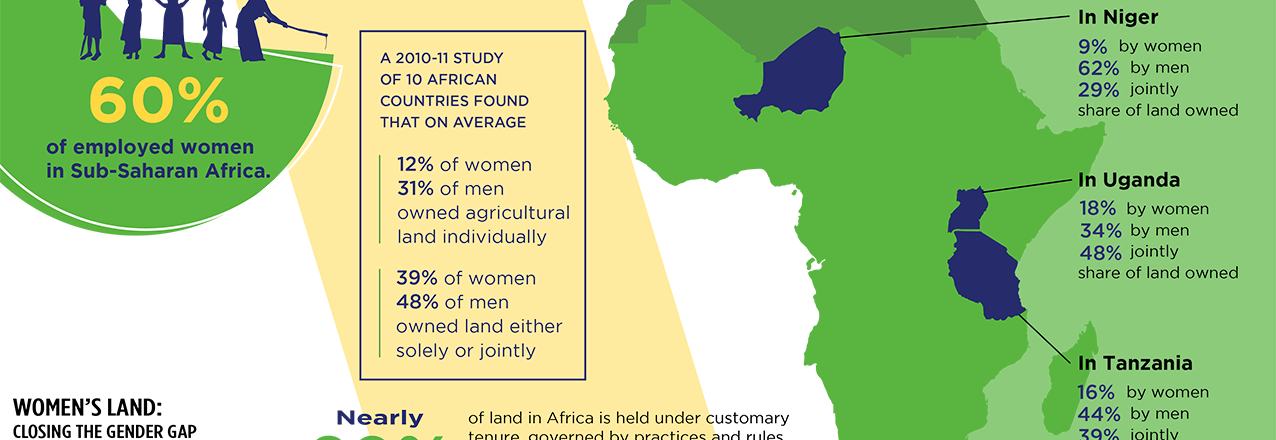
  1. Women’s Land: Closing the Gender Gap in Sub-Saharan Africa (June 2017)
    Source: Landesa
  2. Shelter in Displacement (June 2017)
    Source: Oxford / Forced Migration Review

Global

  1. The Water Conflict Chronology: Water Conflicts over the Centuries and Millennia | PODCAST | (6/22/17)
    Source: Circle of Blue
  2. Story-telling app and website help communities improve their ‘backyards’ (6/23/17)
    Source: Mongabay
  3. Burger King pledges to end deforestation by 2030, scientists sceptical (6/23/17)
    Source: Thomson Reuters Foundation
  4. On International Day, UN says widows’ rights to independent life, livelihood after loss must be ensured (6/23/17)
    Source: UN News Centre
  5. Time to act to secure property rights (6/26/17)
    Source: Devex
  6. ‘It’s up to us’: why business needs to take a stand on palm oil (6/26/17)
    Source: The Guardian
  7. Sophie’s Choice for Communities: Sacrificing Land Rights to Gain Security (6/26/17)
    Source: WRI

Indigenous Peoples

  1. Brazil: Warnings and protests mark Brazilian President Temer’s trip to Norway (6/22/17)
    Source: Mongabay
  2. Brazil: Amazon tribes stand up for their survival (6/23/17)
    Source: National Geographic
  3. Canada: Vancouver International Airport, Musqueam band sign 30-year ‘friendship’ agreement (6/21/17)
    Source: Vancouver Sun
  4. Chile’s President asks forgiveness from indigenous Mapuche (6/23/17)
    Source: Thomson Reuters Foundation
  5. Australia: Noongar who won federal court challenge only to have it reversed vow to fight on (6/21/17)
    Source: The Guardian

Africa

  1. Cameroon: Land Certificates – Marked Improvement in Issuance Since 2005 (6/21/17)
    Source: AllAfrica / Cameroon Tribune
  2. For Ethiopia’s farmers, landscape management and tenure lead to more resilience and income (6/22/17)
    Source: The World Bank
  3. Guinea-Bissau: Theatre sheds light on conflicts (6/23/17)
    Source: D+C
  4. Liberia: Deputy SRSG Calls for Restructuring National Land Tenure System (6/23/17)
    Source: Daily Observer
  5. Sierra Leone News: Land issues, if not addressed, will lead to conflict – ALLAT (6/27/17)
    Source: Awoko
  6. Tanzania: Villages near national parks, game reserves to be surveyed (6/24/17)
    Source: The Citizen
  7. In Uganda, row over land shines light on historic kingdom (6/26/17)
    Source: Thomson Reuters Foundation
  8. Uganda: Reasons land conflicts are on the rise (6/27/17)
    Source: New Vision

Americas

  1. Colombia’s FARC disarmament confirmed by United Nations (6/27/17)
    Source: Deutsche Welle

Asia

  1. UN representative makes case for Myanmar women (6/26/17)
    Source: Myanmar Times
  2. Indonesia: Can “One Map” solve Indonesia’s land tenure woes? (6/27/17)
    Source: Eco-Business
  3. Sri Lanka: Land Mediation Boards For Reconciliation in N-E Implementing the LLRC Recommendations (6/28/17)
    Source: Daily Mirror
  4. Thailand: Going too far with S44 (6/22/17)
    Source: Bangkok Post

Europe

  1. Ukrainian Government to Start Blockchain Land Registry Trial in October (6/23/17)
    Source: Coindesk

Land Matters Media Scan – 22 June 2017

Here are the recent land tenure and resource management media items:

USAID

  1. Request for Proposal: Investor Report on Land Risks and Mitigation Strategies (6/21/17)
    Source: USAID LandLinks
  2. Without Coordination, Development Does Not Work (6/14/17)
    Source: USAID  LRDP

Reports and Publications

  1. Guatemala: Land rights help fight fires in Guatemala nature reserve – study (6/15/17)
    Source: Thomson Reuters Foundation
  2. Honduras: Land-rights policies in Latin America still fall short, studies show (6/18/17)
    Source: CIFOR

Global

  1. The Politics of Death (6/20/17)
    Source: Thomson Reuters Foundation

Africa

  1. Kenya: Politics poses problem to issuance of title deeds (6/14/17)
    Source: Daily Nation
  2. Kenya: Maasai land loss raises tensions in Kenya ahead of elections (6/20/17)
    Source: Thomson Reuters Foundation
  3. Liberia: Multi-Stakeholder Meeting on Land Concession Management Underway in Liberia (6/20/17)
    Source: Front Page Africa
  4. Nigeria: The deadly conflict tearing Nigeria apart (and it’s not Boko Haram) (6/13/17)
    Source: IRIN News
  5. Sierra Leone: How to ease tensions in Sierra Leone (6/15/17)
    Source: D+C
  6. Uganda: Understanding the Deepening Land Crisis (6/16/17)
    Source: AllAfrica / The Observer

Americas

  1. Canada: Google adds more than 3,000 Canadian indigenous lands to Google Maps, Google Earth (6/21/17)
    Source: Financial Post

Asia

  1. India: When Women Have Land Rights, the Tide Begins to Turn (6/14/17)
    Source: The Citizen / Inter Press Service News Agency
  2. Indian police thwart indigenous people in land complaints, activists say (6/19/17)
    Source: Thomson Reuters Foundation
  3. Indonesia: Purwokerto people enjoying land reform program (6/16/17)
    Source: The Jakarta Post

Request for Proposal: Investor Report on Land Risks and Mitigation Strategies

The Cloudburst Group has released the Request for Proposal (RFP) No. 2017-ERC-002, “Investor Report on Land Risks and Mitigation Strategies.” The deadline for questions and inquiries is June 26, 2017, while the overall deadline for proposals is July 14, 2017.

The proposal requested is to subcontract with a firm to undertake a quantitative analysis of land tenure risks and associated costs of investing in developing countries. This subcontract will cover the design and implementation of research, which will include a quantitative survey of investors working in developing countries (U.S., multi-national, or local investors), report on findings, and report launch event.

Download the RFP and pricing template here.

Getting Answers

A conflict-affected community of 1,300 residents in Northern Cauca is improving its well-being through a restitution ruling and support from the municipal government.

IN A PARAMILITARY JAIL

In the village of Lomitas, a rural area of the municipality of Santander de Quilichao, paramilitary groups were especially ruthless with residents. Most of the village’s 1,300 inhabitants were Afro-descendants making a living by growing fruits and vegetables on farms. It was a peaceful and self-sufficient community.

In 2000, the paramilitary group United Self-Defenders of Colombia began using the village as a base, displacing many people from their lands and setting up training camps in their place. The paramilitary group used Lomitas’s community center as an interrogation and torture room for people accused of being guerrilla infiltrators. For years, the village was the site of barbarous acts.

“Our town was used as a jail. Here, they tortured people from other municipalities until they would confess. Then, they would kill them and throw them in the Cauca river. You could hear the screams of people crying for help. Every day, you could find dead bodies along the river’s edge,” explains Lorenzo Mosquera, a community leader from Lomitas.

The community tried to resist. However, as the situation grew increasingly worse, many left their lands and sought refuge in the homes of relatives or even in other countries. With heavy hearts, Lorenzo Mosquera and his family of 23 contacted the Brazilian government, which offered them asylum.

But Mosquera never lost contact with his neighbors from Lomitas, and in 2008, after living in Brazil for three years, a yearning for his land and his roots made Lorenzo return to Lomitas. Upon arrival, he was surprised to see that his land parcel and that of his relatives had been overrun by others who were now growing sugarcane there.

Eighty percent of Lomita’s lands remained in the hands of four or five companies that entered the area through intermediaries offering low prices to campesinos desperate to leave. These companies also cultivated lands that were supposedly abandoned. In addition, the electricity company dismantled the electricity network without the community’s authorization.

“We felt invaded and trampled on. These business transactions were a type of legal displacement. Here, there didn’t use to be sugarcane—we lived on sustainable farms that produced food,” Mosquera explains.

In 2012, with the support of the Land Restitution Unit, Lorenzo began the fight to recover his land. Finally, in 2015, a restitution judge issued a ruling in favor of Lorenzo and five other families. The ruling orders several reparation measures that seek to benefit the community as a whole and states that these measures should be implemented by the municipality and other government entities. Since then, another 22 restitution sentences have been issued for other families in Lomitas.