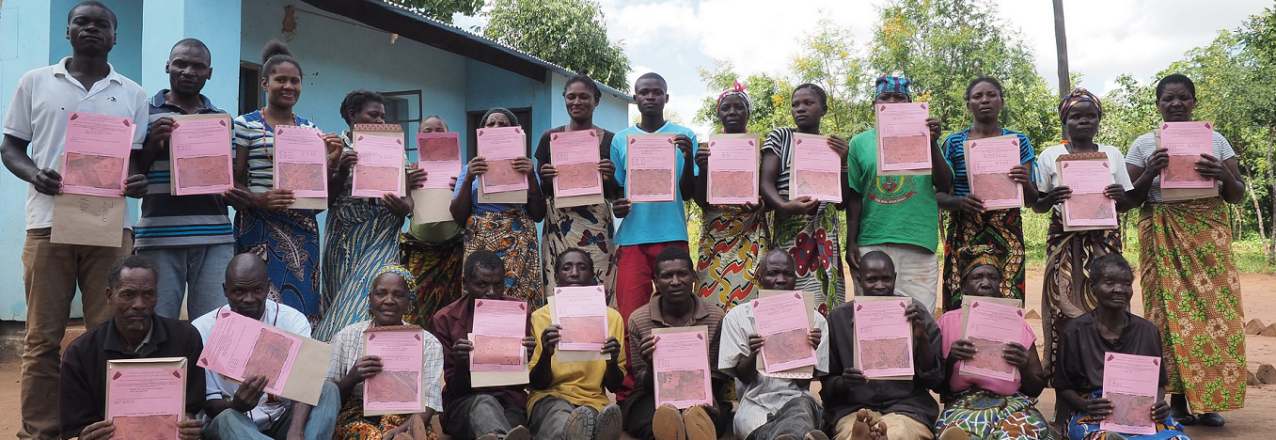
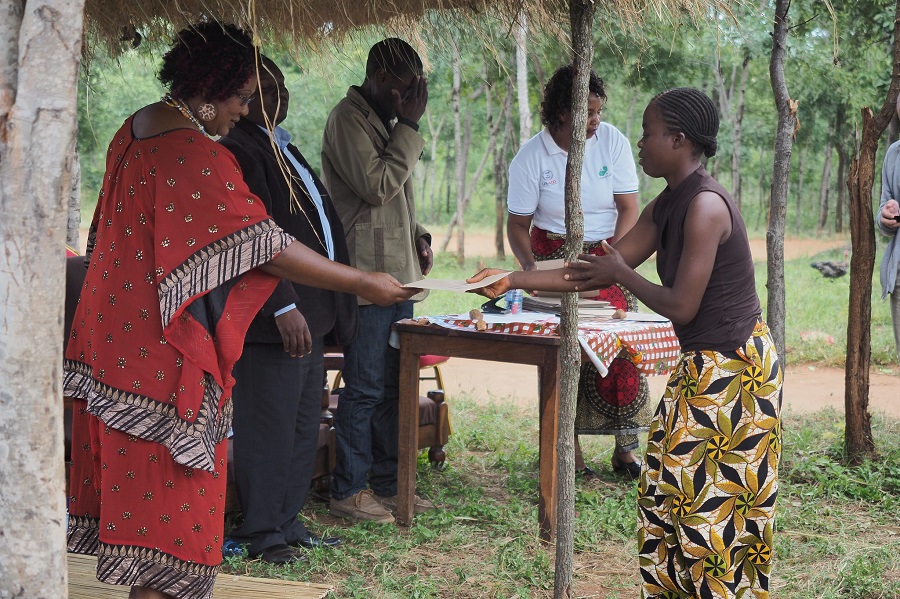
In Tanzania, smallholder land registrations are critical to protecting local land rights. However, since passing the Village Act in 1999 to provide for the management of village lands, the process of registration has moved slowly due to limited operational capacity. To bring the law into full effect, procedures for registration and administration need to be low-cost, simple, and equitable. In addition, the land registration system must support future transactions and allow registers to be maintained at village and district levels.
Under the Land Tenure Assistance (LTA) activity, funded by the U.S. Agency for International Development (USAID), DAI is modifying an existing tool for mapping smallholdings and detailing ownership claims—the Mobile Application to Secure Tenure (MAST)—which USAID first piloted in Tanzania. This tool will be linked to a low-cost land registry tool, the Technical Register Under Social Tenure (TRUST), which DAI is developing at the district level and plans to scale up to other areas of the country. The outcome is a low-cost, participatory land registration process that is transforming the way land rights are managed in Tanzania, with the potential for adaptation elsewhere.
USAID’s Mobile Applications to Secure Tenure (MAST) initiative started small. Launched in 2014 in three pilot villages, the initial goal was to test a simple but powerful idea: with some training and support, could underserved communities use mobile phone mapping technology and participatory approaches to document and secure their land rights? Five years and four countries later, that initial idea has grown into a powerful suite of tools and programs that are achieving remarkable results, from women’s economic empowerment in Tanzania to forest conservation in Liberia.
Here are the latest updates on MAST from around the globe.
Land Certification and Access to Credit in Tanzania
In Tanzania, USAID’s Land Tenure Assistance (LTA) program has now used MAST to map and document almost 63,000 land parcels. With their property rights secure, people – particularly women – are more empowered in the economy. “The certificates issued by LTA have paved the way for rural Tanzanians to improve their farms and start small businesses by leveraging their land to access credit. The project is working with local banks to encourage the acceptance of certificates as collateral and with villages to raise awareness of the new loan opportunities. Farmers have already begun using their land-backed loans to purchase fertilizer, high-quality seeds, tractors, and other agricultural inputs to raise their productivity and their incomes.” LEARN MORE.
Supporting Community Forest Management in Liberia
Liberia depends on its forests. The forestry sector contributes 10 percent of the country’s GDP. One in three rural Liberians (1.5 million people) live in forested areas and rely on forests for a significant source of their livelihoods. Under a new pilot program, USAID/Liberia is using MAST to help communities define, map, record, and document their resources to enhance biodiversity conservation while improving community forest management. MAST provides a participatory framework and flexible tools that empower citizens in the process of documenting and managing their forest resources. The end result is clearer, stronger rights and greater incentives to invest and conserve resources.
New Results and Data Visualizations
As MAST’s implementation has grown in scale, so has the volume of data amount its impacts. Check out the latest data visualizations on key findings related to reductions in the time and cost to register land, as well as improvements in women’s economic empowerment. For example, MAST allows citizens to map and document their land and resources in less time than traditional land administration methods. MAST leverages innovative methods and tools to engage citizens in inclusive approaches that increase efficiencies over time. In Zambia, the time from land demarcation to certification decreased from 550 to 100 days during the course of MAST implementation. In Tanzania, MAST reduced the cost of registering land from $40 per parcels to under $8 dollars. LEARN MORE.
Want to learn more about MAST? Visit the MAST Learning Platform at:
Maritza Losada moved to Puerto Guadalupe, Meta five years ago when her husband found a job with a large biomass energy company that grows sugar cane. She and her husband purchased a lot in the town’s poorest neighborhood, Barrio Nuevo. The district remains today much like it was in 1995 when the government created the housing project for future agro-laborers: no roads, no sewage, no gutters.
The town sits on banks of the Meta River, which flows into the Orinoco River, and allows farmers and agro-industrialists to transport their goods over hundreds of miles across the eastern plains of Colombia. Nevertheless, this river and the rainy season turn Maritza’s neighborhood into a muddy bog. Every year, the neighbors lay down stones and boards to build walkways to maneuver about their homes.
Over time, they have erected makeshift electric posts and wires to gain access to light and electricity. Maritza’s house too has slowly evolved, from a canvassed shack to a more durable, yet uninsulated, structure with a zinc roof and walls. Inside, there are no dividing walls or rooms; in one corner sleeps her two children, in the other she and her husband. She is currently expecting her fourth child.
With a reliable income and work benefits, under the law, her husband could access money deposited in his retirement pension for certain objectives, including for home improvements. There is only one problem the couple never processed the paperwork for a registered land title for their property. With no registered property title, Maritza and her family cannot access this nor any other government subsidy.
When Colombia held Chocoshow, its first national cacao trade show, at the end of 2018, growers readied their finest cacaos to compete for recognition and fame on the nation’s stage. A victory for any lot of high-grade cacao would be a welcome boost to a sector constantly struggling with price fluctuations.
Meta-based cacao growers’ association Asopcari was prepared. After two years of fundamental changes in how its producers harvest and process cacao, the association came to Chocoshow with high hopes. In the end, it walked away with one gold and one silver medal, a triumphant showing for a group of 90-plus growers scattered about the Ariari river valley.
The growers have not always been great at production, Lopez admits, but it is not for lack of trying. The history of cacao in Meta is one of success and tragedy. By the mid-eighties, cacao was a cash crop for thousands of farmers, and annual production peaked at 5,000 tons. By 2000, illicit crops had essentially gutted Meta’s cacao future, destroying more than 7.5 million trees and leaving families in a far more vulnerable state.
In 2000, Asopcari was created and started with 300 hectares of quality cacao clones. In 2004, Meta cacaoteros produced a meager 400 tons of cacao. For Asopcari and others, it was going to be an uphill battle. Since then, the efforts to recuperate cacao cultivation in Meta have been slow. For more than a decade, much of Meta was off limits due to conflict, the drug trade, and an overwhelming distrust of anyone and everyone, making it especially difficult to establish sustainable marketing channels.
To make matters worse, the government delivered little necessary technical assistance to improve growing and harvesting techniques. Farmers soon lost track of which trees were improved varieties and bundled all cacao together, regardless of origin or type.
How documented property rights gave a Tanzanian widow financial stability
Asiah Samila is a farmer with five children. She lives in Mlanda, a village located outside Iringa in central Tanzania.
When Asiah’s husband died, their youngest child was just a newborn. He left her with their house and farmland in Mlanda village. However, she did not have a title deed for the property, putting her in a difficult position.
In rural villages like Mlanda, women typically are not involved in family decisions. A woman is seen as a caregiver to children, a homemaker, and someone who is responsible for taking care of the needs of the husband. Few women own land.
Lacking Land Rights
Widowed women face many challenges when they don’t have official paperwork proving ownership of their land. In some cases, a widow’s in-laws may forcefully claim the land, displacing her.
Without documented property rights, widows can’t buy or sell their land, nor can they obtain access to bank loans.
In Asiah’s case, the neighboring school claimed that she was occupying part of their land, and Asiah was unable to show the paperwork needed to defend herself and her right to the property.
But with USAID’s help, Asiah was able to find a solution to the conflict.
The majority of land in developing countries is not documented, impacting the ability of millions of households to make long-term investments in their property. Countries where property rights are perceived as insecure are also less attractive for investors and more reliant on donor funding. USAID recognizes that strengthening rights to land and natural resources is central to achieving a broad range of development goals on the journey to self-reliance. Through the Integrated Land and Resource Governance (ILRG) program, USAID provides both short and long term assistance across a range of land and property rights issues including natural resource management, inclusive economic growth, agricultural productivity, and women’s economic empowerment.
Learn more about USAID’s ILRG program in Zambia in the series of short videos below:
Partnerships
Women’s Empowerment
Through partnerships, USAID is building self-sufficient and sustainable organizations to achieve key development goals in Zambia such as food security, conflict mitigation, and improved governance.
“The support that has come from USAID is very critical because it helps COMACO [Community Markets for Conservation] to drive these programs to the communities.”
Women with strong inheritance rights and land in their own name are likely to be more prosperous and have healthier families. In eastern Zambia, USAID is working with traditional leaders and local partners to put women at the center of the land certification process.
“I can plant anything I want to put on my land. I am free because I am confident it is really mine.”
Land and Agriculture
Tradition and Tenure
Without access to recognized and secure property rights, farmers in Zambia face barriers to long term investments in their land. USAID is working with farmers to document their land through low-cost, locally available tools, as well as teaching techniques to improve agricultural productivity.
Customary land tenure traditions in Zambia are not locked in time. Rather, they are adapting to new needs and finding new technologies to help communities. USAID is supporting tradition leaders with low cost processes to document land rights of their people. USAID and its partners have already helped traditional leaders generate more than 15,000 customary land certificates.
In 2008, the government created the company Almidones de Sucre in order to stimulate rural development in the Montes de María region and to provide added value to the cassava value chain. For several years, the company worked to build a business culture with cassava growers and increase production. In 2017, with the arrival of USAID support, Almidones benefited from the consolidation of a public-private partnership, which generated the synergy needed in the sector. The commercial manager of Almidones de Sucre, Alejandro Zuluaga, talks about this partnership and the evolution of the industrial cassava sector in Colombia.
By Deborah Espinosa and Patrick Gallagher, USAID’s Land Technology Solutions Program
Persistent and pervasive gender inequality is a global development challenge that constrains economic growth, educational opportunities, and health outcomes. It jeopardizes food security and undermines poverty reduction strategies. The world over, some formal and many informal laws and customs operate to hinder women’s empowerment and thus their full potential as agents of economic and social change.
A woman holding her land certificate in rural Zambia. Photo: Jeremy Green/USAID.
Arguably, in no sector are gender disparities so prevalent and disempowering to women as in the land and property rights sector. For women, documented land rights can confer direct economic benefits and lead to greater autonomy, increased bargaining power within their communities and households, and enhanced resilience. Worldwide evidence suggests that when women enjoy secure rights to land, their control over household income increases.[1]
In much of the world, however, the ownership and control of land is a source of power, prestige, and profit. Not surprisingly then, women’s ownership and control over land is almost always constrained by entrenched traditions and practices that limit women’s participation in public life, even if formal laws recognizing women’s land rights are in place.
Importantly, USAID’s new and innovative tool for documenting land rights has proved impactful in reversing these trends. USAID’s Mobile Application to Secure Tenure (MAST) has worked to reduce gender equality and promote women’s empowerment in communities where it has been implemented. MAST is a suite of easy-to-use tools and methods that help communities efficiently, transparently and affordably map and document their land and resource rights. MAST combines a mobile application with a robust data management platform to capture and manage land information, including names and photographs of people using and occupying land, details about land used, and information regarding an occupant’s claim to the land.
Working with local governments, customary leaders, and civil society organizations, USAID is leveraging MAST to recognize and record both women and men’s rights to rural land, with positive women’s empowerment outcomes in Tanzania and Zambia.
In Tanzania, for example, although Tanzanian women comprise 50 percent of the population and provide 80 percent of total agricultural labor (a sector which employs 77 percent of Tanzanians), country data indicates that only 27 percent of women are landowners.[2] The country ranks 119th (out of 189) on the UNDP’s 2013 Gender Inequality Index. In 2018, Tanzania’s ranking has even fallen since its 2013 ranking of 130th. [3][4]A key reason cited for Tanzania’s drop in the rankings is the persistence of gender inequalities in access to and control over land and other financial resources, and the additional burden that poverty places on Tanzanian women.[5] Another gender disparity in Tanzania is the low proportion of women in decision-making positions at regional and local government levels.[6]
Figure 1. Gender of MAST beneficiaries by location. In Iringa, Tanzania and Zambia, approximately 45% of MAST beneficiaries are female.
And yet, four years into USAID’s MAST-based Land Tenure Assistance (LTA) Program, almost 45 percent of project beneficiaries receiving land certificates are women (see Figure 1). Similarly, under USAID’s Tenure and Global Climate Change program in Zambia, two civil society organizations, Chipata District Land Alliance (CPLA) and Petauke District Land Alliance (PDLA), used MAST to also register about 45 percent of customary land in the names of women in a country with similar traditional constraints on women.
In both of these countries, MAST’s approach has been critical in promoting gender equality and women’s empowerment in the land sector. MAST includes on-the-ground trainings, using inclusive and participatory approaches to build capacity of communities to document, manage information about, and understand their land and resource rights. The MAST approach operates transparently, encourages full participation of community members, and increases the understanding of land rights of all beneficiaries, particularly women’s rights.
To hear directly from Zambian women on their experiences obtaining land certificates, see the USAID video, In My Own Name, Empowering Women Through Secure Land Rights.
What Does the Data Say?
Figure 2. Gender of MAST-assisted landowners by their occupancy type and location. Percentages are calculated within each site, and Tanzania data is representative of Iringa region only. Though men dominate the single occupant/landholder types, women are equally represented in the co-occupancy/joint types.
A gender analysis of data on individual versus collective landholdings provides further insight useful for future programming. In both Tanzania, and Zambia, more men hold land individually, while more women hold land jointly or in co-tenancy arrangements. This finding is backed by research indicating that female ownership of land is generally held together with husbands, whereas men are more likely to be sole owners of land.[7]
Despite that, men currently represent a higher proportion of individual landowners, the implementation of MAST has proven effective in promoting gender equality and empowering women by providing a technology coupled with an inclusive approach for recognizing and documenting land rights. In Zambia, land documentation had positive impact on household perceptions of improved tenure security,[8] and in Tanzania, there was an11% increase in respondents who felt that disputes over land will improve in the next year.[9]
Under USAID’s Tenure and Global Climate Change program, about 45% of all customary land certificates have been issued to women using Mobile Applications for Secure Tenure (MAST). Photo: USAID.
To learn more about MAST, visit USAID’s MAST Learning Platform at:
[1] Meinzin-Dick, et al. 2017. “Women’s Land Rights As A Pathway to Poverty Reduction: Framework and Review of Available Evidence, in Agricultural Systems, https://www.sciencedirect.com/science/article/pii/S0308521X1730505X. [2] FAO. 2014. Gender Inequalities in Rural Employment in Tanzania Mainland An Overview. [3] UNDP. 2018. Human Development Report. [4] UNDP. 2018. Human Development Report. [5] UNDP. 2018. Tanzanian Human Development Report 2017: Social Policy in the Context of Economic Transformation. Tanzanian women spend 13.6 percent of their time per day on unpaid care work compared to 3.6 percent for their male counterparts. Id. As a consequence, women’s availability for income-generating activities is reduced, to the detriment of themselves and the household and local economies. [6] Id. [7] Land Alliance and ODI. (2017). “Prindex Analytical Report.” [8] USAID. 2018. USAIDTenure and Global Climate ChangeEvaluation Report. [9] USAID. 2017. Baseline Report: Impact Evaluation of the Feed the Future Tanzania Land Tenure Assistance Activity.
By Deborah Espinosa and Patrick Gallagher, USAID’s Land Technology Solutions Program
There is much debate about the extent to which our prolific use of mobile technology affects our lives. While the broader debate rages on, the results on how smartphones can lead to improved development outcomes is becoming clearer. For example, a recent study in Ghana found that smallholder farmers’ mobile phone ownership and use significantly improves agricultural productivity when also combined with provision of extension services, and enhanced market participation.[1]
Land tenure and property rights is another emerging area where mobile technology can enhance development in powerful ways. USAID’s Mobile Applications for Secure Tenure (MAST) initiative is empowering rural communities to define, map, record, and document their land and resources. MAST combines participatory approaches and mobile technology platforms with on-the-ground training to engage communities to map and document land and resource rights through efficient, transparent, and accurate processes. Significantly, these communities are applying this technology more efficiently than more traditional methods and at scale.
The MAST approach is comprised of easy-to-use mobile phone and tablet applications, combined with a robust data management platform, which captures and manages land information that can include names and photos of the people using and occupying land, details about what the land is used for, and information regarding occupants’ claims to land. In addition, on-the ground training of community members builds their capacity to document and manage information about land and resource rights, while participatory approaches ensure that communities understand those rights.
In Burkina Faso, the MAST approach proved to be roughly nine times faster than traditional methods. With MAST tools in hand, and in partnership with the community members, the country’s Rural Land Service required only four months to complete the process of mapping 2,638 parcels in four villages, with verifications averaging 30 minutes each. In comparison, using traditional methods, the same authorities mapped only 3,706 parcels over a four-year period.[2]
By working in tandem with community members—especially youth—MAST enables citizens to map and document their own land and resources in less time, while promoting community autonomy in land tenure processes. For instance, MAST has been implemented on a variety of time scales; the technology can be deployed to map an area intensely for a short time, or more gradually over longer periods of time. Paired with community ownership, this means that the technology is flexible enough to meet the needs of the community.
Chieftainess Mkanda distributes land certificates documented through MAST in Zambia’s Eastern Province. Photo: USAID Tenure and Global Climate Change Program.
Efficiencies in mapping are also evident through entire certification processes in Burkina Faso, Tanzania, and Zambia, demonstrating that MAST is a scalable tool. As MAST implementations scale up, the duration between demarcation and certification shortens. MAST allows the certification process to become more efficient as time passes. In contrast, traditional processes generally do not become more efficient over time because of their reliance on older technologies, significant labor, and time-intensive manual processes.
Thus, despite MAST having higher upfront costs related to adapting or customizing the technology suite to specific land tenure context, its significant efficiency gains over time have allowed implementers to leverage mobile tools and citizen-centric approaches for replication and scaling regardless of the context. Ultimately, the MAST approach is not only a rapid and scalable tool, it also becomes more efficient over time as users become familiar with the technology. And this means that land documents get in the hands of the landholders even sooner.
To learn more about MAST, visit USAID’s MAST Learning Platform at:
[1] Haruna Issahaku, Benjamin Musah Abu & Paul Kwame Nkegbe (2018) “Does the Use of Mobile Phones by Smallholder Maize Farmers Affect Productivity in Ghana?”, Journal of African Business, 19:3, 302-322. [2] A Mobile Application to Secure Land Tenure, Michael Graglia and Christopher Mellon, Aug. 3, 2017 (https://www.newamerica.org/future-property-rights/blog/mobile-application-secure-land-tenure/); Issifou Ganou, Medard Some, Raymond Soumbougma, and Anne Girardin, Using Mobile Phones, GPS, and the Cloud to Deliver Faster, Cheaper, and More Transparent Land Titles: The Case of Burkina Faso. Paper prepared for presentation at the “2017 WORLD BANK CONFERENCE ON LAND AND POVERTY,” The World Bank – Washington DC, March 20-24, 2017.
Sometimes, social change comes from the most unexpected places. In Tolima, it is coming from the cacao plant. Thanks to a public-private partnership facilitated by USAID, the women from 120 families are walking down the road of equality and are empowered to use their voices. They have realized that expressing their opinions is important, and that their ideas strengthen their families and community.
What began as a training in land preparation, seeding, irrigation systems, and business management gradually became a scenario in which women learned to express themselves and seek to fill leadership roles in spaces traditionally reserved for men.
Yolanda Tapiero, a member of the farmers’ association Asoacas in the municipality of Ortega, never used to participate or speak up in association meetings. She says she was shy and embarrassed to address male colleagues in this professional setting, far from her house.
“The partnership integrated us and taught us to ask ourselves how we worked together. So we abandoned our fear of talking to others. We saw that nothing bad would happen if we expressed ourselves and spoke up. Now, in my association, I request the floor and I propose what I see and what could be useful to the association. We have a lot to say, but it’s because we don’t express ourselves that many things get loss,” Yolanda Tapiero, member of Asoacas, Ortega, Tolima.




 Maritza Losada moved to Puerto Guadalupe, Meta five years ago when her husband found a job with a large biomass energy company that grows sugar cane. She and her husband purchased a lot in the town’s poorest neighborhood, Barrio Nuevo. The district remains today much like it was in 1995 when the government created the housing project for future agro-laborers: no roads, no sewage, no gutters.
 Meta-based cacao growers’ association Asopcari was prepared. After two years of fundamental changes in how its producers harvest and process cacao, the association came to Chocoshow with high hopes. In the end, it walked away with one gold and one silver medal, a triumphant showing for a group of 90-plus growers scattered about the Ariari river valley.
 Asiah Samila is a farmer with five children. She lives in Mlanda, a village located outside Iringa in central Tanzania.


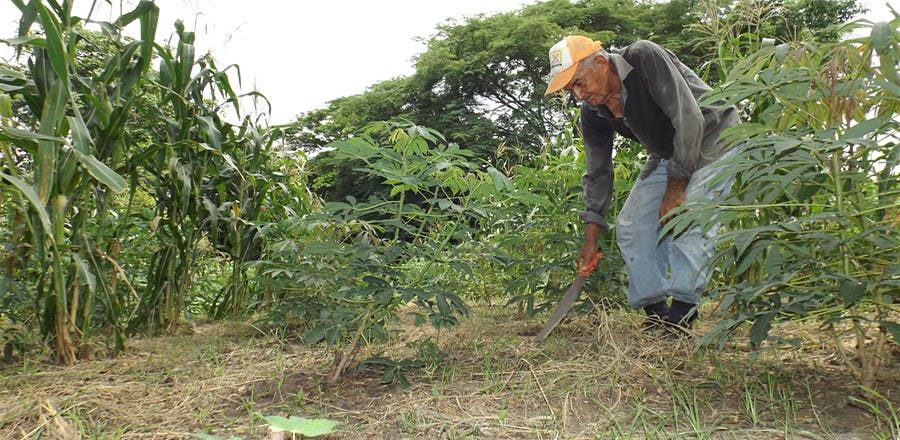
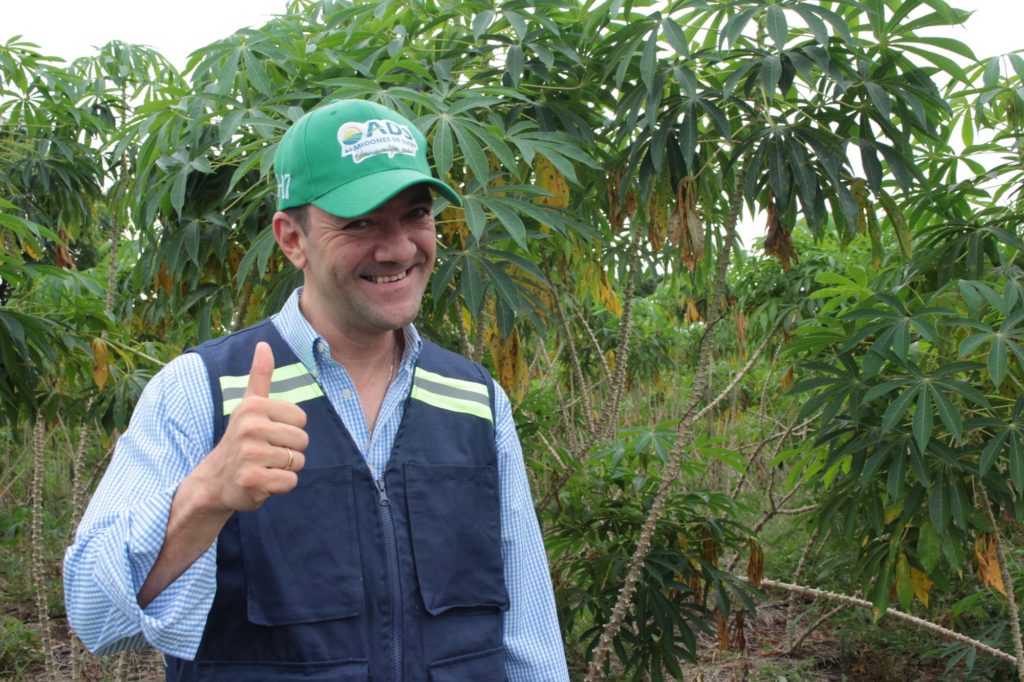 In 2008, the government created the company Almidones de Sucre in order to stimulate rural development in the Montes de María region and to provide added value to the cassava value chain. For several years, the company worked to build a business culture with cassava growers and increase production. In 2017, with the arrival of USAID support, Almidones benefited from the consolidation of a public-private partnership, which generated the synergy needed in the sector. The commercial manager of Almidones de Sucre, Alejandro Zuluaga, talks about this partnership and the evolution of the industrial cassava sector in Colombia.