

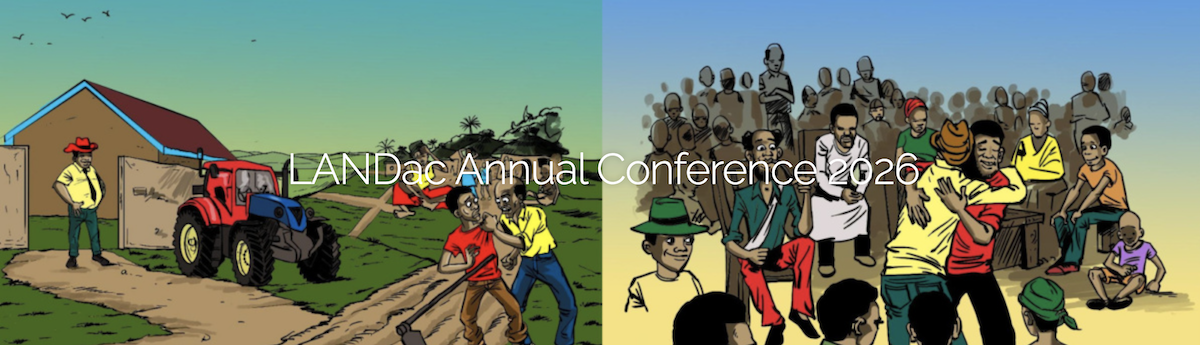
In 2026 the LANDac annual conference is centered on the theme of Land, Conflict and Peace. This conference offers the opportunity to explore issues at the crossroads of land governance and peace, conflict, and humanitarian studies. It invites reflection on how war and its aftermath reshape our understanding of land governance and call for new, context-sensitive approaches. Such reflection is more urgent than ever: today, around 50 countries of the world are experiencing war or organized violence, affecting roughly one in six people worldwide. In the current context of myriad global and local conflicts, this important theme aims to encourage rich discussion between participants from academia, practitioners, and policy makers.
Register here: https://forms.uu.nl/universiteitutrecht-geo/registrationlandacconference2026
Register to watch the opening and closing plenary sessions online: https://us06web.zoom.us/webinar/register/WN_dnwHGU5QQDyeI–nxbN2Xg#/registration
Land in peace and conflict
The relationship between land and conflict, and the ways in which conflict redefines land access and rights, are common themes for practitioners working in land governance, and have also been explored in academic debates across a number of fields. Both research and practice have increasingly linked underlying dynamics of structural (in)justice around land to conflict, and the topic remains as relevant as ever: new findings continue to emerge, while evolving factors such as climate change further complicate the relationships between people, land, and conflict. Political and economic exclusion are central to conflicts, and these can often manifest through claims to land. In turn, conflict can engender loss of land, due to displacement, land grabbing, and militarisation. The aftermath of war can equally be a time of land loss, or of frustrated efforts to regain land lost in conflict. While war-to-peace transitions can bring the hope to correct some of these wrongs, they also bring new problems, such as through overlapping land claims, land grabbing in the name of development and reconstruction, and continued political competition. Moreover, experience shows that if not addressed in emergency response and post-recovery efforts, land issues can contribute to exacerbate or relapse of conflicts.
This year’s LANDac Conference turns its attention to these intersections. Key questions that motivate the conference are: How can different land governance approaches strengthen land rights in conflict-affected and challenging environments? How can land governance interventions support recovery, peacebuilding, and justice? And how can we better understand land governance as part of the broader politics of land before, during, and after violent conflict?
This conference offers the opportunity to explore the crossroads of land governance with peace and conflict studies. It invites reflection on how war and its aftermath reshape our understanding of land governance. Such reflection is more urgent than ever: today, around 50 countries of the world are experiencing war or organised violence, affecting roughly one in six people worldwide. If current trends continue, two thirds of the world’s poor will live in conflict-affected or fragile countries by 2030.
To reflect on these challenges, this conference aims to bring together scholars, policy makers and practitioners from the land governance field on the one hand; and the conflict, peace, and humanitarian field on the other. We believe these two communities can speak to each other in very meaningful ways. Early work on land in humanitarian and peace building contexts (by Sara Pantuliano in 2009 and John Unruh in 2013) has put these issues on the agenda, and experiences from different war-affected countries indicate the complexity of land governance interventions in these settings, technically, legally, and politically.
Among the peace and conflict community, land remains somewhat underacknowledged as a critical theme. Here, the land governance community may help put urgent issues of injustice as well as structural violence relating to land on the international peacebuilding agenda. Precisely in situations of threatening violence, a pertinent question is what can be done through land governance. Vice-versa, the land governance community stands to benefit from insights and theory-building on key issues in conflict dynamics, including the mobilisation for violence, the role of identity politics, and the dynamics of state formation; but also what it takes to think of peace in terms of transformation and justice.
Format
The 2-day conference kick-offs on Wednesday morning 1 July with a plenary session. Dr Jon Unruh will open with a keynote on land rights, conflict and peace building. After Prof Unruh’s framing on the conference theme, a plenary conversation will explore what it means to operate in today’s complex environments at the intersection of land governance, conflict, peace, and humanitarian action. Four panelists come together to share the lived realities behind their work. Each arrives with a different vantage point, from government decision‑making to frontline programming, from navigating activism and political pressures to conducting research in places where conflict is not an abstraction. This session opens a space for honest, thought‑provoking conversation, bringing forward both institutional and personal perspectives on how to address the root causes of emerging crises through policy, programming, and long‑term engagement in an aid landscape that is constantly shifting.
The plenary morning is followed by several rounds of parallel sessions in 1,5 hour slots on Wednesday and Thursday 2 July. The conference closes on Thursday afternoon with a second plenary panel. As in previous editions of the conference, we offer space for a variety of formats: paper presentations, panel discussions, round tables for these two days. On 1 July we will close the day with drinks and snacks, offering ample opportunities for networking.
Following the conference, on 3 July, we host a pre-event for early career researchers, providing space for PhDs and MSc students to share their knowledge, think about how to present this knowledge to other stakeholders, and to inspire each other.
The conference will be concentrated on-site, at Janskerkhof 2-3 Utrecht. We aim to stream keynote sessions. Parallel sessions will be hosted in hybrid format, allowing online presentation (no online participation without presentation).
Keynote speakers
LANDac is proud to announce the following keynote speakers.
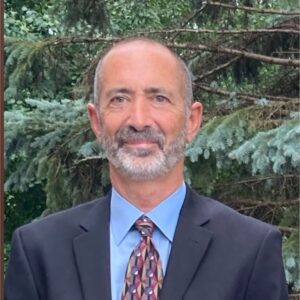
Jon Unruh
Dr. Jon Unruh, is a professor at McGill University in Canada. He has over 30 years experience in developing and implementing research, policy and practice on 1) war-affected housing, land and property rights systems; 2) the peace process and recovery from armed conflict; 3) the intersection between customary and statutory tenure; and 4) land rights and environmental change, and has published widely on these topics. He has worked with a variety of international agencies, governments and donors on the establishment of restitution/compensation programmes for housing, land and property in war-affected countries, including: UN agencies, NATO, The World Bank, OSCE, USAID, Global Affairs Canada and and The Japanese Global Infrastructure Foundation, among others. Dr. Unruh has conducted in-person research and policy work in: Ukraine, Syria, Yemen, Iraq, Lebanon, Saudi Arabia, Jordan, Sudan, Somalia, Ethiopia, Uganda, Kenya, Tanzania, Liberia, Sierra Leone, Cameroon, Mozambique, Angola, Madagascar, Colombia, Peru, Slovenia, Vietnam, East Timor and Sri Lanka. https://www.mcgill.ca/geography/people-0/unruh
Opening Panel Conversation
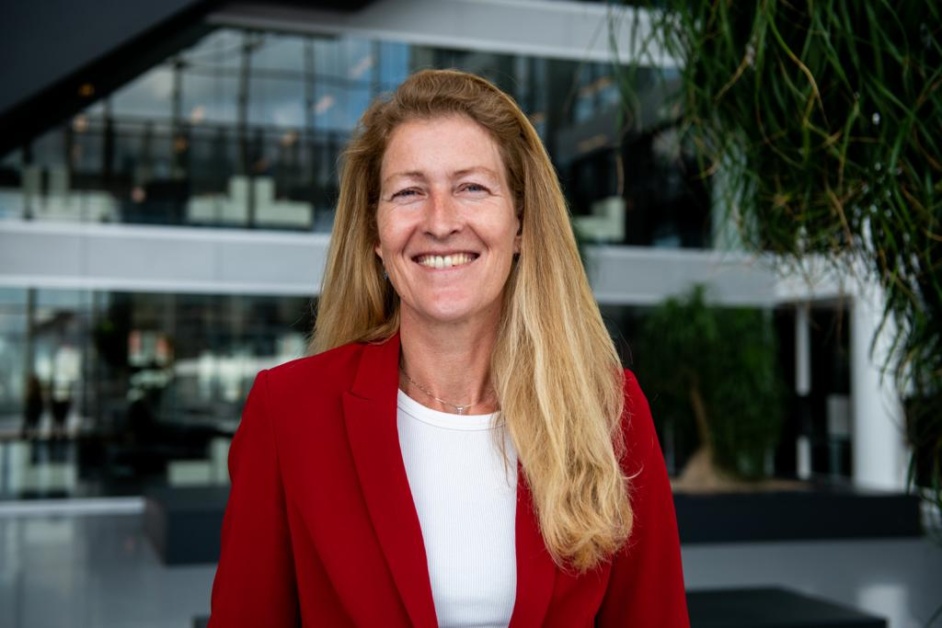
Ms Wampie Libon – van der Wal is Director Inclusive Green Growth Department (IGG), Ambassador for Sustainable Development, and Arctic Ambassador at the Ministry of Foreign Affairs of the Netherlands. Her directorate coordinates international climate and energy policy, and it manages a portfolio of ODA activities on water, energy and food. Prior to this position, she was the Director of the International Enterprise Department at the Ministry of Foreign Affairs and the Head of the Economic and Climate Policy Department of the Netherlands Embassy in Washington DC. From 2014-2018, she was Deputy Head of Mission of the Embassy in Belgium. She also worked five years as an European advisor to Prime Ministers Balkenende and Rutte. Starting her diplomatic career in 1997, she held various positions in The Hague, New York and at the Permanent Representation of the Netherlands at the EU in Brussels.
Dr Judith Verweijen – Researcher and Assistant Professor at Utrecht University
Dr Mohammed Alsalimiya – Public Relationship Director at Land Research Center (Palestine)
Mr Michael Servaes – Executive Director of Oxfam Novib
Closing panel
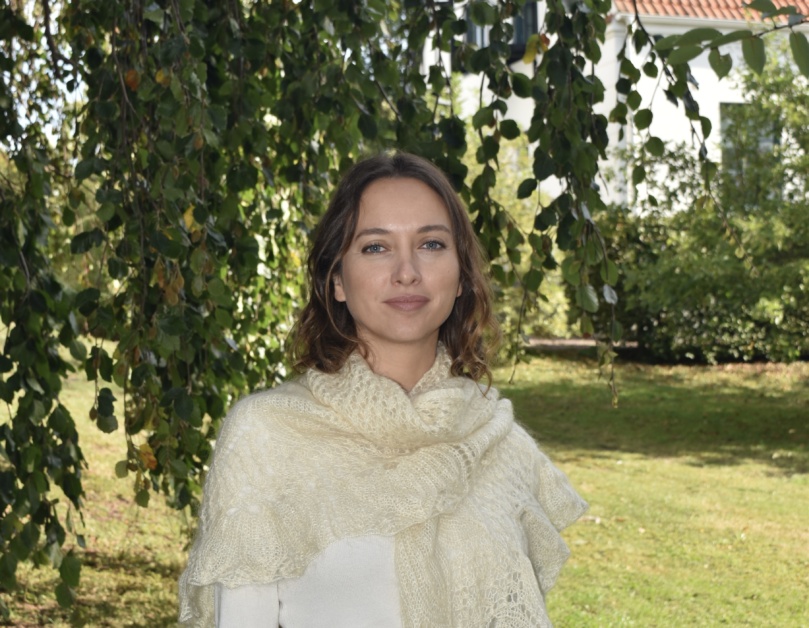
Pinar Dinç
Pinar Dinç is Associate Professor at Lund University, Centre for Advanced Middle Eastern Studies. She is a political scientist specialising in environmental peace and conflict studies, with a particular focus on the interplay between political power, climate and environmental change, ecological degradation, authoritarianism, resistance, and migration in the Middle East.
Mediebou Chindji
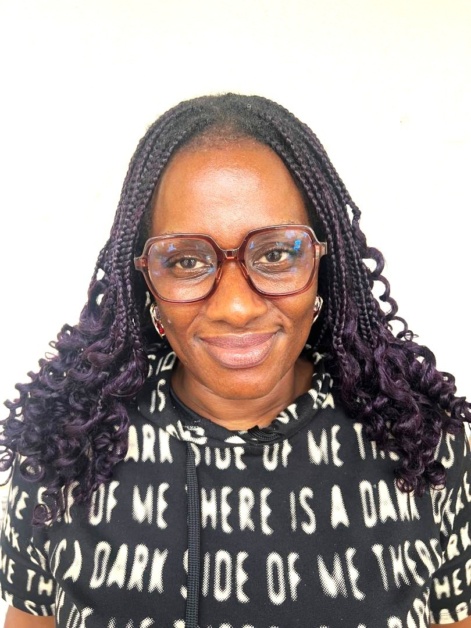
Prof. Mediebou Chindji is Associate Professor in Social and Development Geography at the University of Yaoundé I (Cameroon), where she coordinates the Master’s program in Urban Planning and Development. She is also affiliated with the Network of Excellence on Land Governance in central Africa (NELGA/AC). Her research focuses on land governance, spatial justice, and urban transformations in Sub-Saharan Africa, with particular attention to conflict-affected and fragile contexts. She examines how land tenure systems, legal pluralism, and urban expansion shape socio-spatial inequalities and fuel land-related conflicts. Her recent work explores the role of land governance in post-conflict reconstruction, displacement dynamics, and peacebuilding processes, highlighting the need for inclusive and context-sensitive policy frameworks. She has published widely on land, urban vulnerability, and environmental risks, and actively contributes to international debates on land governance, conflict, and sustainable development.